Places on the atlas that name this study.
- Everyday lives
- Sivagalai
Early South Indian farming mixed rain-fed crops and managed water
Rice appears alongside millets and pulses at early Tamil Nadu sites, and tests at two suggest rain-fed rice; Kerala's field evidence is thinner.
- This page
- 3,807 words · revision 8
Draft study · Awaiting specialist review · Updated
001Dates and places
Places on the atlas that name this study.
- Sivagalai Urn Burial & Habitation Complex
Excavated site zone · Thoothukudi District
1000–500 BCE
Different beginnings
500–200 BCE
Marks & materials
200 BCE–300 CE
Connected worlds
300–600 CE
Change & continuity
- 540–410 cal BCE
- 430–230 BC
- approximately 300 BCE–300 CE peak phase
- c. 300 BC–300 AD
- 260–557 AD
- Laboratory date
- Date from writing, coins or texts
- Period assigned by excavators or scholars
Each date belongs to what was dated (a sample, an object, a layer or a text), which is not always the event the study asks about.
Each period has the same width, so spacing is not to scale.
The full table of dates, with their ranges, is under How we know.
- 1 Well supported
- 2 Likely
- 1 Not known
002How sure
In brief
At Kodumanal and Perur in Tamil Nadu, rice was found with millets, pulses and probable tubers. Eleanor Kingwell-Banham's 2019 study reports direct dates on the rice of 430–230 BCE at Kodumanal and 260–557 CE at Perur. Its phytoliths (microscopic plant silica) fit rain-fed or groundwater rice, not deeply flooded paddy. At Porunthal, 540–410 BCE is one selected one-sigma interval for burial paddy, not the complete calibrated distribution; grave offerings do not show everyday fields. The Tamil poem Puṟanāṉūṟu 18 urges a ruler to store water, showing that managed water could matter to farming. A 9.5 m terracotta pipeline at Tirukkovilur is interpreted as carrying drinking water, not irrigation water. At Pattanam in Kerala, rice, pepper and cardamom were found, but not the fields where they grew. No securely dated wetland reclamation was found in either region. Seasons, gardens and field layouts remain unknown.
Key researchers cited in this study: K. Rajan (Kodumanal & Porunthal Excavations / Epigraphy) · Dorian Q. Fuller (South Indian Archaeobotany & Crop Origins) · Full bibliography
How sure
- Well supported
Rice was used alongside millets and pulses in early Tamil Nadu.
Plant remains at Kodumanal and Perur were directly identified, and the rice directly dated.
- Likely
Rice at Kodumanal and Perur was rain-fed rather than deeply flooded.
Phytolith water indicators favour it, but the test covers only two sites.
- Likely
Managed water mattered to early Tamil farming.
Puṟanāṉūṟu 18 is explicit, but no tank or canal of the period is dated.
- Not known
Wetlands were reclaimed for farming before 600 CE.
No securely dated reclamation feature was found in Kerala or Tamil Nadu.
Why it matters
It tests the long-standing assumption that growing rice meant irrigation works and centrally organised labour.
003Key findings
What the study concludes
- Selected Tamil Nadu assemblages directly establish rice alongside millets, pulses and other plant resources.
- Kodumanal and Perur phytolith evidence favors lower-water or rainfed rice interpretations over intensive irrigation for the sampled contexts.
- Puṟanāṉūṟu 18 shows that rain risk and managed water were explicit agrarian concepts, but does not date a specific hydraulic structure.
- Pattanam establishes diverse plant presence in Kerala but not the local cultivation regime of every taxon.
- Wetland reclamation, exact seasonality and managed gardens remain inadequately demonstrated in the reviewed core-period evidence.
In the study’s own words. How sure each point is, is shown above.
The summary above is the short read. The full study is the complete text it was drawn from, with its tables and source notes.
What the full study covers
- Executive summary, scope, and research design
- Archaeobotanical evidence: crops, sampling, preservation, and water regime
- Dry farming, irrigation, water installations, and wetland reclamation
- Classical Tamil evidence and the social limits of inference
- Kerala evidence and the problem of moving from plants to fields
- Synthesis, disagreements, open questions, and bibliography
004The study
Executive summary, scope, and research design
What archaeological and textual evidence establishes the diversity of agricultural systems in Kerala and Tamil Nadu during 1000 BCE–600 CE?
The evidence supports a diverse agrarian landscape, not a single regional progression toward irrigated wet-rice agriculture. The strongest direct evidence comes from selected archaeobotanical assemblages in Tamil Nadu. At Kodumanal and Perur, macrobotanical remains show rice occurring alongside millets, pulses and probable tuber use; phytolith analysis was specifically designed to distinguish wetter from drier rice-growing regimes and led Eleanor Kingwell-Banham to argue that the rice represented there was compatible with lowland or groundwater-influenced rainfed cultivation rather than intensive irrigation. She therefore cautions against equating the appearance of rice with irrigation or agricultural intensification. ↗1
Porunthal adds an important but methodologically different case. A study of four megalithic cist burials reported rice, millet and other plant indicators; paddy from the graves was directly dated, with selected one-sigma components of 540–410 and 510–435 cal BCE (not the complete calibrated distributions), and the authors proposed settled paddy-and-millet agriculture, possibly including irrigation. Because the sampled context is mortuary rather than an excavated field, settlement floor or irrigation installation, the evidence establishes the presence and cultural use of crops much more securely than it establishes the normal acreage, staple dominance or water-management regime of surrounding agriculture. ↗2 ↗3
Classical Tamil poetry supplies a complementary kind of evidence. Puṟanāṉūṟu 18 explicitly relates food production to land and water, contrasts land dependent on rainfall with low-lying places where water can be accumulated, and urges the augmentation of water resources. This is strong evidence that managed water and rain-risk were intelligible agrarian concerns in the textual world represented by the poem. It is not, by itself, an archaeological date for a particular tank or canal, nor evidence that all rice cultivation was irrigated or centrally administered. The broad dating of early Caṅkam material remains debated, and Kingwell-Banham used approximately 300 BCE–300 CE only as a practical broad estimate while emphasizing the difficulty of directly dating South Indian irrigation works. ↗1 ↗4
Kerala presents a major evidential asymmetry. At Pattanam, the project record reports archaeobotanical remains including rice, pulses, black pepper and cardamom, among other botanical material. Yet Pattanam is a settlement and exchange context rather than a sampled field system, and the project itself notes that further analysis would be needed to determine whether pepper came from managed cultivation or semi-wild sources. The finds therefore illuminate consumption, movement and plant use more securely than they reconstruct local gardens, paddy fields or plantation-like systems. ↗5
The most significant negative result limited to the sources read is that the accessible evidence reviewed here did not establish a stratigraphically secure, directly dated core-period example of agricultural wetland reclamation in Kerala or Tamil Nadu. Likewise, water infrastructure cannot automatically be classified as irrigation: the Tamil Nadu Department of Archaeology interprets the long terracotta-pipe installation at Tirukkovilur as a conduit for drinking water rather than a field-water system. ↗6
Three controls run through this study: burial grain is not treated as proof of an irrigation regime, a tool is not treated as proof of landholding, and later ethnography is not projected backwards as evidence for unchanged occupational, caste or community roles. The period 1000 BCE–600 CE is the study's main window, not a range into which every item is forced.
The chronology is therefore separated into four lanes. Earlier background is relevant where crop histories pre-date 1000 BCE but is not used here to manufacture continuity. Core-period evidence includes the Iron Age–Early Historic assemblages and texts discussed below. Later reception/comparison is used only where later evidence helps expose the danger of projecting historically recent wetland, irrigation or social systems backwards. Mixed chronology applies to literary corpora, long-lived sites and regional syntheses whose components cannot all be assigned one exact date.
Archaeobotanical evidence: crops, sampling, preservation, and water regime
The best evidence for crop diversity does not come from listing grains; it comes from asking what was sampled, where it came from, how it was preserved, and what agricultural inference the remains can sustain. “Crops at six sites: millets and pulses persist as rice spreads” sets out the plant evidence site by site; this study asks how farming and water worked.
Kingwell-Banham's reassessment of Early Historic South Indian rice is especially important because it explicitly tests a long-standing assumption: that the spread of rice implies increasingly irrigated agriculture. She notes that archaeological arguments for irrigation had often rested more heavily on historical texts and the presumed water requirements of rice than on direct archaeological indicators of cultivation conditions. Her study combines previously published macrobotanical evidence with rice and associated phytoliths from Kodumanal and Perur. ↗1
At Kodumanal, rice from the relevant sequence was directly dated to approximately 430–230 BCE as reported in the study. At Perur, rice was directly dated to approximately 260–557 CE. Both assemblages contained evidence for rice together with other plant foods, including millets, pulses and probable tuber/parenchyma remains. This is not the signature of an exclusively rice-dependent system. ↗1
The phytolith method provides the most direct cultivation-regime test available in this sample set. Samples were taken from the same archaeological layers as the macrobotanical evidence, separated using heavy-liquid procedures, and examined microscopically. Kingwell-Banham reports counting at least 300 single-cell forms and 100 multicell panels where preservation permitted and compares water-sensitive and fixed rice phytolith forms alongside sedge indicators. Lower sensitive-to-fixed ratios and relatively low Cyperaceae abundance at Kodumanal and Perur were interpreted as fitting lower-water, groundwater-influenced or lowland rainfed rice rather than deep-water or heavily irrigated cultivation. ↗1
The crucial inference is therefore:
archaeological layer → botanical assemblage → rice phytolith water indicators → lower-water cultivation interpretation
The large footed grinding slab
Oc Eo
Comparative evidence from Vietnam; these are not finds from Kerala or Tamil Nadu.
and not:
rice grain → irrigated paddy → intensification → centralized labour.
The first chain has a measured analytical middle step. The second adds social and hydraulic conclusions that the grain itself does not demonstrate. Kingwell-Banham consequently argues for continuity of drought-resilient foods – millets, pulses and tuber resources – alongside rice and other crops with potentially greater water demands. ↗1
Preservation places important limits on this reconstruction. Charred cereal grains often survive better than fragile chaff and tiny weed seeds. Kingwell-Banham notes that differences in flotation and sieve mesh – such as recovery at 0.5 mm rather than 0.25 mm – can substantially alter the representation of small remains. Weed ecology might in principle reveal cultivation moisture, manuring, crop rotation or field disturbance, but sparse recovery means that the available macrobotanical datasets often cannot robustly diagnose those practices. ↗1
That limitation matters particularly for seasonality. The reviewed material does not justify a high-confidence reconstruction of sowing and harvest seasons for the individual sites. Modern monsoon-season categories cannot simply be projected backwards without adequately sampled weeds, crop-processing remains, ecological indicators or season-specific field evidence. The defensible finding is crop and water-regime diversity, not a complete ancient agricultural calendar.
Porunthal illustrates another context problem. Premathilake and colleagues studied phytoliths from four megalithic cist burials and reported evidence for rice, millet, sedges and palms. Paddy from the graves was directly dated, with selected one-sigma components of 540–410 and 510–435 cal BCE (not the complete calibrated distributions), and the authors interpret the results as settled rice-and-millet farming with possible irrigation. ↗2 ↗3 Yet mortuary deposition can be selective, ceremonial or socially patterned. A concentrated rice deposit in a burial does not measure the share of cultivated land under rice, ordinary household consumption, or an irrigation network, and Kingwell-Banham warns that burial rice may carry ceremonial rather than straightforward subsistence significance. ↗1 “Crops at six sites: millets and pulses persist as rice spreads” gives the Porunthal laboratory details and the crop-by-crop record for Kodumanal, Porunthal and other sites, including Cooke, Fuller and Rajan's flotation results for Kodumanal; “Porunthal's graves hold dated rice; the writing claim is disputed” and “Sivagalai's dated rice grain came from inside a burial urn” cover the Porunthal and Sivagalai finds. Mangudi, also covered by Cooke, Fuller and Rajan and documented by the Tamil Nadu Department of Archaeology, is not used here. ↗7 ↗8
The crop classes consequently have unequal evidential weight. Rice is supported by direct archaeobotanical and phytolith evidence. Millets and pulses are supported as components of mixed subsistence but their relative acreage is not measurable from the reviewed record. Tubers are represented by parenchyma evidence but are taxonomically and agronomically less precise. Gardens or horticultural plots are not securely reconstructed merely from the presence of fruit, spice or tree taxa. The archaeological record is therefore strongest for mixed crop use and some cultivation-water conditions, weaker for field geometry and seasonal labour organization.
Dry farming, irrigation, water installations, and wetland reclamation
The evidence makes most sense if “irrigation” is disaggregated. A community could cultivate rainfed rice in a low-lying place that retained groundwater, divert runoff into a field, maintain a small reservoir, use tanks for livestock and domestic needs, and irrigate some plots while dry-farming others. Those are different hydrological practices and leave different archaeological signatures.
For the selected Tamil archaeobotanical sites, the strongest direct result is not an absence of water management, but an absence of evidence that their rice required continuously flooded, intensive irrigation. Kingwell-Banham treats lowland or groundwater-supported rainfed cultivation as a plausible middle category between strictly upland rainfed crops and deep-water or intensively irrigated rice. ↗1
This also changes the interpretation of storage and catchment features elsewhere in southern India. Modified rock pools and reservoirs have sometimes been folded into narratives of irrigation development, but their functions can include livestock watering, domestic supply, seasonal storage or runoff capture. Kingwell-Banham explicitly considers such alternatives and argues that crop diversity could itself provide resilience under highly seasonal rainfall. ↗1
Tirukkovilur supplies a useful control on functional inference. The Tamil Nadu Department of Archaeology reports a roughly 9.5-metre terracotta pipe installation assembled from about fifty pipes and interprets it as bringing drinking water from a river or channel. The installation demonstrates water engineering; it does not demonstrate agricultural irrigation. ↗6 This is exactly why “water installation” and “irrigation installation” should not be interchangeable metadata categories.
For dry farming, the inference is stronger than for formal irrigation. The persistence of millets and pulses alongside rice and the lower-water interpretation of rice cultivation at Kodumanal and Perur fit a mixed strategy responsive to rainfall variability. Morrison's broader landscape synthesis likewise describes Early Historic rice expansion in southern India as integration with, rather than simple replacement of, established dry farming, herding and foraging practices. That regional synthesis is useful context, although the full article was not read directly for this study and therefore carries less evidentiary weight here than the archaeobotanical analysis. ↗9
For wetland reclamation, the consulted record yields a negative result limited to the sources read. No accessible source read here supplied a securely stratified core-period Kerala or Tamil Nadu agricultural feature that both demonstrates deliberate conversion of wetland into cultivated land and has a sufficiently direct chronological association to sustain that claim. This does not mean that reclamation did not occur. It means that “wetland reclamation” should not presently be presented as an established regional characteristic on the basis of the sources reviewed. What would change the conclusion is a dated field or embankment sequence, palaeoecological evidence demonstrating anthropogenic hydrological transformation, or an excavation report linking a reclamation feature to a securely dated cultivation horizon.
Classical Tamil evidence and the social limits of inference
Puṟanāṉūṟu 18 provides unusually direct agrarian language. In the Project Madurai text based on the Auvai S. Duraisamy Pillai commentary tradition, the poem associates human sustenance with the conjunction of land and water, contrasts poor land in which seed depends on the sky with low-lying places where water can be increased, and commends water accumulation. The commentary explicitly interprets the passage in terms of creating or enlarging water bodies so cultivation need not depend solely on rainfall. ↗4
The edition history matters. Project Madurai states that its digital text derives from a scan of the South India Saiva Siddhanta Works Publishing Society edition with Auvai S. Duraisamy Pillai's commentary; the site records the first edition as 1947 and the relevant later print history, and explains that its electronic text was prepared from a Digital Library of India scan with distributed proofreading. ↗4 This provides a recoverable text witness, but it is not a substitute for a newly read critical edition with full manuscript apparatus.
Genre matters just as much. A poem can reveal valued agrarian practices, political ideals, metaphors of prosperity and contemporary ecological knowledge. It does not function like an excavation section. The passage therefore supports the proposition that managed water and rainfall dependence were conceptually salient within the represented Tamil agrarian world. It does not alone establish the construction date, capacity, command area or ownership of a specific irrigation tank.
Nor does exhortation to a ruler prove that rulers monopolized irrigation labour. Large works might involve royal sponsorship, local organization, household labour, corporate groups, coercion, tenancy arrangements or combinations not recoverable from this passage. The evidence also does not license the projection of later caste-defined agricultural occupations into the Early Historic period. Those social questions require condition-specific epigraphic, archaeological or textual evidence rather than retrospective ethnographic analogy.
Chronology remains broad. Kingwell-Banham notes the persistent difficulties of dating Caṅkam literature and uses approximately 300 BCE–300 CE as a broad working frame for early material. She also observes that literary references to tanks and canals are frequent while direct archaeological dates for South Indian tank construction remained unavailable in the evidential review she published in 2019. ↗1 Muthukumaran's later study of “Rice and Water in Early Historic South India and Sri Lanka” further brings archaeological and Caṅkam textual evidence into dialogue, but only abstract/indexed material was accessible for this study; its detailed passage-by-passage argument should therefore be acquired before being relied upon for more extensive textual claims. ↗10 ↗11
Oryza sativa - Kerala 2 – Modern rice plant or grain
Photographed 2014-09-15
The safest synthesis is consequently one of convergence without identity. Archaeobotany shows mixed crops and, at selected sites, lower-water rice cultivation. Poetry shows that deliberately managed water could matter to agricultural prosperity. These two bodies of evidence need not contradict one another: some land could have depended chiefly on rainfall while other plots or places benefited from managed water. What they do not establish is a universal or regionally homogeneous “irrigated rice civilization.”
Kerala evidence and the problem of moving from plants to fields
The Kerala side of the comparison is substantially less secure at field-system level. Pattanam is the main Kerala case. The PAMA project describes the site's peak phase as approximately 300 BCE–300 CE and reports rice, pulses, black pepper, cardamom and other plant remains; it also says further research is needed to tell whether the pepper came from farmed or semi-wild plants. ↗5 A 2020 study of a peat deposit at Pattanam identified coconut kernel fragments, a rice grain and specimens resembling black pepper, but the peat's age was still under investigation (Varghese et al. 2020, Proceedings of the Indian National Science Academy 86.2: 1097–1106); “Crops at six sites: millets and pulses persist as rice spreads” sets out these identifications. Plants found at a port may have been imported, exchanged, stored or cooked there without growing nearby, so these finds show presence and use, not local fields or pepper gardens. “Early Kerala rice labour: no proven link to Pulayar or Cherumar” and “Kuttanad's buried peat and wood do not date ancient rice fields” discuss the dated Vembanad wetland core and early Kerala wetlands. Reconstructing the fields around Pattanam would need field-adjacent plant remains, weeds, phytoliths, pollen or hydrological features, and the sources reviewed here do not supply them at the resolution achieved for Kodumanal and Perur.
This is an evidence-coverage asymmetry, not proof that ancient Kerala had less agricultural complexity. High rainfall, acidic soils, preservation conditions, modern development, research history and the types of contexts excavated can all affect what becomes archaeologically visible. The responsible comparative conclusion is therefore that the present accessible dataset is stronger for particular Tamil Nadu crop-and-water questions than for Kerala field ecology.
The study also found no secure basis for projecting historically later Kerala wetland-reclamation systems unchanged into 1000 BCE–600 CE. Such comparisons may generate hypotheses, but neither later landholding terminology nor modern agricultural communities should be converted into Early Historic institutions without an independent evidential bridge.
Synthesis, disagreements, open questions, and bibliography
The evidence permits several high-confidence conclusions.
First, agricultural diversity is directly demonstrable. Rice was not alone: millets, pulses and other plant resources remained significant in sampled Tamil assemblages. The combination is more consistent with multiple strategies under variable water availability than with a region-wide transition from “dry farming” to a homogeneous irrigated rice system. ↗1
Second, rice does not diagnose irrigation by itself. At Kodumanal and Perur, the phytolith evidence was explicitly used to investigate water regime and favored rainfed/lowland interpretations. ↗1 At Porunthal, an irrigation interpretation has been proposed, but the burial context makes it inappropriate to generalize that proposal to ordinary cultivation or the wider region. ↗2
Third, managed agricultural water is nevertheless historically plausible and textually explicit. Puṟanāṉūṟu 18 treats control or augmentation of water as agriculturally consequential. The strongest historical model is therefore not “irrigation absent” versus “irrigation dominant,” but a mosaic of rainfall dependence, lowland moisture exploitation and deliberately managed water. ↗1 ↗4
Fourth, water infrastructure requires functional demonstration. Tirukkovilur's pipe system is a useful warning that even substantial engineered waterworks can serve drinking-water rather than crop irrigation. ↗6
Fifth, gardens, exact crop seasonality and core-period wetland reclamation remain weakly established in the evidence read here. Their absence from this study is not an assertion that they were historically absent; it is a statement about what the reviewed sources can establish.
Strongest disagreements and discriminating evidence
The central disagreement concerns the extent and antiquity of irrigated rice. An irrigation-forward interpretation can point to literary references to tanks and canals, the Porunthal authors' proposed interpretation, and the ecological demands of some rice regimes. The revisionist position emphasizes direct cultivation proxies, contextual ambiguity and the feasibility of rainfed or groundwater-supported rice. ↗1 ↗2 The disagreement would be most effectively resolved site by site through directly dated field systems, reservoir construction sequences tied securely to cultivation horizons, sufficiently large weed assemblages, rice phytolith water indices, diatoms or sedimentary indicators, and landscape-scale palaeohydrological evidence.
A second disagreement is less about interpretation than scale. Plant remains at ports and settlements reveal what was present, consumed or exchanged, but not necessarily where it was produced. Pattanam's pepper is a particularly clear test case because the project itself leaves farmed versus semi-wild origin open. ↗5 Isotopic, morphometric, genetic or contextual evidence capable of sourcing plants, together with systematically sampled production settlements and fields, would materially alter the present Kerala assessment.
Sources still to check
The Cooke, Fuller and Rajan archaeobotanical publication for Mangudi, Kodumanal and Perur has since been read in full for “Crops at six sites: millets and pulses persist as rice spreads”, which uses its Kodumanal tables; its Mangudi and Perur records are not yet used in this study. ↗7
The first remaining target is the supplementary material for the Premathilake et al. Porunthal article. “Crops at six sites: millets and pulses persist as rice spreads” gives its two laboratory codes and calibrated ranges, but the sample-to-burial associations, phytolith counts and exact basis for the irrigation inference were not checked. ↗2 ↗3
Second is Muthukumaran's complete 2022 article so that every cited Caṅkam passage can be checked against an identified Tamil edition and its argument assessed rather than reconstructed from search indexing. ↗10 ↗11
Foxtail millet panicle (Setaria italica subsp. italica, modern botanical specimen)
Photographed 2020-11-01
Third, the Tamil Nadu Department of Archaeology publication catalogue confirms dedicated excavation volumes for Mangudi, Perur and Tirukoilur. Those volumes were not checked directly for trench, stratigraphic, and feature-level controls that public web summaries cannot supply. ↗12
For Kerala, the decisive next dataset would not be another generalized history of paddy cultivation. It would be a context-rich archaeobotanical/palaeoenvironmental study connecting Early Historic plant remains to sampled producing landscapes, including flotation totals, weeds, phytoliths or pollen, hydrological context and direct dating.
Selected bibliography
Kingwell-Banham, Eleanor. 2019. “Dry, rainfed or irrigated? Reevaluating the role and development of rice agriculture in Iron Age-Early Historic South India using archaeobotanical approaches.” Archaeological and Anthropological Sciences 11: 6485–6500. DOI: 10.1007/s12520-019-00795-7. Full open-access article read. URL: https://link.springer.com/article/10.1007/s12520-019-00795-7. ↗1
Cooke, M., D. Q. Fuller, and K. Rajan. 2005. “Early Historic Agriculture in Southern Tamil Nadu: Archaeobotanical Research at Mangudi, Kodumanal and Perur.” In South Asian Archaeology 2003, Aachen, pp. 341–350. Bibliographic metadata verified; full PDF read for “Crops at six sites: millets and pulses persist as rice spreads” (Kodumanal tables) while Mangudi and Perur tables remain to be incorporated here. URL: https://www.homepages.ucl.ac.uk/~tcrndfu/articles/SAA_04%20Cooke%20et%20al%20(06-15).pdf. ↗7
Premathilake, R., et al. 2017. “Implications of phytolith records from an Early Historic megalithic burial site at Porunthal in Southern India.” Journal of Archaeological Science: Reports 11: 491–506. DOI: 10.1016/j.jasrep.2016.12.025. Abstract consulted here (laboratory codes and ranges cross-checked in “Crops at six sites: millets and pulses persist as rice spreads”; supplementary tables were not checked directly). URL: https://doi.org/10.1016/j.jasrep.2016.12.025. ↗2 ↗3
Muthukumaran, S. 2022. “Rice and Water in Early Historic South India and Sri Lanka.” South Asian Studies 38(2): 101–115. DOI: 10.1080/02666030.2022.2111084. Abstract consulted; complete article was not read directly for this study. URL: https://doi.org/10.1080/02666030.2022.2111084. ↗10 ↗11
Auvai S. Duraisamy Pillai, commentary on Puṟanāṉūṟu, poems 1–60. Project Madurai electronic text based on the South India Saiva Siddhanta Works Publishing Society edition; edition lineage recorded on the site. Poem 18 and its commentary read. URL: https://www.projectmadurai.org/pm_etexts/utf8/pmuni0494_01.html. ↗4
Tamil Nadu Department of Archaeology. “Kodumanal,” “Mangudi,” “Perur,” “Tirukkovilur,” excavation register, and publications catalogue. Official institutional summaries were used principally for campaign history and the stated function of water installations, not as substitutes for excavation reports. URLs: https://www.tnarch.gov.in/kodumanal; https://www.tnarch.gov.in/mangudi; https://www.tnarch.gov.in/perur; https://www.tnarch.gov.in/tirukkovilur; https://www.tnarch.gov.in/archaeology-excavation; https://www.tnarch.gov.in/publications-for-sale. ↗13 ↗14 ↗8 ↗15 ↗12 ↗6
PAMA. “Pattanam” project documentation. Used for reported archaeobotanical finds, phase summary and the explicit unresolved question of cultivated versus semi-wild pepper. URL: https://www.pama.org.in/currentprojects/Pattanam. ↗5
Morrison, Kathleen D. 2015. “Archaeologies of flow: Water and the landscapes of Southern India past, present, and future.” Journal of Field Archaeology 40: 560–580. DOI: 10.1179/2042458215Y.0000000033. Partial text consulted; full article was not read directly for this study and is used here only as regional context. URL: https://doi.org/10.1179/2042458215Y.0000000033. ↗9
Overall conclusion: The defensible model for 1000 BCE–600 CE is a mosaic of agrarian practices: drought-tolerant millets and pulses, rice grown under more than one possible moisture regime, tuber use, and at least some culturally salient managed water. The archaeological evidence currently gives much stronger resolution for selected Tamil Nadu sites than for Kerala producing landscapes. Neither “rice” nor “waterworks” can stand as a proxy for irrigation; mortuary crops cannot stand as a proxy for ordinary fields; Pattanam's plant remains cannot stand as a proxy for local gardens; and wetland reclamation remains an open archaeological question rather than an established core-period regional fact.
005Photographs
Photographs of the places and objects this study discusses. Each item carries its creator’s credit, licence and documented source. See all 412 photographs and source images ↗
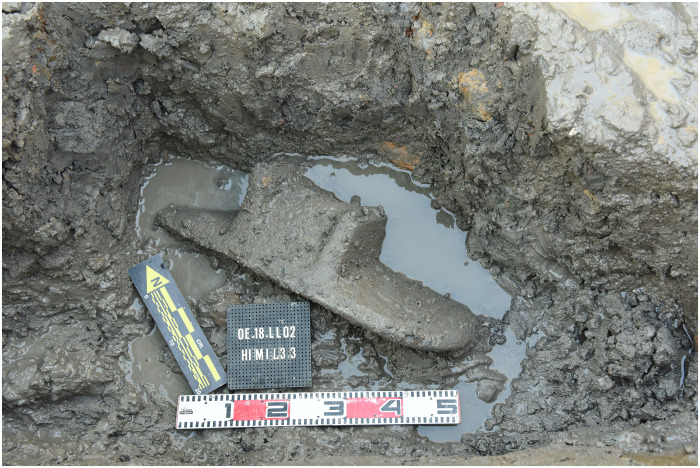
Oc Eo
The large footed grinding slab
A footed sandstone grinding slab, 76 cm long, excavated at Oc Eo in 2018. Starch grains of ginger, cinnamon and nutmeg were identified on its surface.
Comparative evidence from Vietnam; these are not finds from Kerala or Tamil Nadu.
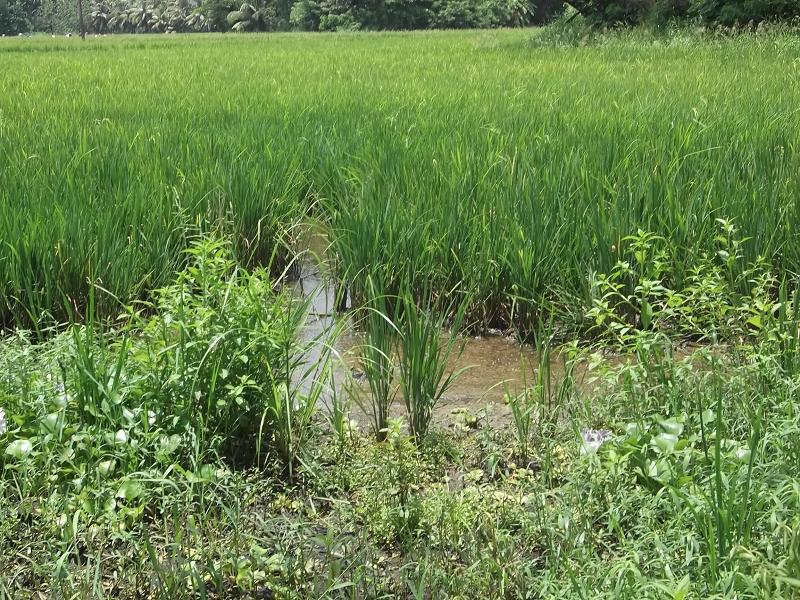
Photographed 2014-09-15
Oryza sativa - Kerala 2 – Modern rice plant or grain
Oryza sativa - Kerala 2. Modern rice plant or grain; ancient cultivation must be established by dated archaeobotanical evidence.

Photographed 2020-11-01 18:00:54
Foxtail millet panicle (Setaria italica subsp. italica, modern botanical specimen)
Setaria italica subsp. italica (foxtail millet) panicle, shown as a modern botanical reference specimen.
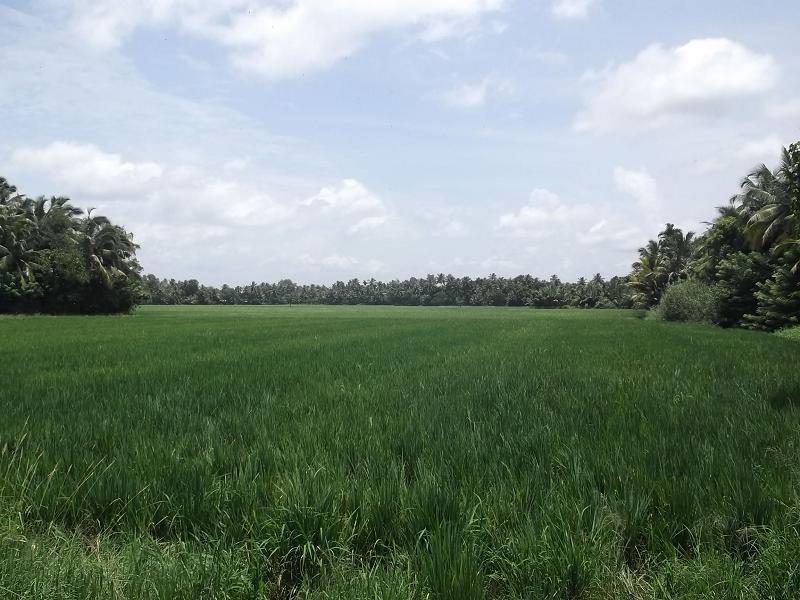
Photographed 2014-09-15
Oryza sativa - Kerala 3 – Modern rice plant or grain
Oryza sativa - Kerala 3. Modern rice plant or grain; ancient cultivation must be established by dated archaeobotanical evidence.
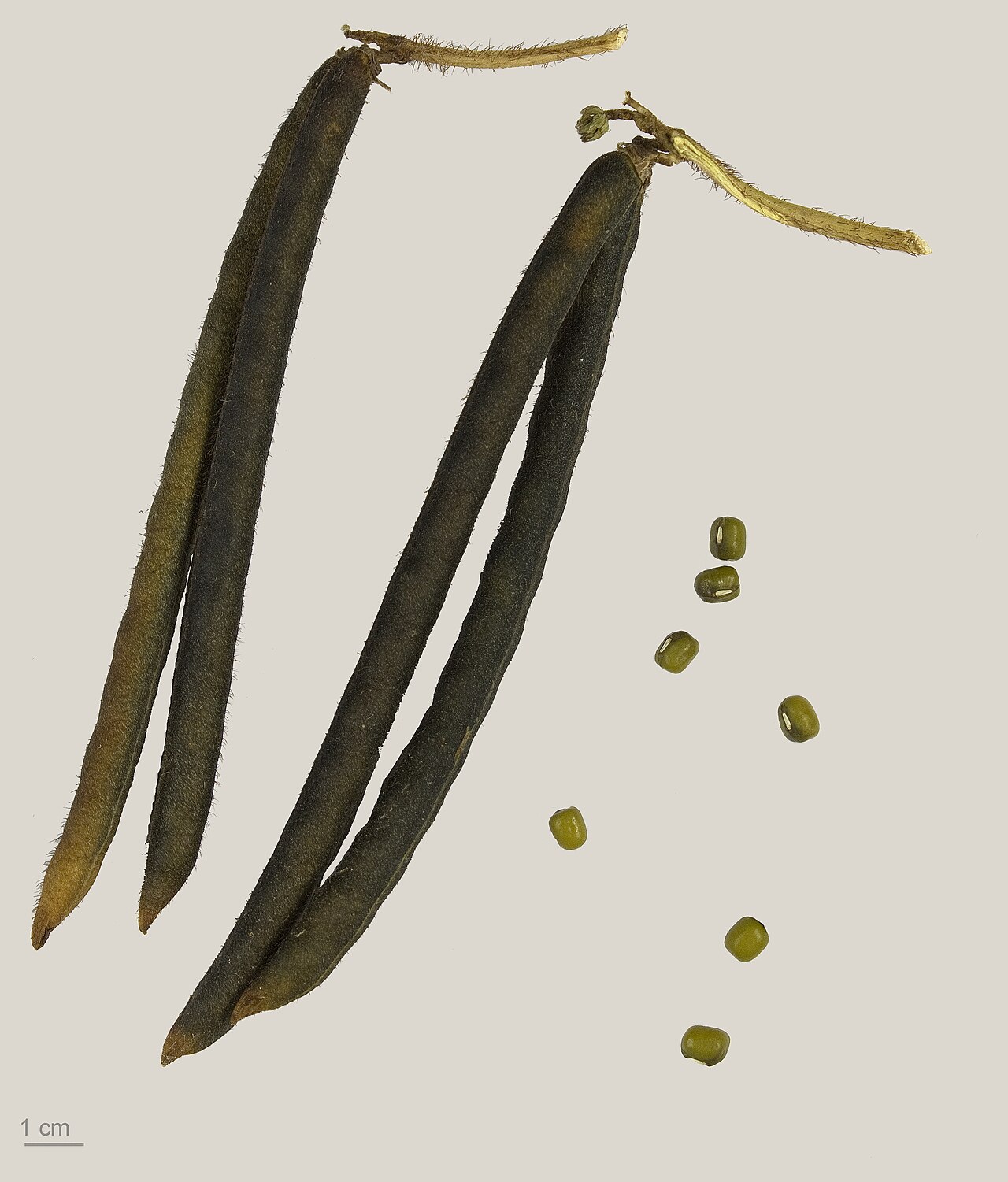
Photographed 16 December 2013
Vigna radiata MHNT.BOT.2009.17.4 – Modern mung bean identification
Vigna radiata MHNT.BOT.2009.17.4. Modern mung bean identification; not archaeological seeds.
Photographed 2016-05-07 11:14
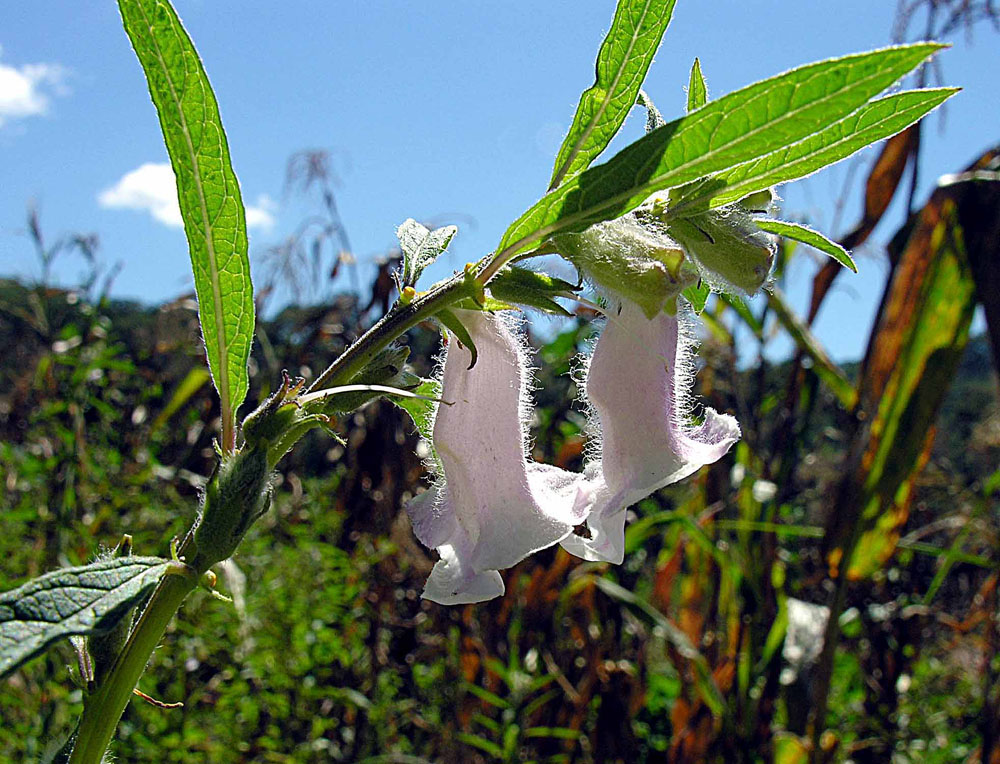
Sesame flower in bloom (Sesamum indicum, modern botanical context)
Sesamum indicum (sesame) flower in bloom, shown as modern botanical context.

Photographed 10 September 2025 (according to Exif data)
Sesamum indicum Subsp.malabaricum-1-mettur dam-salem-India – Modern sesame identification
Sesamum indicum Subsp.malabaricum-1-mettur dam-salem-India. Modern sesame identification; not evidence of ancient distribution.

Photographed 2020-11-01 18:05:45
Foxtail millet grains (Setaria italica subsp. italica, modern botanical specimen)
Setaria italica subsp. italica (foxtail millet) grains, shown as a modern botanical reference specimen.
Show 3 more photographs and source images ↓
Modern references relevant to this study
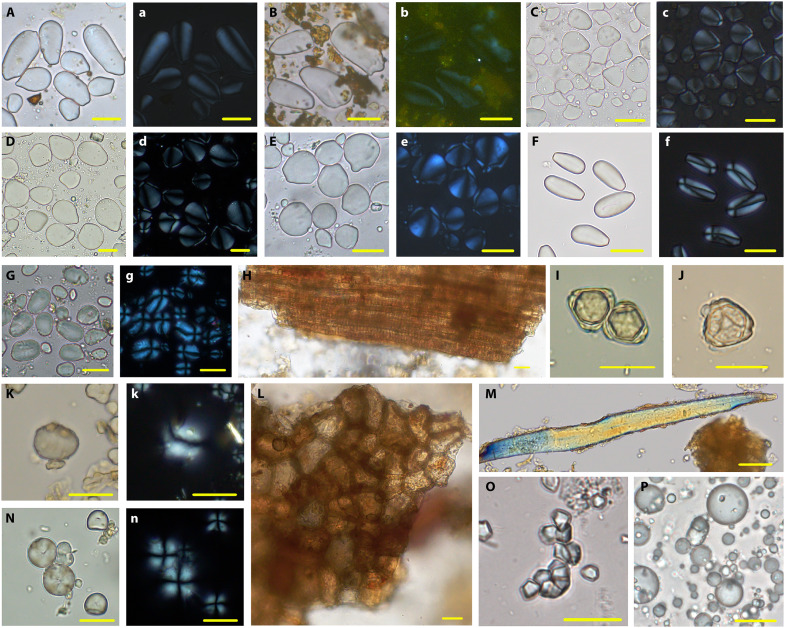
Modern reference samples used for comparison in the Oc Eo study: starch grains and other remains of turmeric, ginger, clove, cinnamon, nutmeg and rice.
Comparative evidence from Vietnam; these are not finds from Kerala or Tamil Nadu.
Oc Eo
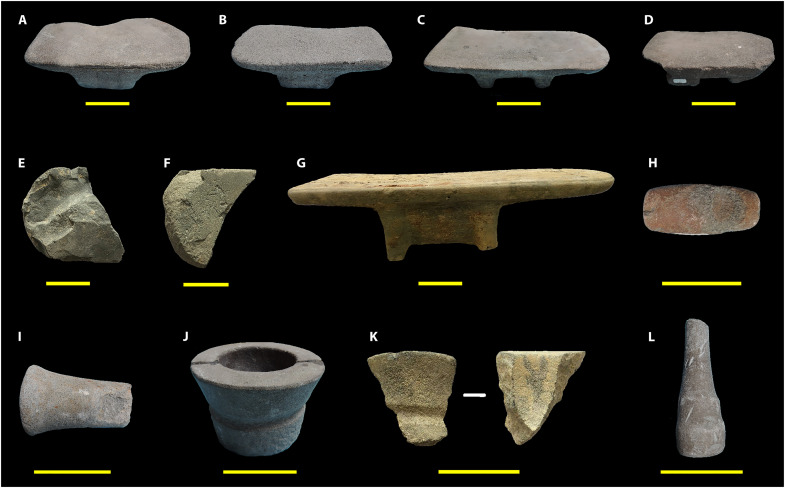
Ancient food-preparation tools from Oc Eo
Food-preparation tools from Oc Eo reported in the published study: footed grinding slabs, mullers or pestles, and mortars. Scale bar 10 cm.
Comparative evidence from Vietnam; these are not finds from Kerala or Tamil Nadu.

Oc Eo
Ancient plant remains recovered from Oc Eo
Starch grains and other plant remains from Oc Eo under the microscope, including turmeric, ginger, galangal, clove, cinnamon, nutmeg and rice.
Comparative evidence from Vietnam; these are not finds from Kerala or Tamil Nadu.
006Two views
Both views are shown at equal weight; this site does not choose between them.
How much early South Indian rice depended on irrigation
- One view
- Premathilake and colleagues read the Porunthal burial rice as settled paddy farming with possible irrigation; tanks and canals in poetry fit this.
- Another view
- Kingwell-Banham (2019) argues the Kodumanal and Perur phytoliths point to rain-fed or groundwater rice, not intensive irrigation.
- What would settle it
- Directly dated fields or reservoirs tied to cultivation layers, with large weed samples and rice phytolith water indices.
007Where next
Compare the evidence for early crops with the Perur excavation sequence. The published Perur crop samples include layers later than 600 CE.
On the atlasSivagalai Urn Burial & Habitation ComplexExcavated site zone · Thoothukudi District
Explore nextDinner 2,000 Years Ago: Hearths, Urns and PoemsAll related studies, connected material, books and sources28 · 10
Elsewhere on this site
Excavation Atlas Sites: Sivagalai Urn Burial & Habitation Complex
Junior Detective Quests: Dinner 2,000 Years Ago: Hearths, Urns and Poems
Multi-Script Glossary Terms: mullai (முல்லை / മുല്ല) · marutam (மருதம் / മരുതം) · uḻavar (உழவர் / ഉഴവർ) · iñci & cukku (Ginger – Zingiber officinale) (இஞ்சி & சுக்கு / ഇഞ്ചിയും ചുക്കും) · mañcaḷ (Turmeric – Curcuma longa) (மஞ்சள் / മഞ്ഞൾ) · tēṉ & tiṉai (Wild Hill Honey & Foxtail Millet) (தேன் & தினை / തേനും തിനയും)
Connected material
Photographs, drawings, books, videos and other studies linked to this study. A link helps you explore; it does not prove a historical claim.
- Ancient food-preparation tools from Oc EophotographBackground
- The large footed grinding slabphotographBackground
- Ancient plant remains recovered from Oc Eoscientific photomicrographBackground
- Modern references relevant to this studyphotographBackground
- Oryza sativa - Kerala 2 – Modern rice plant or grainphotographBackground
- Oryza sativa - Kerala 3 – Modern rice plant or grainphotographBackground
- Foxtail millet panicle (Setaria italica subsp. italica, modern botanical specimen)photographBackground
- Foxtail millet grains (Setaria italica subsp. italica, modern botanical specimen)photographBackground
- Vigna radiata MHNT.BOT.2009.17.4 – Modern mung bean identificationphotographBackground
- Sesame flower in bloom (Sesamum indicum, modern botanical context)photographBackground
- Sesamum indicum Subsp.malabaricum-1-mettur dam-salem-India – Modern sesame identificationphotographBackground
- A meal survives in pieces: seeds, pots and bonesdiagramThe plate’s Perur rice note, one sample dated 260–557 CE, comes from this study of farming evidence.
- Order first. Dates second.diagramThe Perur rice range on the plate, 260–557 CE for one dated sample, comes from this study.
- Plants survive as different kinds of evidencediagramThe flotation and phytolith panels show recovery methods that this study says shape which plant remains reach the record.
- Reading a changing landscapediagramThe tank cascade note follows this study: early irrigation works are hard to date directly.
Books, videos and websites
Outside reading on this topic. These are not part of the study and we have not checked every claim in them. See all books and videos
- Dorian Fuller’s bucket flotation film Video · Dorian Q. Fuller (author & publisher of the archaeobotany methods resource) · UCL · 3:36 · A short practical demonstration of bucket flotation for recovering archaeological plant material. A practical teaching resource authored by an active archaeobotanical researcher. A 2007 methods demonstration. It does not establish a date or crop identification for any Kerala or Tamil Nadu sample.
- Dorian Fuller on archaeobotanical research Video · Dorian Q. Fuller · University College London; lecture hosted by LINXS · 1:04:48 · A research lecture on archaeological plant remains, domestication and analytical methods including imaging. Places the work of identifying and interpreting seeds and crops in the hands of an active researcher. Multi-regional research and methods. Do not present it as a report of Kerala or Tamil Nadu crop assemblages unless a specific passage and its evidence are checked.
008Sources
The study lists the sources it consulted; we have not rechecked them. A working link does not show that a source was read, and a valid identifier does not show that it supports a claim. We do not link to unofficial uploads or copies of publications. Where a study cited one, we show the published citation, or a publisher, DOI or Internet Archive link when we have one. Tracking codes are removed from links, and the sources themselves are not republished here.
Eleanor Kingwell-Banham, Dry, rainfed or irrigated? Reevaluating the role and development of rice agriculture in Iron Age-Early Historic South India using archaeobotanical approaches, Archaeological and Anthropological Sciences 11 (2019), 6485–6500.
M. Cooke, D. Q. Fuller and K. Rajan, Early Historic Agriculture in Southern Tamil Nadu: Archaeobotanical Research at Mangudi, Kodumanal and Perur, in South Asian Archaeology 2003, Aachen, 2005, pp. 341–350.
Premathilake et al., Implications of phytolith records from an Early Historic megalithic burial site at Porunthal in Southern India, Journal of Archaeological Science: Reports 11 (2017), 491–506.
S. Muthukumaran, Rice and Water in Early Historic South India and Sri Lanka, South Asian Studies 38.2 (2022), 101–115.
புறநானூறு 1–60 / Purananuru 1–60 with Auvai S. Duraisamy Pillai commentary
Purananuru 1–60 with commentary of Auvai S. Duraisamy Pillai, Project Madurai electronic text based on South India Saiva Siddhanta Works Publishing Society edition.
Tamil Nadu Department of Archaeology, Tirukkovilur.
Tamil Nadu Department of Archaeology, Archaeological Excavations register.
Tamil Nadu Department of Archaeology, Publications for Sale.
PAMA, Pattanam project documentation.
Kathleen D. Morrison, Archaeologies of flow: Water and the landscapes of Southern India past, present, and future, Journal of Field Archaeology 40 (2015), 560–580.
Researchers and institutions whose work this study uses: K. Rajan, Dorian Q. Fuller
How we know The evidence, claims and dates behind this study
What this study draws on
- Kingwell-Banham's 2019 phytolith counts at Kodumanal and Perur, at least 300 single-cell forms per sample where preserved.
- Phytoliths from four Porunthal burials and directly dated paddy from two of them (Premathilake and colleagues, 2017).
- Puṟanāṉūṟu 18 read in the Project Madurai text with Auvai Duraisamy Pillai's commentary.
- Tamil Nadu Department of Archaeology reports on Tirukkovilur, and the Pattanam project's plant list.
Dates in this study
| What is dated | Date | How it was dated |
|---|---|---|
| 540–410 cal BCE | 540–410 BCE | Period assigned by excavators or scholars |
| 430–230 BC | 430–230 BCE | Laboratory date |
| approximately 300 BCE–300 CE peak phase | 300 BCE – 300 CE | Period assigned by excavators or scholars |
| c. 300 BC–300 AD | 300 BCE – 300 CE | Date from writing, coins or texts |
| 260–557 AD | 260–557 CE | Laboratory date |
See these dates on the timeline
The study’s claims
12 claims · 18 source passages · 58 paragraphs
Browse the study paragraph by paragraphKodumanal and Perur provide evidence for mixed plant use including rice alongside millets, pulses and probable tuber/parenchyma remains rather than an exclusively rice-based subsistence system.
Supported in this study
Evidence is site-specific and preservation-biased.
Rice phytolith evidence at Kodumanal and Perur is interpreted as more consistent with groundwater-influenced or lowland rainfed cultivation than with deep-water or intensively irrigated cultivation.
Supported with qualifications
Rainfed and irrigated cultivation form a continuum; phytolith evidence discriminates water conditions more directly than grain presence alone.
Small weed seeds, chaff and other fragile remains are vulnerable to preservation and recovery bias, limiting high-confidence reconstruction of manuring, crop rotation, irrigation and seasonality from the reviewed macrobotanical data.
Supported in this study
A bounded statement about reviewed datasets, not all South Indian archaeobotany.
Crop remains in a burial cannot by themselves establish ordinary staple proportions, cultivated acreage or an irrigated field system.
Supported in this study
Puṟanāṉūṟu 18 represents agricultural prosperity as depending on land and water and contrasts rainfall dependence with deliberate augmentation of water in low places.
Supported in this study
Broad literary chronology only.
A broad working range around 300 BCE–300 CE is used for early Caṅkam material in the principal archaeobotanical synthesis, but the literary chronology remains difficult and should not be treated as a precise composition date for each poem.
Supported with qualifications
The 2019 synthesis reported that direct archaeological dates for South Indian tank construction were unavailable in the evidence then reviewed, despite literary references to tanks and canals.
Supported with qualifications
Must not be restated as universal absence of dated irrigation archaeology.
The Tirukkovilur terracotta-pipe installation is interpreted by the Tamil Nadu Department of Archaeology as a drinking-water conduit and therefore cannot be counted as field irrigation without additional evidence.
Supported in this study
Government interpretation is attributed rather than treated as an unmediated observation.
No securely stratified and directly dated core-period agricultural wetland-reclamation feature in Kerala or Tamil Nadu was established from the accessible evidence reviewed in this study.
Supported with qualifications
negative result limited to the sources read, not a claim that wetland reclamation did not occur.
The best-supported regional model is a mosaic combining drought-resilient crops, at least some lower-water rice cultivation and textually attested managed water, rather than one homogeneous irrigated-rice system.
Supported in this study
Regional synthesis does not imply uniform practice at every site.
Managed gardens or horticultural plots are not securely reconstructed from the reviewed core-period evidence merely from the presence of spice, fruit or tree taxa.
Supported with qualifications
Exact sowing and harvest seasonality cannot be robustly reconstructed from the reviewed evidence because weed/chaff recovery and context-specific ecological data are insufficient.
Supported with qualifications
Modern seasonal labels should not be mechanically projected backwards.
Trace one claim through the study’s records
Explore the evidenceOther source lists
Numbered citation links from the study
The numbered links in the study text point here.
Dry, rainfed or irrigated? Reevaluating the role and development of rice agriculture in Iron Age-Early Historic South India using archaeobotanical approaches | Archaeological and Anthropological Sciences
Implications of phytolith records from an Early Historic megalithic burial site at Porunthal in Southern India - ScienceDirect
Implications of phytolith records from an Early Historic megalithic burial site at Porunthal in Southern India - ScienceDirect
puRanAnURu (with the commentary of Auvai Duraisamy Pillai) part 1 -verses 1 to 60 (in tamil script, unicode format)
PAMA - Bridging the Past, Present and Future.
Tirukkovilur | Department Of Archaeology
dorian downloads
Mangudi | Department Of Archaeology
Full article: Archaeologies of flow: Water and the landscapes of Southern India past, present, and future
Rice and Water in Early Historic South India and Sri Lanka
Rice and Water in Early Historic South India and Sri Lanka: South Asian Studies: Vol 38, No 2
Publications - For Sale | Department Of Archaeology
Archaeological Excavations conducted by the Department of Archaeology | Department Of Archaeology
Kodumanal | Department Of Archaeology
Perur | Department Of Archaeology
About this study Status, corrections and how it was made
Status
Draft study, revision 8. No historian, archaeologist, or Tamil or Malayalam specialist has reviewed it yet.
How it was made
Compiled as an editorial synthesis from published scholarship around questions we framed. About this project & workflow
The summary, How sure lines and Two views notes on this page were prepared from this study and cross-checked against its passages. That is an editorial check, not a specialist review.
Corrections and updates
Technical details
Study code LTS-SUP03. The text fingerprint changes whenever the study text changes.
- The study text is shown as written. Links from its paragraphs to citations help you move around the study; they are not new claims or checked source passages.
See how this study’s records were extracted
Text fingerprint (SHA-256): LTS-SUP03 · a65e9acd5ed631e6cf586bd3… · v8
Evidence tables and technical details are on the web page: https://layersofthesouth.org/read/d221673247