000The practice trench
Young explorers · Ages 7 to 11
Dig down, layer by layer.
This trench is ready to dig. Open it one layer at a time. Then work out which layer came first.
- 101
- 102
- 103
- 104
Finds tray · Made up for practice. Not a real dig.
- (101) · 0 to 65 cm Bits of old things, mixed up in loose soil.
- (102) · 65 to 145 cm A piece of a pot, lying in the floor.
- (103) · 65 to 230 cm A piece of a pot, deep down in the pit.
- (104) · 145 to 260 cm Bits of pot and charcoal, outside the pit.
Your dig
How to play
- Dig the four layers, one at a time.
- Answer the question at each layer.
- Put the layers in the order they were made.
(101) The top layer, all mixed up
Found Bits of old things, mixed up in loose soil.
Think about it
This top layer is mixed up. Can it tell us how old the floor below is?
- Yes, it can.
- No, it cannot.
See the answer
No. Mixing can move things from one layer to another. So this top layer does not date the floor below.
(102) An earlier floor
Found A piece of a pot, lying in the floor.
Think about it
Look at the floor. Something cut a hole through it. Which was there first?
- The floor.
- The hole.
See the answer
The floor. It had to be there before a pit could cut through it.
(103) A later pit, filled in
Found A piece of a pot, deep down in the pit.
Think about it
Here is the trick. The pit fill goes deeper than the floor. Which layer was made later: the floor or the pit fill?
- The floor, because it is higher up.
- The pit fill, because the pit cuts the floor.
- Both at the same time.
See the answer
The pit fill. The pit is later than the layers it cuts. Its fill went in after the pit was dug. An older thing can end up in that later fill. So a thing in a layer can be older than the layer.
(104) A lower layer, not mixed up
Found Bits of pot and charcoal, outside the pit.
Think about it
This is the deepest layer. Does deepest always mean oldest?
- Yes, always.
- No, not always.
See the answer
No. Depth alone cannot tell us how old a thing is. Look for cuts, and for layers that are not mixed up.
Which came first?
Put these three layers in order. Start with the one made first.
Made first
- (104) A lower layer, not mixed up
- (102) An earlier floor
- (103) A later pit, filled in
Made last
We leave out the top layer, 101. Digging and ploughing mixed it up, so it cannot tell us when the layers below were made.
The clues
- Layer 104 is lower than the floor, 102, and it is not mixed up. So it was there first.
- The floor, 102, had to be there before the pit could cut through it.
- In the drawing, the pit goes down into the lower layer too. A cut is later than the layers it cuts.
Keyboard help
Tab moves between buttons. Enter digs. In the list, Alt with the up or down arrow moves a layer. Escape takes you back to the dig button.
001Early Tamil letters
Your name in early Tamil letters
These are real letters from about 2,000 years ago. Ātaṉ is a real name scratched on pots at Keezhadi (Keeladi); your name written in them is new.
𑀆𑀢𑀷𑁰
002Clean the face
Young explorers · Second trench
Clean it, then draw the lines.
First rub the dust off the trench wall. Then draw where each soil layer meets the next.

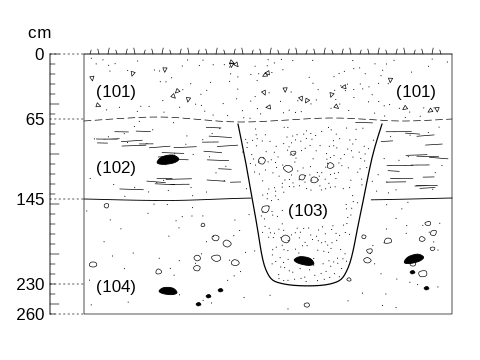
Made up for practice. Not a real dig. Depths are in centimetres. The pit (103) goes down from 65 to 230 cm.
See the four layers and where the lines go
- (101) Top layer, all mixed up: 0 to 65 cm.
- (102) Earlier clay floor with a pot piece: 65 to 145 cm.
- (103) Later pit fill cutting through the floor: 65 to 230 cm.
- (104) Lower layer with pot pieces and charcoal: 145 to 260 cm.
- Layer 104 is lower than the floor, 102, and it is not mixed up. So it was there first.
- The floor, 102, had to be there before the pit could cut through it.
- In the drawing, the pit goes down into the lower layer too. A cut is later than the layers it cuts.
Two careful people can draw a line in different places; that is why diggers write notes.
003How sure can we be?
Four cards for how sure we can be
Many facts on this website have one of four cards. The card shows how sure we can be.
- strong evidenceShade it in
- probablySlanting lines
- maybeDots
- nobody knows yetLeave it empty
One pot on the four cards
Here is what one study says about black-and-red pots.
- strong evidenceThe black part of a tested pot has carbon in it.
- probablyScientists think the pots went into the fire upside down.
- maybeThis study has nothing on the maybe card.
- nobody knows yetNobody knows yet if the white paint on some old pots was kaolin.
004Missions
Eight missions to try
Each mission starts with one picture. Look closely, then find out what we know.
Ages 7 to 9


Ages 9 to 11

Where did this come from?
Every mission fact comes from a study on this website, and every photograph has a full credit record.
- The two-colour pot: Black-and-red ware owes its colours to carbon, iron and firing · photo record
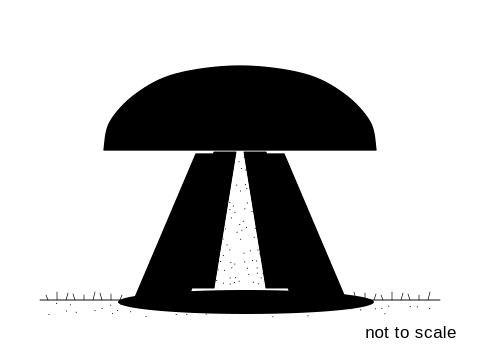
- Stones like umbrellas: Cheramanangad’s stone markers do not predict what lies beneath · photo record
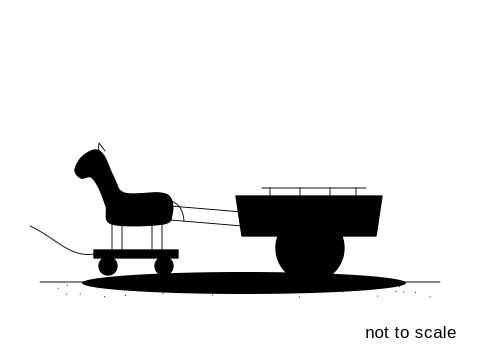
- Toys in old poems: Early Tamil poems show children playing with toy carts
- What was for dinner?: Everyday food: the evidence shows ingredients and work, not menus · photo record
- Is deeper always older?: Pattanam's radiocarbon dates give no single date for its wharf
- Names on old pots: Keezhadi's inscribed pots show writing in everyday life · photo record
- Made here or brought here?: Kodumanal made stone beads and smelted iron on site
- What can a coin tell us?: Kerala's Roman coin hoards show inland movement, not motive
005The case board
Solve a case, earn its stamp
There are sixteen detective cases. Each case has its own stamp.
These cases are written for about age 11 and up. Younger children will need a grown-up to read with them.
Layers and dates


Objects and making


Words and writing


Everyday life


006Make and do
Print it, colour it, build it
Six things to make at home or in a club. Ask a grown-up to help with scissors.
007Word help
Words from the missions
Here is what each word means. Some words also show how they are written in Malayalam.
Open the word list (55)
- anjili ആഞ്ഞിലി / അയിനി
- A Western Ghats tree whose wood lasts well in water.
- BCE
- Years before year one, counted backwards.
- Berenike ബെറനിക്കെയും മയോസ് ഹോർമോസും
- The two main Red Sea ports of Roman Egypt.
- black-and-red ware കറുപ്പും ചുവപ്പും മൺപാത്രങ്ങൾ
- Pots that are black on one part and red on another.
- Brahmi
- A family of early Indian letters that Tamil-Brahmi belongs to.
- burial
- Putting a person who has died into the ground.
- carbon
- The black stuff in soot and charcoal.
- cardamom
- A sweet-smelling plant spice; scientists think it may appear at Pattanam.
- chank shell ശംഖ്
- A big sea shell that people cut into bangles.
- die (plural: dice)
- A small cube with dots, used in games.
- diggers
- People who dig carefully to find out about the past.
- fill
- The soil that later filled a pit.
- fire
- To bake clay hard in great heat.
- furnace
- A very hot oven for melting metal or glass.
- grave
- A place where a person who has died is buried.
- hematite
- Red stuff with iron in it.
- hoard
- A store of coins that someone hid or buried.
- inland
- Away from the coast, deeper into the land.
- ivory
- A hard, creamy material from an elephant tusk.
- kaolin
- A white clay.
- Korkai കൊർക്കൈ
- An early port at the mouth of the Tamiraparani river.
- layer
- One band of soil lying on top of another.
- millennium
- A thousand years.
- millet
- A small grain from a grass.
- monument
- Something big that people built, often of stone, to mark a place.
- ornament
- Something worn to look nice, like jewellery.
- owner
- The person a thing belongs to.
- Palakkad Gap പാലക്കാട് ചുരം
- A gap through the Western Ghats hills, used as a way across.
- palm leaf
- A dried leaf of a palm tree, once used for writing.
- pit
- A hole dug down into the ground, later filled in.
- poem
- Words put together by a poet, often in lines.
- poet
- A person who makes poems.
- portrait
- A picture of a person's head or face.
- pulses
- Seeds such as beans and lentils that people eat.
- quartz
- A hard, clear stone that beads can be made from.
- recipe
- Instructions for cooking a dish.
- riverbed
- The ground at the bottom of a river.
- Roman
- From the Roman Empire, whose rulers were called emperors.
- rough-outs and chips പണിതീരാത്ത മുത്തുകളും കൽച്ചീളുകളും (ഡെബിറ്റാജും ബ്ലാങ്കുകളും)
- Unfinished pieces and waste chips left over from making stone beads.
- sample
- A small piece taken away to be tested.
- sawn
- Cut with a saw or a blade.
- scratched
- Cut into a surface with something sharp.
- seed
- The small part of a plant that a new plant grows from.
- settlement
- A place where people lived together.
- Tamil-Brahmi തമിഴി (തമിഴ് ബ്രാഹ്മി)
- An early way of writing Tamil, with letters taken from Brahmi.
- tender
- Gentle and loving.
- the Americas
- Lands far away across the ocean, where chillies first grew.
- tracing
- A copy made by drawing over the lines of something.
- trench
- A long, deep hole dug with care to see the layers.
- umbrella stone കുടക്കല്ല്
- A big stone with a round top, raised on four stone legs.
- urn
- A big clay pot. Some urns were buried in the ground.
- waterfront
- The edge of the land beside the water.
- waterlogged
- Soaked right through with water.
- wharf
- A built edge by the water where boats can stop.
- workshop
- A place where things are made by hand.
008For grown-ups
For grown-ups
This page keeps nothing on your device until your child presses "Stamp my passport". Then one passport list is kept on this device. You can see it and clear it on the Preferences page. Open Preferences
Some missions are about graves and burials. Explorer pages show no photographs of human remains.
Explorer pages link only to pages on this website.
Things to do together are on the page for families. Go to the families page
For grown-ups: open the glass box
Requests recorded by this page since this page opened stay on this site (browser add-ons not counted). On a fresh visit, nothing is stored on this device. Without JavaScript, open Developer Tools (Network and Storage tabs) to inspect requests and storage directly.