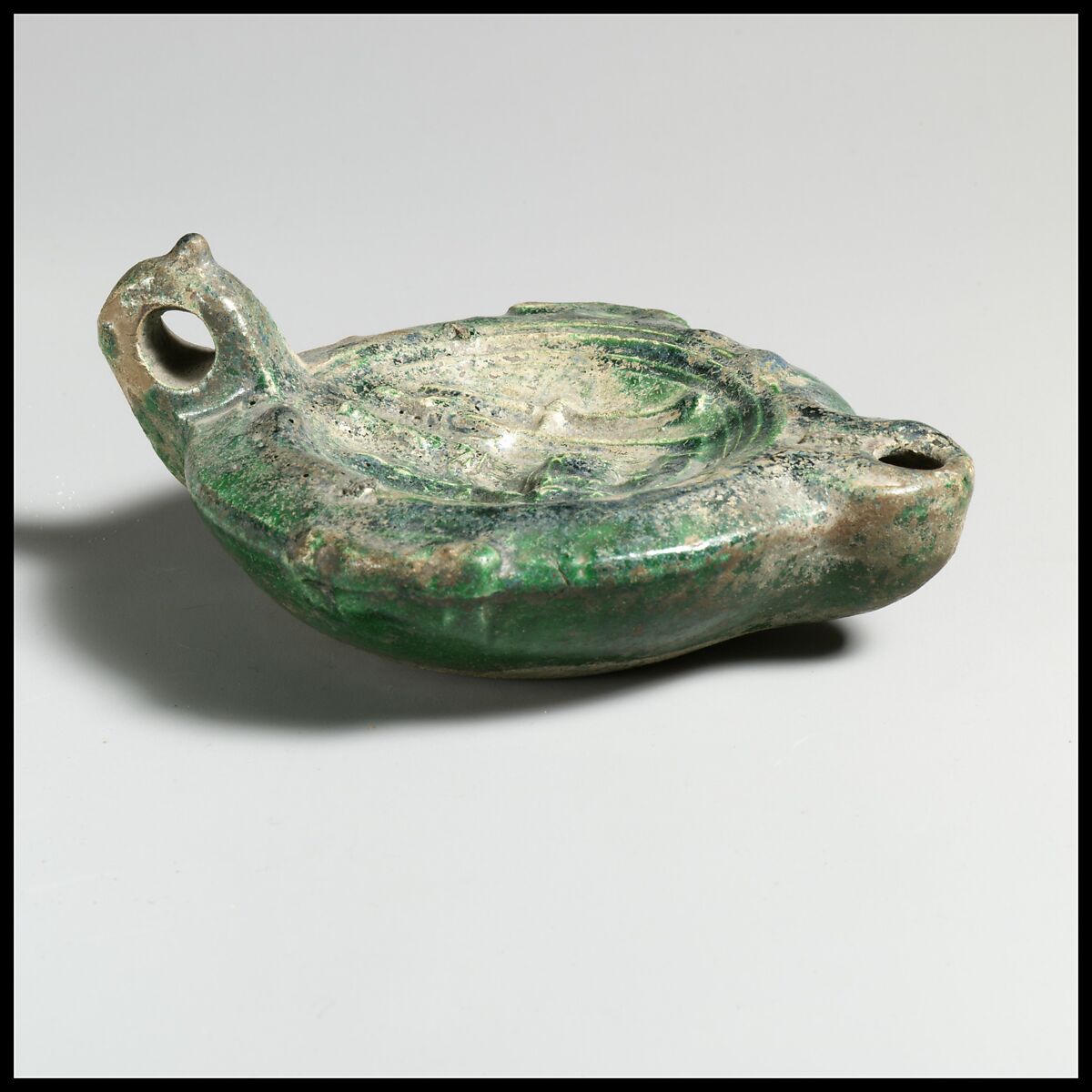
Terracotta lamp, late 1st–2nd century CE
late 1st–2nd century CE
- Words & worlds
The Nedunalvadai pictures palace and camp, not a building record
Nedunalvadai describes an elaborate palace and a ruler visiting wounded warriors at night. Its imagery reveals literary choices, not a measured building plan. The copper wall is a comparison, the fire-vessel’s metal is unspecified, and the camp scene should not be recast as modern surveillance.
- This page
- 3,041 words · revision 8
Draft study · Awaiting specialist review · Updated
001Dates and places

No mapped place in this study.
Dates in this study are stated in words only.
- 2 Well supported
- 1 Likely
- 1 Not known
002How sure
In brief
The Nedunalvadai is a 188-line early Tamil poem, traditionally credited to Nakkirar and linked to a Pandya king, Neduncheliyan. This study reads it in the 1931 Swaminatha Iyer edition with Naccinarkkiniyar's later commentary. Builders lay out the palace with cord and directions; gates, courtyards, guarded rooms, lamps and furnishings follow. Cold appears through shut openings, fires, warmed musical strings and wind-bent lamp flames. At night the king visits wounded warriors in his camp. Close reading corrects three overstatements. Fragrant akil smoke and a fire-vessel come in separate passages, and no bronze is named. The wall is only “like copper”. The camp scene shows a king attending the wounded, not surveillance. The poem's composition date is not settled, and the official archaeology pages checked identify no excavated early Pandya palace that matches it.
Key researchers cited in this study: U. V. Swaminatha Iyer (Classical Tamil Manuscript Editions) · Full bibliography
How sure
- Well supported
The camp scene shows the king visiting wounded warriors at night, not surveillance.
The text and commentary describe him being shown the wounded one after another.
- Well supported
The poem names no bronze brazier and no copper masonry.
Akil smoke and the fire-vessel are separate passages; the copper wall is a simile.
- Likely
The poem's ruler is the Pandya king Neduncheliyan.
The attribution comes from received tradition and the commentary, not from the lines read.
- Not known
When the poem was composed.
No dating argument was read; the commentary and printed editions are much later layers.
Why it matters
It shows how a poem can be evidence for ideals and experience without being treated as an excavation record.
003Key findings
What the study concludes
- Royal architecture is represented through ordered space, thresholds, surfaces, light and sensory prestige, not measurements.
- Fragrant akil smoke and the warming taṭavu occur in distinct passages; bronze is not specified.
- The camp scene makes royal duty visible through wounded warriors, mud, wind-driven lamps, rain and sleepless presence.
- Archaeology and climate proxies are controls on interpretation, not automatic corroboration.
In the study’s own words. How sure each point is, is shown above.
The summary above is the short read. The full study is the complete text it was drawn from, with its tables and source notes.
What the full study covers
004The study
Orientation and scope
What does Neṭunalvāṭai represent about royal space, climate, lighting and warfare?
This study began from a short catalogue description of the poem, which spoke of “palace masonry,” “bronze braziers burning fragrant agallochum wood,” and “royal surveillance of military encampments.” Each phrase is tested here against the poem rather than assumed, and the poem is kept separate from excavated architecture and climate history.
The strongest result is that Neṭunalvāṭai is unusually rich literary evidence for how elite space, seasonal discomfort, artificial light, and martial kingship could be imagined together, but it is not a measured architectural record. In the consulted text, specialist builders lay out royal space with cord and directions; tall gates, courtyards, inner guarded rooms, decorative wall surfaces, lamps, bed furnishings, and water sounds form a sensorial palace sequence. The same poem makes cold legible through shut summer openings, fires, altered musical strings, wind-driven lamp flames, mud, rain, and bodily discomfort. Its closing camp scene depicts a king going among wounded warriors at night; “inspection of the wounded” or “command presence” is more faithful than the modern term “surveillance.” ↗1
Three catalogue claims do not survive close checking. First, the lines about akil (agarwood/agallochum) concern fragrant smoke in a domestic sequence, while a later line describes people warming themselves at red fire in a taṭavu; the poem does not, in those passages, specify a bronze brazier. Second, the inner wall is described as like copper, while the adjacent text/commentary speaks of shining plaster/stucco and dark pillars; this is simile and finish, not evidence for copper masonry. Third, the camp passage presents a king being guided successively to wounded fighters, not an administrative surveillance system. ↗1
Period: mixed. The represented world belongs to the early-classical Tamil corpus, but an exact absolute composition date was not established from a consulted critical apparatus in this study; the surviving commentary and print transmission are later layers. The Central Institute of Classical Tamil (CICT) describes the work as a 188-line āciriyappā poem attributed to Nakkīrar and identifies its ruler, within received literary-historical tradition, as the Pandya Neṭuñceḻiyaṉ. CICT also lists a 1931 U. V. Swaminatha Iyer edition with Nacciṉārkkiṉiyar’s commentary and records Swaminatha Iyer’s first printed Pattuppāṭṭu edition in 1889. These are transmission facts, not proof of a narrow ancient composition date. ↗2 ↗3 The poem is Tamil Nadu (Pandya) material rather than Kerala evidence; it is read here as connected context, and its Yavana-attributed lamp ties it to the wider question of how early Tamil texts name foreign craft (“The label Yavana named different roles, not one nationality”).
Text, transmission, and chronology
The strongest accessible textual base located was Project Madurai’s electronic transcription of the third edition (1931) of Pattuppāṭṭu with Nacciṉārkkiṉiyar’s commentary, edited by U. V. Swaminatha Iyer and printed by Kesari Press in Chennai. Project Madurai identifies that edition at the head of its Neṭunalvāṭai file; CICT independently catalogues the 1931 edition and earlier 1889 and 1918 Pattuppāṭṭu editions. This study therefore read a complete electronic transcription of an identifiable historical edition, but not the corresponding CICT page-image facsimile. ↗3 ↗1
The distinction between poem and commentary is consequential. Nacciṉārkkiṉiyar’s glosses explain older vocabulary through a later interpretive horizon and should not automatically be retrojected into the represented world. At lines 101–102, for example, the poem attributes a skilfully made female-figure lamp to yavaṉar, while the consulted commentary glosses the group as Cōṉakar. This demonstrates reception and semantic reinterpretation; it does not establish that the poem’s lamp is a securely identifiable Roman archaeological type. ↗1
For English control, J. V. Chelliah’s Pattupattu: Ten Tamil Idylls was bibliographically resolved, but the relevant translation pages were not read in full. Open Library records a 1962 second edition from the South India Saiva Siddhanta Works Publishing Society and a 1985 Tamil University edition/reprint; the National Diet Library likewise records the later Tamil University reprint. An accessible modern web translation by Vaidehi was used as a line-by-line cross-check, not as the controlling critical text. ↗4 ↗5 ↗6 ↗7
The ruler's identity also belongs to the received tradition rather than to an explicit name in the palace-and-camp lines read here. CICT names Nakkīrar as composer and Neṭuñceḻiyaṉ as ruler, while the 1931 commentary closes by identifying the king with the Neṭuñceḻiyaṉ victorious at Talaiyālaṅkāṉam. The defensible formulation is therefore that the transmitted tradition attributes the poem to Nakkīrar and identifies its ruler as a Pandya Neṭuñceḻiyaṉ. Assigning the poem a narrowly specified second- or third-century date without a consulted dating argument would create false precision. ↗2 ↗1
Eva Wilden’s Manuscript, Print and Memory is relevant to this methodological caution. At the level accessible here, its description emphasizes the long transmission of the Caṅkam corpus through oral predecessors, anthologization, commentary, manuscripts, quotation, rediscovery, and print. The complete monograph was not read, so it is used only to frame the transmission problem rather than for page-specific arguments. ↗8
Chelvanayakam, History of Tamil Literature” as a primary source. A University of Peradeniya repository verifies V. Chelvanayakam and his 1966 article “Tradition in Early Tamil Poetry,” but no book with that exact title was found, and the article is not substituted for it. This is a bibliographic gap, not evidence that the title never existed. ↗9
Royal space and lighting
Lines 72–79 present palace making as an act of ordered orientation. At midday, the poem invokes the sun, two staffs or markers, specialists learned in nūl, precisely stretched cord, directions, divine regard, and division of a residence appropriate to a great king. Nacciṉārkkiṉiyar interprets the practitioners as builders/carpenters knowledgeable in a craft text and the procedure as setting out parts of the residence. This supports an ideal of specialist knowledge, cord-based setting out, directional attention, and ritually significant orientation. It does not recover a floor plan, dimensions, or a construction manual. ↗1
Lines 79–88 intensify the royal threshold: a high enclosure, substantial iron fastening, paired doors assembled by skilled craft, and a gateway high enough for a victory elephant and standard, poetically compared to a mountain opening. The passage communicates scale, security, procession, and craft precision. Explicit material nouns do not turn it into an excavated specification. ↗1
The courtyard sequence around lines 89–100 is equally sensorial: brought-in sand, animals and birds, horses, moonlight, and falling water compared to a waterfall. The old commentary itself indicates a lacuna in its inherited explanation of part of this section, which is a warning against filling uncertain architectural details from later palaces. The poem constructs prestige through surface, sound, water, animals, and open space rather than a survey drawing. ↗1
Lines 101–107 move into guarded interior space. A skilfully made pāvai or female-figure lamp is attributed to Yavana workmanship; oil and thick wicks are repeatedly tended so that darkness is removed, while access to the protected enclosure is restricted. Light thus marks both elite craft and the maintenance of privileged space. Because no excavated artifact is tied to the poem, “Yavana-made” must remain a textual attribution rather than an automatic archaeological identification. ↗4 ↗1 “The label Yavana named different roles, not one nationality” traces who was called a Yavana across other sources. “Evening lamps in early Tamil poems, and how fuel is identified” reads an earlier scene (lines 36–44) in which women light iron lamps and make evening offerings, and asks the separate question of what fuel such lamps burned.
Lines 108–114 are particularly important for material interpretation. The description uses comparison: shining cutai or plaster/stucco is compared to silver, dark substantial pillars to a gemstone, and the tall decorated wall is described as though made of copper. The commentary also construes the copper wording comparatively and notes floral/vine work. The evidence therefore supports bright finished surfaces, dark pillars, and decorative treatment as literary features – not literal “copper masonry.” ↗1
The bed sequence adds an accumulation of elite craft and furnishing – worked components, pearls, figured and floral decoration, soft bedding and cloth. Such richness could easily tempt a museum-style reconstruction of an “authentic Pandyan bedroom,” but that would exceed the source. The poem can support explanation of individual terms and literary categories of prestige; it cannot certify one archaeological interior assembled from unrelated objects. ↗1
Archaeology strengthens that boundary rather than dissolving it. The Tamil Nadu Department of Archaeology lists numerous Early Historic excavations, including sites relevant to Pandya-region history, but the official pages read did not identify an excavated early-Pandyan royal palace corresponding to Neṭunalvāṭai. Mangulam preserves floors and brick walling and an Early Historic component, but the department does not identify the reported structure as the poem’s palace. By contrast, at the much later Chola capital of Gangaikondacholapuram, the department explicitly identifies palace remains through excavated walls, bricks, tiles and pillar bases. The latter is a methodological comparison, not evidence for the earlier literary building. ↗10 ↗11 ↗12
Climate, warmth, and material terms
Cold weather is an active narrative force. Rain, a biting northern wind, shivering people and altered animal behavior frame the season. Later, a summer sleeping-room opening that admits the southern breeze is kept shut and latched; people avoid cold water and seek red fire, and musical strings need warming because the cold affects their tuning. The poem thus creates an internally coherent literary ecology of cold and wet weather through bodily and household responses. ↗1
The catalogue’s “bronze braziers burning fragrant agallochum wood against winter cold” combines two distinct moments. At lines 53–56, women reduce floral adornment and produce fragrant smoke; the commentary understands akil as fragrant dark-hearted wood used in the aromatic mixture. No bronze vessel is specified. At lines 64–66, people instead seek warmth from red fire in a split-mouthed taṭavu, which the commentary explains as a fire/incense vessel. Again, its material is not stated. The safest wording is therefore “fragrant akil smoke” for the first passage and “a taṭavu fire-vessel with red fire” for the second. ↗1
The distinction also blocks a false reconstruction of a royal heating system. The fragrant-smoke passage and generalized warming passage describe seasonal behavior, not engineering specifications for the queen’s chamber. The environmental logic is behavioral: openings are shut, fire is sought, strings are warmed, adornment changes, and wind and rain affect people, animals and objects. ↗1
Nor is the poem itself a palaeoclimate measurement. Southern Indian proxy research reconstructs environmental and monsoon variability through lake sediments, pollen, geochemistry, chronologies and other physical indicators. The Kukkal Lake study, for example, uses a long sediment sequence to reconstruct Holocene environmental change; another study emphasizes the difficulty of reconstructing long-term northeast-monsoon variability. Such records operate on different evidentiary and chronological scales from a literary scene. Neṭunalvāṭai can document a culturally intelligible representation of cold, wet weather, but cannot by itself demonstrate a discrete historical climatic anomaly. ↗13 ↗14
The same restraint applies to luxury and foreign terms. Yavaṉar indicates foreign-attributed craft within the poem, but the commentary’s later gloss warns against a one-to-one archaeological equation. Akil indicates valued aromatic material; cutai a bright finished surface; the copper wording is explicitly comparative. These terms most securely recover categories of smell, sheen, darkness, brightness, warmth and costly craftsmanship rather than a single literal inventory of an excavated palace. ↗1
Warfare and the camp
The closing movement, lines 168–188, shifts from the queen’s guarded interior to the king’s exposed night camp. It evokes battle elephants and warriors marked by sword wounds. The king goes to see those wounds; a man carrying a stout spear with neem tied at its head shows the injured fighters one after another. Nacciṉārkkiṉiyar interprets the guide as a commander and the king’s movement as visiting or tending the wounded. The scene is strong evidence for a literary ideal of royal martial duty and recognition of valor, but weak evidence for “surveillance” in a modern bureaucratic sense. ↗4 ↗1
Lighting is inseparable from the weather. The cold north wind makes the large flames of pāṇṭil lamps lean southward. The commentary and modern explanatory traditions do not agree perfectly on the precise lamp form, which is precisely why metal and archaeological type should not be supplied without independent evidence. The secure literary function is that flame makes wind direction visible. ↗4 ↗1
The rest of the passage makes kingship bodily. Horses remain equipped in muddy camp streets; rain and droplets are everywhere; the ruler gathers his garment, places a hand on a warrior’s shoulder, and moves under the white royal umbrella. Even deep into the night he does not withdraw to sleep. The poem synchronizes the queen’s sleepless interior separation with the king’s sleepless exterior martial duty. ↗4 ↗1
Warfare is therefore represented less as a tactical battle report than as an ethical and sensory field of kingship: wounded bodies, elephant fighting, mud, horses, wind-driven light, rain protection, insignia, attendants and royal presence. The poem does not provide troop numbers, surveyed fortifications, independently established campaign geography, or an externally dated military dossier. ↗1
Evidence boundaries, disagreements, and conclusions
| Issue | Best-supported reading | Overclaim to avoid | Evidence that could discriminate further |
|---|---|---|---|
| Palace | Literary sequence of oriented planning, gates, courts, guarded rooms, surfaces and furnishings | Measured Pandyan palace plan | Facsimile/variant apparatus plus independently dated palace excavation |
| “Bronze brazier” | Fragrant akil smoke and a separate taṭavu fire-vessel; vessel material unstated | Bronze agarwood heater | Comparative early-Tamil lexicography and provenanced contemporary vessels |
| Copper wall | Wall/finish like copper, with cutai and dark pillars nearby | Copper masonry | Variant review and specialist philology |
| Yavana lamp | Literary attribution of a figure lamp to Yavana craftsmanship | Automatically a Roman imported artifact | Comparative philology plus provenanced lamp corpora |
| Camp “surveillance” | Nocturnal inspection/attendance on wounded fighters | Bureaucratic surveillance | Comparison of relevant verbs and camp vocabulary across early Tamil war poems |
| Winter | Literary representation of cold, wet seasonal conditions | Direct record of a palaeoclimate anomaly | Local high-resolution physical proxies tied to a defensible composition interval |
These distinctions follow the consulted text and commentary while keeping archaeology and palaeoclimate evidence independent of the poem rather than recruiting them merely to “prove” it. ↗14 ↗1 ↗12
Conclusions. Neṭunalvāṭai represents royal space as ordered, guarded, materially splendid and sensorially managed. Artificial light marks both privileged interiority and the king’s exposure in the camp. Climate is represented through bodily response, household adaptation, mud, rain and moving flame rather than measured temperature. Warfare is represented through wounds, elephants, horses, insignia, sleeplessness and the king’s personal movement among fighters. The poem is consequently strong evidence for representations, values and elite ideals, but insufficient by itself for an archaeological reconstruction of a Pandyan palace, an authenticated artifact inventory, or a climatic event history. ↗1
The catalogue's three phrases can therefore be restated without losing their useful core. “Palace masonry” should become literary representations of palace layout, thresholds, surfaces, courtyards and furnishing. “Bronze braziers burning fragrant agallochum wood” should become fragrant akil smoke and separate fire-vessels used for warmth, with vessel material unspecified. “Royal surveillance” should become the king’s nocturnal inspection/attendance on wounded warriors in the war camp. ↗1
A negative result limited to the sources read is equally important: the official Tamil Nadu archaeology material read did not yield an Early Historic Pandyan palace that can securely be equated with the literary residence. This does not establish that no relevant archaeological evidence exists; it means an exact reconstruction remains unsupported until a specific excavation publication establishes palace identification, chronology, plan and stratigraphic context. ↗10 ↗12
Acquisition notes and bibliography
The highest-priority unresolved source is the page-image facsimile/critical apparatus of the 1931 U. V. Swaminatha Iyer–Nacciṉārkkiṉiyar edition for lines 53–70, 72–135 and 168–188. The electronic transcription was read, but the corresponding printed pages and any consequential variants were not. A full copy of J. V. Chelliah’s English translation should likewise be checked at those passages. Specialist philological review should concentrate on taṭavu, pāṇṭil, cutai, yavaṉar, takaram, and the copper-simile syntax. Archaeological follow-up should proceed through individual excavation monographs rather than summary webpages before any spatial reconstruction is attempted. ↗3 ↗5 ↗7 ↗10
Targeted searches covered the Tamil title and transliterations; U. V. Swaminatha Iyer/Nacciṉārkkiṉiyar editions; J. V. Chelliah translations; transmission scholarship; the V. Chelvanayakam reference; official Tamil Nadu archaeology pages; and southern-Indian palaeoclimate research. Full relevant text was read in the Project Madurai transcription and an accessible modern translation; institutional catalogues, official archaeology pages and climate-article abstracts were read at the access levels stated above. No inaccessible source is represented here as having been fully read. ↗14 ↗2 ↗7 ↗1 ↗10
Bibliography
U. V. Swaminatha Iyer, ed. Pattuppāṭṭu mūlamum Maturaiyāciriyar Pārattuvāci Nacciṉārkkiṉiyar uraiyum: Neṭunalvāṭai. 3rd ed. Chennai: Kesari Press, 1931. Electronic transcription, Project Madurai: https://www.projectmadurai.org/pm_etexts/utf8/pmuni0484.html ↗1
Central Institute of Classical Tamil. “Neṭunalvāṭai.” Classical Tamil Digital Library. https://library.cict.in/ebooks/netunalvadai ↗2
Central Institute of Classical Tamil. “Pattuppāṭṭu.” Classical Tamil Digital Library. https://library.cict.in/ebooks/pattuppattu ↗3
Chelliah, J. V., trans. Pattupattu: Ten Tamil Idylls. 2nd ed. Tirunelveli: South India Saiva Siddhanta Works Publishing Society, 1962. Open Library OL5176678M; OCLC 209607. https://openlibrary.org/books/OL5176678M/Pattupattu_ten_Tamil_idylls ↗7
Chelliah, J. V., trans. Pattupattu, Ten Tamil Idylls: Tamil Verses with English Translation. Thanjavur: Tamil University, 1985. Tamil University Publication 19; Open Library OL2694962M; OCLC 15697120. https://openlibrary.org/books/OL2694962M/Pattupattu_ten_Tamil_idylls ↗6
Wilden, Eva Maria. Manuscript, Print and Memory: Relics of the Caṅkam in Tamilnadu. Studies in Manuscript Cultures 3. Berlin/Boston: De Gruyter, 2014. ISBN 978-3-11-034089-1. Metadata/description read; full book not read. ↗8
Chelvanayakam, V. “Tradition in Early Tamil Poetry.” University of Ceylon Review 24, nos. 1–2 (1966): 106–114. University of Peradeniya repository: https://ir.lib.pdn.ac.lk/handle/20.500.14444/4516 ↗9
Tamil Nadu Department of Archaeology. “Archaeological Excavations conducted by the Department of Archaeology.” https://www.tnarch.gov.in/archaeology-excavation ↗10
Tamil Nadu Department of Archaeology. “Mangulam.” https://www.tnarch.gov.in/mangulam ↗12
Tamil Nadu Department of Archaeology. “Gangaikondacholapuram.” https://www.tnarch.gov.in/gangaikondacholapuram – later methodological comparison only. ↗11
Rajmanickam, Vijayaraj, Hema Achyuthan, Christopher Eastoe, Anjum Farooqui, et al. “Early-Holocene to present palaeoenvironmental shifts and short climate events from the tropical wetland and lake sediments, Kukkal Lake, Southern India: Geochemistry and palynology.” The Holocene 27, no. 3 (2017). DOI 10.1177/0959683616660162. Abstract read. ↗14
Gunnell, Yanni, Krishnamurthy Anupama, and Benjamin Sultan. “Response of the South Indian runoff-harvesting civilization to northeast monsoon rainfall variability during the last 2000 years: instrumental records and indirect evidence.” The Holocene 17, no. 2 (2007). DOI 10.1177/0959683607075835. Abstract read. ↗13
005Photographs
Photographs of the places and objects this study discusses. Each item carries its creator’s credit, licence and documented source. See all 412 photographs and source images ↗
late 1st–2nd century CE
Terracotta lamp, late 1st–2nd century CE
Terracotta lamp, late 1st–2nd century CE. Roman comparative object bearing Serapis and Cerberus. Not a Tamilakam find or evidence of a Kerala household’s religious affiliation.
006Where next
All related studies, connected material, books and sources16 · 13
Elsewhere on this site
Read this study with a guided path: Read a Tamil poem · Follow a voyage
Connected material
Photographs, drawings, books, videos and other studies linked to this study. A link helps you explore; it does not prove a historical claim.
- Terracotta lamp, late 1st–2nd century CEphotographBackground
007Sources
The study lists the sources it consulted; we have not rechecked them. A working link does not show that a source was read, and a valid identifier does not show that it supports a claim. We do not link to unofficial uploads or copies of publications. Where a study cited one, we show the published citation, or a publisher, DOI or Internet Archive link when we have one. Tracking codes are removed from links, and the sources themselves are not republished here.
Pattuppāṭṭu mūlamum Maturaiyāciriyar Pārattuvāci Nacciṉārkkiṉiyar uraiyum: Neṭunalvāṭai
U. V. Swaminatha Iyer, ed., Pattuppāṭṭu ... Neṭunalvāṭai, 3rd ed., Kesari Press, 1931; Project Madurai electronic transcription.
Central Institute of Classical Tamil, Neṭunalvāṭai, Classical Tamil Digital Library.
Central Institute of Classical Tamil, Pattuppāṭṭu, Classical Tamil Digital Library.
Modern online line translation/explanation of Neṭunalvāṭai by Vaidehi.
Print or offline sourceSource recordJ. V. Chelliah, Pattupattu: Ten Tamil Idylls, 2nd ed., 1962.
J. V. Chelliah, Pattupattu, Ten Tamil Idylls: Tamil Verses with English Translation, Tamil University, 1985.
Eva Maria Wilden, Manuscript, Print and Memory: Relics of the Caṅkam in Tamilnadu, 2014.
Print or offline sourceSource recordTamil Nadu Department of Archaeology, Archaeological Excavations conducted by the Department of Archaeology.
Tamil Nadu Department of Archaeology, Mangulam.
Tamil Nadu Department of Archaeology, Gangaikondacholapuram.
Early-Holocene to present palaeoenvironmental shifts and short climate events from the tropical wetland and lake sediments, Kukkal Lake, Southern India: Geochemistry and palynology
Rajmanickam et al., Kukkal Lake palaeoenvironment study, The Holocene 27(3), 2017.
Print or offline sourceSource recordResponse of the South Indian runoff-harvesting civilization to northeast monsoon rainfall variability during the last 2000 years: instrumental records and indirect evidence
Gunnell, Anupama and Sultan, northeast monsoon rainfall variability, The Holocene 17(2), 2007.
Print or offline sourceSource recordV. Chelvanayakam, 'Tradition in Early Tamil Poetry,' University of Ceylon Review 24, nos. 1–2 (1966): 106–114.
Researchers and institutions whose work this study uses: U. V. Swaminatha Iyer
How we know The evidence, claims and dates behind this study
What this study draws on
- Line-by-line reading of Project Madurai's transcription of the 1931 Swaminatha Iyer edition with Naccinarkkiniyar's commentary.
- A cross-check against Vaidehi Herbert's modern English translation.
- Tamil Nadu archaeology pages checked for an excavated early Pandya palace; none was identified.
- Two palaeoclimate studies read as abstracts and kept separate from the poem.
Dates in this study
This study has no dates recorded in a form we can chart, so there is no date chart. Any dates it gives are in the full study.
The study’s claims
16 claims · 17 source passages · 47 paragraphs
Browse the study paragraph by paragraphThe transmitted work is a 188-line Neṭunalvāṭai attributed to Nakkīrar and framed around winter separation between a king at war and a queen in royal space.
Supported with qualifications
Authorship is a transmitted attribution.
The received tradition identifies the ruler as a Pandya Neṭuñceḻiyaṉ, but the consulted palace-and-camp lines do not themselves name him.
Supported with qualifications
Traditional/commentarial identification.
Lines 72-79 represent specialist royal-space layout through directional observation, technical knowledge and precise cord-setting.
Supported in this study
Literary architectural representation, not measured architecture.
The palace sequence represents monumental secured gateways, a sensorial courtyard, restricted inner rooms and maintained artificial light.
Supported in this study
Architectural sequence remains literary.
The figure lamp is textually attributed to Yavana craftsmanship, while the commentary glosses yavaṉar as Cōṉakar; the phrase should not automatically be converted into a Roman archaeological artifact identification.
Supported with qualifications
No securely linked excavated lamp was identified.
The interior wall is described as though made of copper, alongside shining cutai and dark pillars; the copper wording is simile rather than evidence for copper masonry.
Supported in this study
Exact technical characterization of cutai merits specialist philological review.
The akil passage represents fragrant smoke and does not specify a bronze receptacle.
Supported in this study
Do not merge this passage with the later warming vessel.
The direct warming passage describes red fire in a split-mouthed taṭavu; the consulted text and commentary do not specify bronze as its material.
Supported in this study
Translation as brazier may imply more material specificity than the text warrants.
The winter scene represents climate-responsive behavior rather than an instrumental or proxy climate record.
Supported in this study
Literary winter should not be used alone to infer a discrete palaeoclimate anomaly.
The closing camp scene represents a king guided successively to wounded warriors at night; inspection or attendance on the wounded is better supported than modern bureaucratic surveillance.
Supported in this study
The modern term surveillance imports institutional implications not stated in the passage.
In the camp the north wind bends lamp flames southward, making artificial light a literary indicator of weather and direction.
Supported in this study
The official archaeology pages read did not identify an excavated Early Historic Pandyan royal palace that can be equated with Neṭunalvāṭai's palace.
Supported with qualifications
Not found in the sources examined; not a claim of archaeological nonexistence.
Later Gangaikondacholapuram illustrates how palace identification can rest on excavated structural remains, but it is not direct evidence for the earlier Pandyan literary palace.
Supported in this study
Later reception/comparison only.
J. V. Chelliah's translation editions were bibliographically resolved, but the relevant Neṭunalvāṭai pages were not read in full.
Supported in this study
No translation wording is attributed to Chelliah in the report.
The inherited citation 'V. Chelvanayakam, History of Tamil Literature' was not resolved; a 1966 article by V. Chelvanayakam on early Tamil poetry was independently verified.
Supported with qualifications
Failure to recover the earlier title is not proof that it does not exist.
CICT records 1889 as U. V. Swaminatha Iyer's first Pattuppāṭṭu print publication and identifies later 1918 and 1931 editions; the consulted electronic textual lineage is the 1931 third edition.
Supported in this study
Print chronology does not determine ancient composition date.
Trace one claim through the study’s records
Explore the evidenceOther source lists
Numbered citation links from the study
The numbered links in the study text point here.
neTunalvATai -naccinArkiniyar urai (in tamil script, unicode format)
CICT Library | CICT – AI-Powered Digital Library
CICT Library | CICT – AI-Powered Digital Library
பத்துப்பாட்டு – நெடுநல்வாடை – Learn Sangam Tamil
Pattupattu, ten Tamil idylls : Tamil verses with English translation 1st ed | NDLサーチ | 国立国会図書館
Pattupattu, ten Tamil idylls by J. V. Chelliah | Open Library
Pattupattu; ten Tamil idylls. by J. V. Chelliah | Open Library
Manuscript, Print and Memory: Relics of the Cankam in Tamilnadu (Studies in Manuscript Cultures #3) | Harvard Book Store
Tradition in early Tamil poetry
Archaeological Excavations conducted by the Department of Archaeology | Department Of Archaeology
Gangaikondacholapuram | Department Of Archaeology
Mangulam | Department Of Archaeology
Response of the South Indian runoff-harvesting civilization to northeast monsoon rainfall variability during the last 2000 years: instrumental records and indirect evidence - Yanni Gunnell, Krishnamurthy Anupama, Benjamin Sultan, 2007
Early-Holocene to present palaeoenvironmental shifts and short climate events from the tropical wetland and lake sediments, Kukkal Lake, Southern India: Geochemistry and palynology - Vijayaraj Rajmanickam, Hema Achyuthan, Christopher Eastoe, Anjum Farooqui, 2017
About this study Status, corrections and how it was made
Status
Draft study, revision 8. No historian, archaeologist, or Tamil or Malayalam specialist has reviewed it yet.
How it was made
Compiled as an editorial synthesis from published scholarship around questions we framed. About this project & workflow
The summary, How sure lines and Two views notes on this page were prepared from this study and cross-checked against its passages. That is an editorial check, not a specialist review.
Technical details
Study code R227. The text fingerprint changes whenever the study text changes.
- The study text is shown as written. Links from its paragraphs to citations help you move around the study; they are not new claims or checked source passages.
See how this study’s records were extracted
Text fingerprint (SHA-256): R227 · 5be84c65d31209ab98134ac6… · v8
Evidence tables and technical details are on the web page: https://layersofthesouth.org/read/a17f01bd0b