003Catalogue page 3 of 12
Catalogue page 3.
Every title is a complete research study. Return to the study catalogue to inspect all 199 studies side by side.
Sound correspondences show the Dravidian languages are related, but model dates and genetic studies do not fix a homeland or a people.

A rock inscription, Asoka's edict, a merchant's guide, a praise poem and a museum coin each show early Chera power in a different way.

Inscribed rock beds near Madurai record Jain-related ascetics and their donors; the sources checked found no comparable early set in Kerala.
Everyday livesEarly Kerala rice labour: no proven link to Pulayar or CherumarRice is attested in early Kerala and social ranks in Tamil poems, but no reviewed source links ancient rice work to the Pulayar or Cherumar.
Everyday livesEarly South Indian farming mixed rain-fed crops and managed waterRice appears alongside millets and pulses at early Tamil Nadu sites, and tests at two suggest rain-fed rice; Kerala's field evidence is thinner.
Belief & memoryEarly Tamil hero stones record names and a cattle raidShort Tamil-Brahmi inscriptions on early memorial stones name the dead; one records a cattle raid, and a 2026 ASI notice reports a battle death.
Early Tamil poems tie Ay Andiran to Pothiyil and remember Ay Eyinan's death, and secondary scholarship links them with Ptolemy's Aioi on the southern coast; none of this proves a continuous…
 Belief & memoryEarly Tamil poems name many gods; dated shrines come later
Old Tamil poems name Murukan, Mayon, Shiva, Indra and a war goddess; datable shrines and devotional hymns appear only towards 600 CE.
Belief & memoryEarly Tamil poems place the sacred in songs, rivers and gesturesSeveral early Tamil poems, read in one modern translation, find sacred life in songs, groves, a river festival and royal deference.
Everyday livesEarly Tamil poems show children playing with toy cartsTwo early Tamil poems show children playing with small toy carts; they reveal adult affection, but they are poems, not records of real toys.
Everyday livesEarly Tamil records show rank, not the later caste orderEarly Tamil inscriptions and poems show kings, servants, guilds, women patrons, and words for low birth, without establishing the full later jāti caste order.

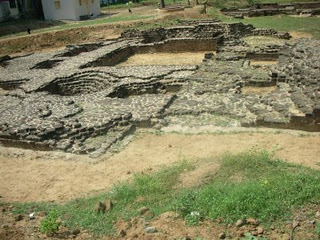
At Pattanam and Keezhadi (Keeladi), excavated walls, post-holes and roof tiles show parts of buildings; a Tamil poem adds huts but no plan.
Words & worldsEarly poems name Kuda as a place, Puzhi and Kutta as peoplesEarly Tamil poems use Kuṭanāṭu as a place-name but Puzhi and Kutta mainly as people's names; the neat three-province map comes later.
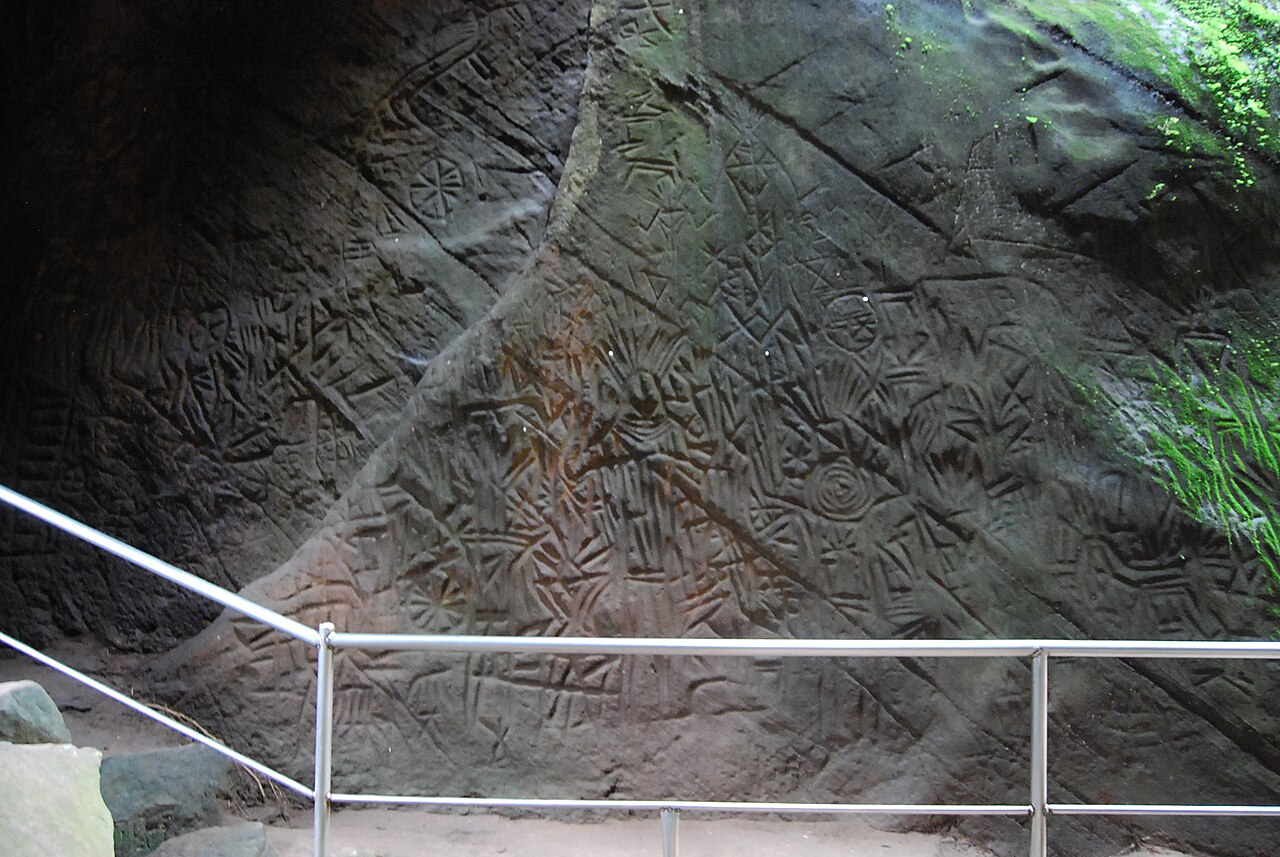 Words & worldsEdakkal's inscriptions are dated more securely than its rock art
Edakkal's carved figures cannot yet be dated directly, but its Tamil-Brahmi and Vattezhuthu (Vaṭṭeḻuttu / Vatteluttu) inscriptions date to about the third and fifth centuries CE.
Everyday livesEvening lamps in early Tamil poems, and how fuel is identifiedEarly Tamil poems show household, ritual, palace and camp lamps, but which fuel a lamp burned needs chemical evidence from the find itself.
Everyday livesEveryday food: the evidence shows ingredients and work, not menusPlant finds, a Greek sailing guide, two Tamil poems and an Egyptian letter show food as work and relationships; none gives a household menu.

Using Keeladi, Mangulam, a Sangam poem and the Muziris Papyrus, this study shows how to keep observation, source statement, interpretation and reconstruction apart.
Across the waterEyyal's 1945 hoard held Roman coins and punch-marked silverAn Eyyal jar found in 1945 reportedly held 117 coins: Roman gold and silver plus punch-marked silver. Its latest Roman coin dates to 98–99 CE.