001Catalogue page 1 of 12
Catalogue page 1.
Every title is a complete research study. Return to the study catalogue to inspect all 199 studies side by side.
The famous Tamil line 'every place is home; everyone is kin' opens a longer poem about fortune, death and how to treat others.
Across the waterA Tamil-inscribed stone links a Thai bead site to South IndiaAt Khuan Luk Pat in southern Thailand, a stone with a Tamil-Brahmi text shows a Tamil-language link; beads and gems show wider exchange.
Across the waterA medieval map copy labels a Temple of Augustus near MuzirisThe Peutinger Table shows a 'Templum Augusti' near Muziris, but the Pattanam reports checked do not identify such a temple.
Land & waterA route has three layers: places, carriers and ownersA Tamil poem's salt wagon shows a household and its supplies on the move, and a route's places, carriers and owners can change separately.
Everyday livesA wedding in Sangam poetry: Akananuru 136An early Tamil poem remembers a wedding through drums, new clothes, gathered relatives and a shared feast, as one husband recalls it.

Excavations at Adichanallur reveal varied burial forms, pottery, metal objects, plant remains and human remains. Together they show a cemetery used in different ways over time. Gold objects…
Land & waterAdiyamankottai: an early settlement, a twelfth-century rampartExcavations at Adiyamankottai found habitation from about 100 BCE, but its earthen rampart was probably built in the twelfth century CE.
Across the waterAdulis: an African port active in the same ocean trade as KeralaThe Periplus and Eritrean–Italian excavations show Adulis as an African port with its own anchorages, inland road, ruler and buyers.
At Adichanallur, Arikamedu and Pattanam, scattered collections, missing plans and late reports shape what the excavated finds can still show.
Land & waterAgaram and Manalur: no site dates in the excavation reports yetAgaram and Manalur expand the archaeological picture around Keezhadi (Keeladi), but the consulted record does not yet provide secure published dates for their contexts. At Agaram, ring-wells cut into…

Alagankulam's pottery and coins show links to north India and Roman Egypt, not a Roman colony, and do not show it was Madurai's main port.
Across the waterAlagarai: an Early Historic Kaveri pottery settlementSecondary syntheses assign Black-and-Red and Russet-Coated Painted wares to Alagarai's earliest period; the primary excavation reports were not read here.
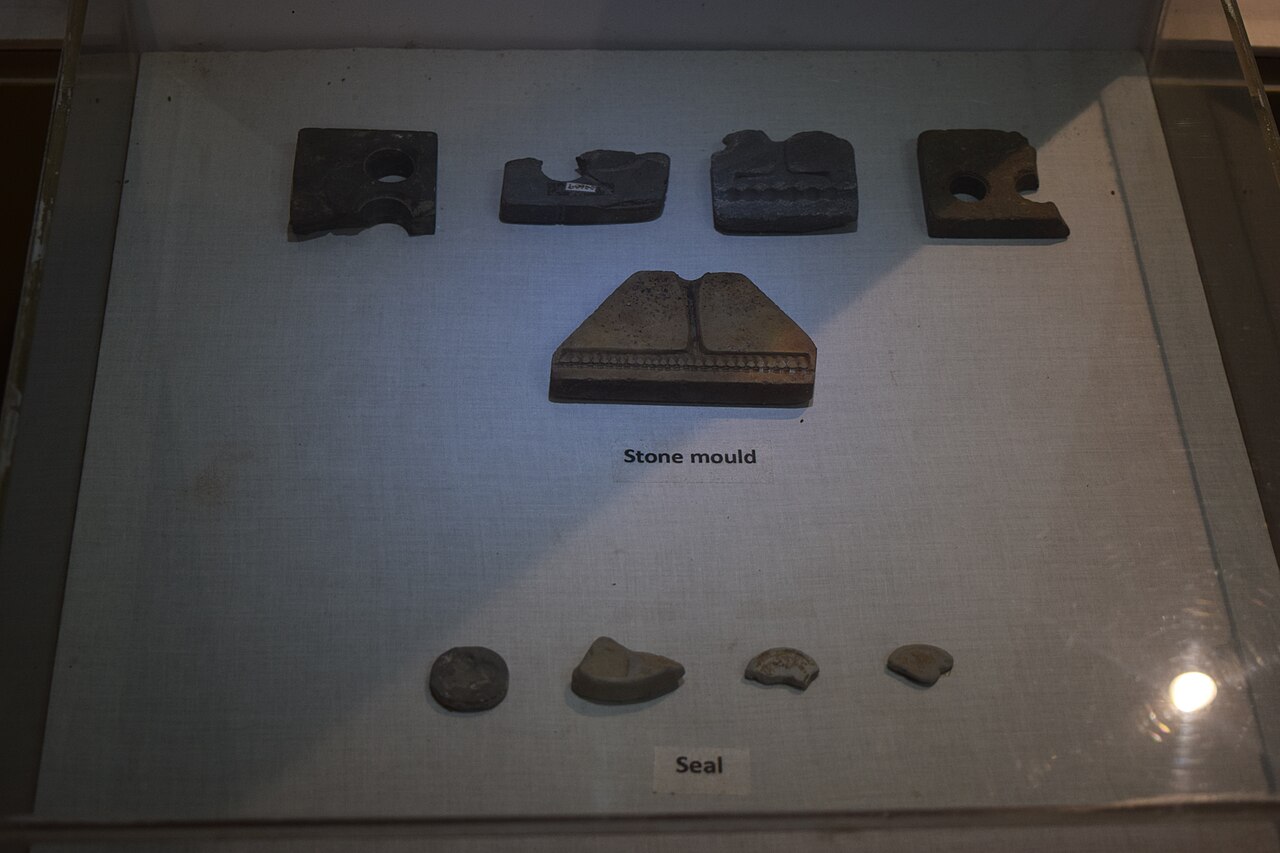 Belief & memoryAmulet and goddess labels on early objects go beyond the evidence
Testing objects from Pattanam, Molapalayam, Modur and Kodumanal, and an early Tamil poem, finds no object of the period securely shown to be protective.
Land & waterAnakkara: excavated burials in Kerala's Bharathapuzha valleyExcavations at Anakkara exposed different burial monuments, pottery, iron objects and fragmentary human bone, with older stone-tool traces nearby. The burial dates rely mainly on…
Across the waterAncient ship hulls and sails: what wrecks and Red Sea finds showWrecks, texts and Red Sea finds show how ancient hulls were joined and sails worked, but not what a Pattanam ship looked like.
Across the waterAncient ship rope and seam coatings: what each trace can showCord from Berenike and coatings from Mediterranean wrecks show what rope and residues can reveal about ships, and what they cannot.
Made by handAncient texts link Korkai with pearls, conch and Pandyan rulersTamil poems and Greco-Roman geographies tie Korkai to pearl fishing; excavation found an early settlement, but no harbour works or sign of a capital.
Everyday livesAnimal bones show livestock and wild game, not working animalsBones from Madurai-area rock shelters and Keezhadi, and an early Tamil poem, show livestock, wild game and fishing; working animals remain unconfirmed.