Places on the atlas that name this study.
- Everyday lives
- 200 BCE–300 CE
- 300–600 CE
- Korkai
Parathavar poems show fishers with a stake in salt, not pilots
Early Tamil poems show the Parathavar fishing, diving for conch at Korkai and holding a stake in salt; no source checked names them as pilots.
- This page
- 4,167 words · revision 8
Draft study · Awaiting specialist review · Updated
001Dates and places
Places on the atlas that name this study.
- Korkai
Protected TNSDA site museum & excavation zone
1000–500 BCE
Different beginnings
500–200 BCE
Marks & materials
200 BCE–300 CE
Connected worlds
300–600 CE
Change & continuity
After 600 CE
- TF-987 wood: 2680 ± 90 BP (5568-yr half-life, '730 BC') / 2755 ± 95 BP (5730-yr half-life); summarized on the official Korkai page as a 785 BCE charcoal result.
- Tamil-Brahmi material broadly 300 BCE–200 CE in the official Korkai summary.
- Official Pattanam project pages describe occupation from the 2nd century BCE to the 10th century CE.
- Conventionally mid-first century CE for the Periplus.
- Laboratory date
- Period assigned by excavators or scholars
- How it was dated is not stated
Each date belongs to what was dated (a sample, an object, a layer or a text), which is not always the event the study asks about.
Each period has the same width, so spacing is not to scale.
The full table of dates, with their ranges, is under How we know.
- 2 Well supported
- 1 Likely
- 1 Not known
002How sure
In brief
Classical Tamil poems repeatedly picture the Parathavar as marine fishers. They work from curved timil boats with nets and harpoon-like gear, and dry their catch on the sand. At Korkai, one poem shows them driving off sharks and diving for conch. Two poems tie them to coastal salt, but in Akanāṉūṟu 140 merchants called umaṇar sell the salt for paddy and cart it inland. Ainkurunuru 47–49, set in riverine farmland rather than on the coast, show a bard's wife (pāṇmakaḷ) bartering freshwater fish for pulses and year-old paddy at a farming household; the sellers are not Parathavar. The Periplus describes Muziris shipping and river shoals, and Pattanam has a wharf and a canoe. Neither names the Parathavar as pilots, lightermen or sailors. The dates of individual poems are unresolved, and critical editions of most passages were not checked.
Key researchers cited in this study: Iravatham Mahadevan (Tamil-Brāhmī Epigraphy) · Eva Wilden (Sangam Critical Editions & Manuscriptology) · Wilfred H. Schoff (Periplus Translation & Commentary) · Tamil Virtual Academy · Full bibliography
How sure
- Well supported
Early Tamil poems repeatedly picture the Parathavar as marine fishers.
Direct, repeated scenes in several anthologies.
- Well supported
At Korkai, Parathavar dive for conch in Akanāṉūṟu 350.
Named directly in the poem.
- Likely
Parathavar had a stake in coastal salt, while umaṇar merchants sold and carted it.
Rated moderate-high; two poems support it but leave exact tasks and ownership unclear.
- Not known
Parathavar worked as pilots, lightermen or ocean sailors at Kerala ports.
No checked early text, inscription or excavation names them in these jobs.
Why it matters
It separates the coastal jobs that early Tamil poems describe, so the Parathavar are not credited with work no source gives them.
003Key findings
What the study concludes
- Parathavar fishing is the strongest direct occupational finding.
- Korkai conch diving is a specific, well-attested literary activity.
- Salt evidence is real but documents an interdependent labour and exchange chain.
- Piloting and lighterage by Parathavar remain unestablished in the checked early sources.
- Kerala maritime context should not be converted into ethnic identification without direct evidence.
In the study’s own words. How sure each point is, is shown above.
The summary above is the short read. The full study is the complete text it was drawn from, with its tables and source notes.
What the full study covers
- Overview
- Scope, chronology, and source control
- Parathavar in fishing, conch diving, and coastal social life
- Salt production, merchants, and the danger of collapsing a supply chain
- Port logistics, Kerala evidence, and what remains unproven
- Disagreements, evidential risks, and conclusions
- What was not checked and bibliography
004The study
Overview
What do early sources establish about fishing, salt production and maritime labour communities?
This study examines a claim: that the Parathavar were the seafarers of Kerala, responsible for its coastal piloting, fishing and salt-making. That claim joins a people-name, several different jobs and a Kerala geography into one proposition. The checked evidence does not support that bundle intact.
After Akanāṉūṟu 140 (Tamil text from the Tamil Virtual Academy): salt made in coastal pans at a Parathavar settlement is carried inland by an umaṇar (salt merchant) family, whose daughter calls salt for paddy in equal measure. People, cart and landscape are illustrative; no historical route is mapped.
Akanāṉūṟu 140 places salt pans at a Parathavar settlement and an umaṇar family carrying salt inland; the scene draws on that reading.
Layers of the South editorial illustration
The strongest result is straightforward: selected Classical Tamil poems repeatedly name Parathavar in marine fishing scenes. They use timil craft, nets, piercing or harpoon-like gear, land and dry catches, and, at Korkai, dive for valampuri conch after dealing with sharks. Akanāṉūṟu 70, 300, 340 and 350, Naṟṟiṇai 175, and Kuṟuntokai 304 form a coherent cluster of direct occupational representations. ↗1 ↗2
Salt is also genuinely present, but the sources resist collapsing production, ownership, marketing, and transport into one community. Akanāṉūṟu 140 places salt made in coastal pans in a small Parathavar settlement while explicitly presenting an umaṇar merchant household selling/bartering the salt and moving it inland by cart. Akanāṉūṟu 366 more directly associates coastal Parathavar with white salt whose damage provokes conflict with paddy cultivators. Together these poems support Parathavar participation or stake in a salt-producing shore economy, while also showing named occupational differentiation. ↗3
By contrast, the reviewed early evidence does not directly identify Parathavar as professional pilots, lightermen, or transoceanic sailors. The Periplus of the Erythraean Sea describes large-scale overseas shipping, river-mouth shoals, and roadstead logistics on the southwest coast, and Pattanam archaeology supplies a wharf, bollards, and a canoe; neither source names Parathavar as the people performing those port jobs. The accessible Schoff wording of Periplus §§54–56 also does not itself say that cargo was transferred into small local boats, so “lighterage” should be treated as a possible logistical reconstruction rather than a direct statement of the consulted text. ↗4
| Test | Outcome | Evidential confidence |
|---|---|---|
| Parathavar as fishers | Repeatedly and directly represented in selected Tamil poems | High for the literary association |
| Parathavar and salt | Supported, but roles are differentiated; umaṇar are explicit merchants/distributors in Akanāṉūṟu 140 | Moderate-high |
| Parathavar as conch divers | Directly represented at Korkai in Akanāṉūṟu 350 | High for that passage |
| Parathavar as pilots/lightermen | Not directly established in the reviewed early sources | Not found in the sources read |
| Parathavar as ocean sailors in Kerala | Not established; Kerala evidence shows ports and shipping without that community identification | Not found in the sources read |
| Seafarer dedications or vows | No checked Parathavar dedication/vow from the target region was located | Not found in the sources read; further epigraphic checks remain |
The most defensible public framing is therefore not a story of one hereditary “seafaring caste” performing every coastal task across Kerala and Tamilakam. It is a source-led account of several coastal labour specializations, in which Parathavar are strongly visible in fishing and some salt-related scenes, while merchants, other shoreline groups, unnamed port workers, and overseas ship crews occupy different evidential positions.
Scope, chronology, and source control
This study covers 1000 BCE–600 CE, but that window is not a license to assign precise dates to undated literary scenes. The selected Tamil poems are treated here as core-window early-historic evidence with poem-level chronology unresolved. Their surviving textual transmission is much later than the social worlds they represent. The EFEO description of Eva Wilden’s 2018 critical edition of Akanāṉūṟu 1–120 states that it was constituted from eight surviving manuscripts, five described as fairly old palm-leaf copies, plus quotations in the grammatical tradition; this is exactly why composition, redaction, manuscript witness, modern edition, and represented event must remain separate. ↗5
For the Tamil passages, this study read selected Tamil Virtual Academy text pages, not full critical editions. Wilden’s published critical edition was identified at publisher level for Akanāṉūṟu 1–120, which includes poem 70 but not the later Akanāṉūṟu passages used heavily here. EFEO also lists critical editions and annotated translations of Naṟṟiṇai (2008) and Kuṟuntokai (2010), with their full texts not yet checked directly. Consequently, English renderings below are analytical paraphrases of the Tamil, not certified philological translations. ↗6
The chronology lanes are therefore deliberately mixed:
| Evidence | Period | What is usable here | What is not licensed |
|---|---|---|---|
| Selected Akanāṉūṟu, Naṟṟiṇai, Kuṟuntokai, Puṟanāṉūṟu poems | Core-period literary evidence; individual poem dates unresolved | Named groups, craft vocabulary, represented work and social distinctions | Exact year, unchanged institutions, direct demographic statistics |
| Periplus Maris Erythraei | Core period, conventionally mid-first century CE | Southwest-coast port, river, roadstead and overseas-shipping description | Naming local Parathavar workers where the text does not do so ↗7 |
| Korkai archaeology | Core-period context in the official summary, including Tamil-Brahmi material broadly 300 BCE–200 CE | Independent evidence that Korkai was an early-historic port/pearl-fishery context | Archaeological identification of excavated workers as Parathavar; exact chronological tie between deep wood sample TF-987 (2680 ± 90 BP in TIFR 1971; summarized on the state page as 785 BCE charcoal) and later port activity ↗8 |
| Pattanam archaeology | Mixed: official project pages describe occupation from 2nd century BCE to 10th century CE | Wharf/canoe and long-lived maritime-settlement context | Treating all centuries as one phase, or equating Pattanam with Muziris as a certainty, or naming Parathavar users of the waterfront ↗9 |
| Modern critical editions and digital portals | Later reception/transmission | Textual control, manuscript history, access to passages | Dating represented ancient events by modern publication date |
Cilappatikāram was also checked as a possible primary source. The accessible Tamil Virtual Academy edition and table of contents were identified, and a preliminary index check did not identify a dedicated Parathavar, umaṇar, or thōṇi passage, though the full epic and its commentaries were not checked systematically; Cilappatikāram is therefore not used as load-bearing evidence in this study. ↗10
Three admissible alternatives guided the analysis. First, Parathavar may function as a social or political group-name in some passages rather than a job title. Second, coastal economic chains can divide production, processing, marketing, transport, and navigation among different people. Third, a port installation can prove that maritime labour existed without telling us the community identity of the workers. The evidence below is stronger when those alternatives are kept open.
Parathavar in fishing, conch diving, and coastal social life
Akanāṉūṟu 70 is among the cleanest fishing attestations. Its opening scene names “Parathavar” in a curved timil, describes a successful catch from a fine/small-meshed net, and moves to division of ayilai fish. The occupational inference does not depend on a later caste history: fishing is inside the poem’s own scene. Akanāṉūṟu 300 likewise describes Parathavar bringing in a net catch and spreading it over fine sand to dry, adding a post-capture processing stage to the evidence. ↗11
Naṟṟiṇai 175 broadens the same cluster. The passage depicts Parathavar returning from the “long sea” in curved timil, heaping a rich fish catch on the sand, within a settlement scene that also mentions a small lamp associated with fish oil. That lamp is useful evidence for fish-derived fuel in a coastal domestic/work setting; it is not, without additional wording, evidence for a navigational beacon or a seafarers’ ritual. ↗12
Pearl-oyster shell specimen (Pinctada imbricata fucata, Naturalis Biodiversity Center)
The gear is not merely generic “fishing.” Kuṟuntokai 304 depicts Parathavar throwing an eṟi-uḷi, a piercing or harpoon-like implement, from a curved timil at a large fish. Akanāṉūṟu 340 likewise places a sharp uḷi, a shark, a long net, and Parathavar in the same marine work scene. The exact lexical force of ellut-tozhil in poem 340 was not resolved against a critical apparatus here, so this study does not build a claim about a precise time-of-day shift or specialized “night-fishing guild” from that phrase. ↗13
Akanāṉūṟu 350 is more specialized still. At Korkai, Parathavar in large timil are described as driving off sharks and diving for valampuri conch; their return is marked by sounding conches. This is direct literary evidence for a hazardous underwater-harvesting activity associated with the group at a named port. It is more precise than a generalized label such as “seafarer,” because it tells us what the workers are represented as doing. ↗14
The term itself, however, cannot safely be reduced to “fisherman.” Puṟanāṉūṟu 378 praises a ruler in a context that includes the strength of the “southern Parathavar” being subdued; the passage is political-military, not an occupational vignette. Puṟanāṉūṟu 24, meanwhile, places sturdy-timil Parathavar in a coastal work-and-leisure scene. Taken together, the corpus shows a group label that can be embedded in fishing life but can also operate in political discourse. ↗15
That distinction matters for historical identity. Repeated poetic association makes it reasonable to say that Parathavar were strongly imagined and remembered as coastal fishing people in these early Tamil texts. It does not establish that every person called Parathavar had one occupation, that the label had an unchanged legal or caste meaning over centuries, or that every later community bearing a similar name is automatically identical with the people in these poems.
The boat vocabulary needs the same restraint. The consulted poems repeatedly use timil in Parathavar fishing and conch-diving contexts. That is evidence for a named craft in the literary scenes. It is not evidence that timil can simply be replaced with “thony,” nor that anyone operating a timil was a professional pilot. Craft identity, hull form, job title, and modern vernacular equivalence are four separate questions; this study verified only the first at the level of the cited passages. ↗16
Salt production, merchants, and the danger of collapsing a supply chain
Akanāṉūṟu 140 is the key passage for separating salt roles. It begins with Parathavar of a small settlement engaged in sea-oriented life and places “white stone/crystalline salt” in coastal kaḻi salt-pan fields described as made without ploughing. The poem then shifts actor: the young woman calling out the exchange value of salt for paddy is the beloved daughter of an umaṇar merchant, and her father’s cart is part of an inland journey. The scene therefore links a Parathavar coastal settlement to salt production while explicitly naming an umaṇar family in marketing, barter, and transport. ↗17
That distinction corrects a common shortcut. From this poem alone it would be too strong to say “Parathavar made, owned, sold, and transported all the salt.” The source supports a coastal production setting associated with them; it separately supports umaṇar commercial distribution. The equal-measure salt-for-paddy cry also places salt within exchange between ecological zones, but the poem is a literary scene, not a price ledger or legal document. ↗17
Akanāṉūṟu 366 gives an independent kind of salt association. Wind-driven material from an agricultural threshing scene damages the white salt of Parathavar at the cool shore, provoking a quarrel with paddy cultivators in muddy fields; older men intervene, and nuḷaiyar appear in the reconciliation scene. Whatever the precise property regime, the Parathavar are represented as having enough direct stake in the salt for its damage to trigger collective conflict. That is stronger evidence for a Parathavar salt interest than a merely adjacent landscape description, while still falling short of proving a single hereditary “salt-maker caste.” ↗18
| Economic step | Directly named actor in the consulted source | What the source supports |
|---|---|---|
| Marine fishing and catch handling | Parathavar | Repeated direct literary association ↗11 |
| Conch diving at Korkai | Parathavar | Direct named activity in Akanāṉūṟu 350 ↗14 |
| Salt-pan production setting | Parathavar settlement in Akanāṉūṟu 140; Parathavar salt interest in 366 | Participation/stake in coastal salt economy, with exact task/ownership not always specified ↗19 |
| Salt barter and inland cart distribution | Umaṇar household in Akanāṉūṟu 140 | Explicit merchant/distributor role ↗17 |
| Coastal social mediation | Elders; nuḷaiyar in Akanāṉūṟu 366 | More than one named shoreline social group is present ↗20 |
There is a promising epigraphic lead, but it is not yet safe to promote into the evidential core. A derivative Alagarmalai inscription page gives a reading upu-vāṇikaṉ viyakaṉ and interprets the donor as a salt merchant; Iravatham Mahadevan’s Early Tamil Epigraphy is the authoritative reference; its revised second-edition metadata are verified, while the entry, plate, and palaeographic argument were not checked directly. Accordingly, the salt-merchant inscription remains a candidate for independent corroboration, not a checked foundation for this study. ↗21
The historical payoff of role separation is substantial. It allows the poems to document a differentiated coastal economy rather than making one ethnonym absorb every occupation. It also leaves room for gendered work – Akanāṉūṟu 140 places a merchant’s daughter in the act of calling the barter – without turning a literary speaker into a statistical statement about all salt commerce. The source is most useful when treated as a scene of interdependent work rather than a caste charter.
Ainkurunuru 47–49 – which belong to the Marutam (riverine farmland) hundred by Ōrampōkiyār rather than to the coast – show a bard’s wife (pāṇmakaḷ) bartering freshwater fish (keṭiṟu catfish in poem 47, varāl murrel in poem 48) for pulses (poem 47) and year-old white paddy (poem 48) at a prosperous farming household; the sellers are not Parathavar. In Vaidehi Herbert’s translation, the scene forms part of the heroine’s reproach of a returning lover. ↗35 Exchange is present in these poems, but they give no stable rate: “a few fish” and “much paddy” in poem 49 are not standard quantities from which to calculate a price, and modern fish-species glosses and implied exchange ratios are not measured data. Nor do the passages prove that all transactions lacked coins. Their value is narrower: as with the umaṇar daughter in Akanāṉūṟu 140, women and household provisioning appear as participants in the movement of goods. “Salt was made on the coast and carted inland in early South India” and “Pattinappalai shows a taxed, busy port, not a customs bureau” discuss other salt-for-paddy scenes, and “Kerala's Roman coin hoards show inland movement, not motive” treats coins as a separate scale of exchange.
Port logistics, Kerala evidence, and what remains unproven
The Periplus of the Erythraean Sea supplies the most important non-Tamil textual context for southwest-coast maritime logistics. In Schoff’s translation, §54 says Muziris had ships arriving with cargoes from Arabia and Greek-speaking traders and locates Nelcynda on a river; §55 places Bacare at that river’s mouth and says vessels used its roadstead because the river had shoals and unclear channels; §56 emphasizes the scale of shipping associated with pepper and other trade. This is powerful evidence for ocean-connected port systems and difficult local navigation. ↗22
It is nevertheless a mistake to turn that description automatically into “Parathavar lightermen.” The consulted text does not name Parathavar at all. It does not name a local pilot profession. And in the Schoff wording actually checked, it does not explicitly state that cargo was transferred from ocean-going ships into small indigenous boats. A historian may reasonably model transshipment as one solution to shoals and river access, but that would be an inference about logistics, not a quotation-level fact from §§54–56. This study therefore keeps “described port conditions,” “inferred lighterage,” and “identified lightermen” in separate boxes. ↗23
Pattanam adds archaeological weight to the existence of local waterfront handling. The Kerala Tourism / Muziris Heritage Project public overview (drawing on KCHR's 2007 and 2011 interim excavation reports, named in the bibliography below; full report pages were not checked here) reports a wharf with bollards and a roughly six-metre wooden dugout canoe lying parallel to it about 2.5 metres below the surface, alongside a long settlement sequence summarized from the 2nd century BCE to the 10th century CE. A second project page says 61 trenches represent only about one percent of the archaeological mound and presents Pattanam’s identification with ancient Muziris as a possibility, not a demonstrated identity. These are significant material traces of waterfront life, but they do not name the canoe users, wharf workers, pilots, stevedores, or merchants as Parathavar. ↗9
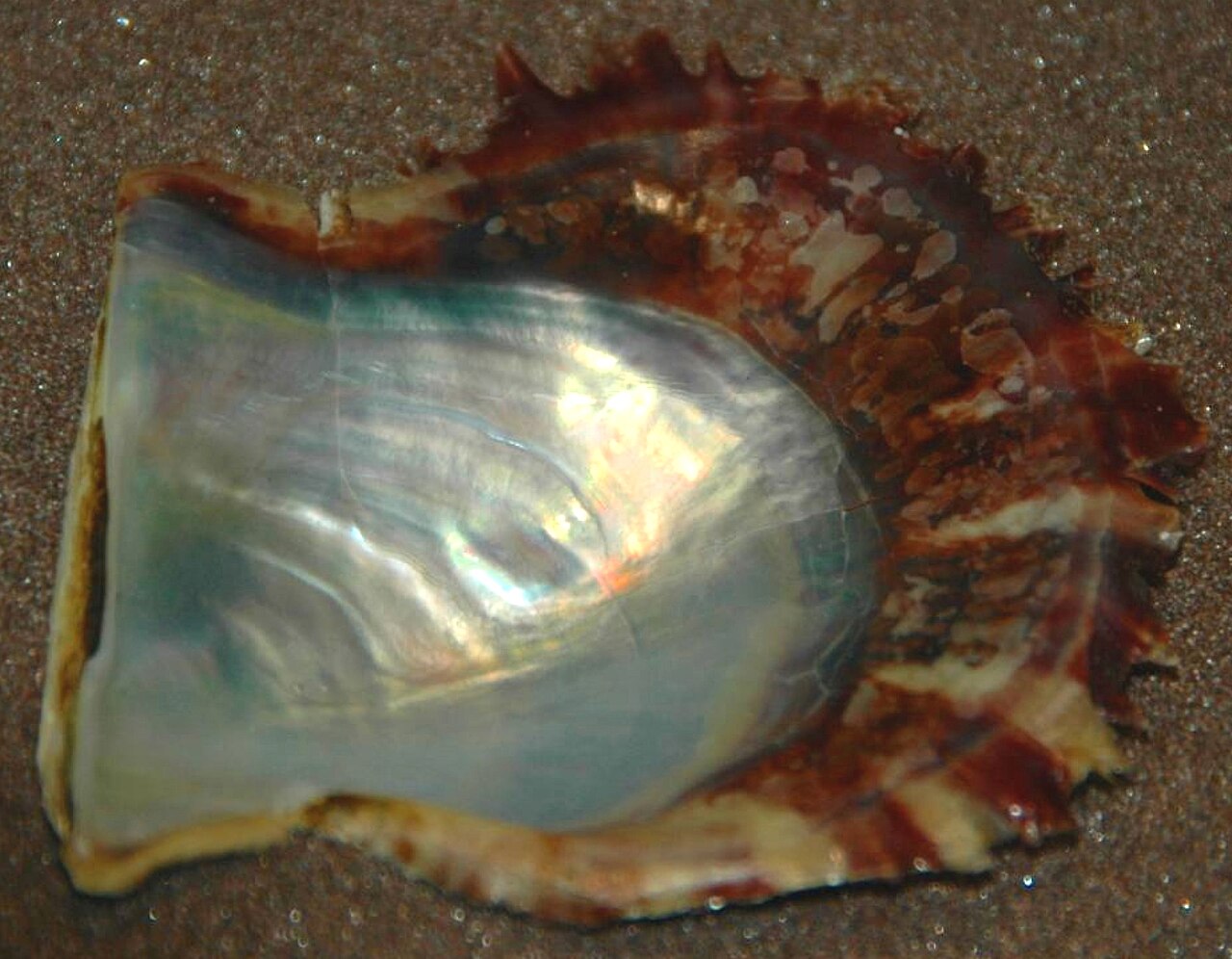
Pinctada fucata (Japanese pearl oyster) (Japan) – Modern pearl-oyster identification, not archaeological shell or proof of a particular ancient fishing ground
Photographed 2016-12-05
Korkai produces the inverse evidential pattern: the literature names Parathavar in a specialized marine activity, while archaeology independently establishes an early-historic port setting. The Tamil Nadu Department of Archaeology page describes Korkai as an ancient port and pearl-fishery centre and reports Tamil-Brahmi sherds broadly dated 300 BCE–200 CE. Its page also summarizes a charcoal result assigned to 785 BCE, whereas the primary Tata Institute date list (Agrawal, Gupta and Kusumgar 1971, Radiocarbon 13(2): 447) identifies Korkai sample TF-987 as wood from locus KRK-1, trench 0-I, layer 5 (3.17 m) at 2680 ± 90 BP (5568-year half-life; 2755 ± 95 BP on the 5730-year half-life). Because no published trench section links that deep wood specimen to specific harbour or fishing contexts, the date is recorded here as background sample analysis and not used to date Parathavar fishing, the port’s foundation, or a specific occupational phase. ↗8
This asymmetry is central to the Kerala part of the bundled claim. The reviewed Kerala evidence is excellent for showing a maritime world: river mouths, overseas ships, wharves, canoes, imported ceramics, and long-lived port settlement. The reviewed Parathavar evidence is strongest in the Old Tamil literary corpus and is explicitly tied to Korkai in Akanāṉūṟu 350. The two datasets belong in the same regional history, but they cannot be fused by assuming that the unnamed workers at Kerala ports were Parathavar. ↗24
The specific phrase “thony piloting” is therefore not supported by the checked early evidence. The poems attest timil craft in fishing contexts; the Periplus attests navigation problems and port access; Pattanam attests a canoe and wharf. None of those observations, alone or together, supplies the missing identity statement “Parathavar were the pilots/lightermen.” A future inscription, explicit literary passage, occupational title, or securely contextualized donor record could change that result.
The same rule governs seafarer dedications and vows. No consulted Tamilakam or Kerala source yielded a Parathavar sailor dedication or vow. Sri Lanka is a demonstrably connected region with an early-Brāhmī inscription corpus; the Sri Lankan Department of Archaeology’s metadata for Paranavitana’s Inscriptions of Ceylon I confirms that the volume covers cave inscriptions from the 3rd century BCE to the 1st century CE. The individual nāvika entries were not checked directly, so this study does not import them as ritual proof, does not quote them as checked evidence, and does not use them to supply a missing Parathavar practice. ↗25
Disagreements, evidential risks, and conclusions
The main disagreement is not whether the early Tamil poems contain coastal work – they plainly do – but how much social history may be built from them. One maximal reading treats repeated Parathavar fishing scenes as proof of a stable, bounded, hereditary community whose later occupational profile can be projected backward and whose members can be assumed to staff early Kerala ports. A more conservative reading treats each occurrence as evidence for how a named group is represented in a particular genre and place, then asks separately whether inscriptions, archaeology, or later documentation demonstrate continuity. The checked evidence strongly favours the second method because Puṟanāṉūṟu 378 already shows the label operating in a political-military register, and because Kerala port evidence lacks the community name. ↗26
A second disagreement concerns port logistics. Shoals, roadsteads, canoes, and wharves make local boat handling and transshipment entirely plausible in a physical sense. But “plausible or necessary work” is not the same evidential proposition as “this named group did that work.” The discriminating evidence would be an explicit occupational term in a contemporaneous text or inscription, a donor label tied to the work, a well-contextualized administrative document, or a chain of archaeological and textual evidence that identifies a particular labour organization. In their absence, modelling can explain how a port functioned but cannot identify the workers by ethnonym. ↗27
The interpretive risk/benefit balance is:
| Interpretive move | Benefit | Risk | Decision here |
|---|---|---|---|
| Treat repeated Parathavar fishing scenes as a real historical association | Preserves strong direct evidence | Literary convention could be mistaken for a census | Use, with genre qualification |
| Treat Akanāṉūṟu 140 and 366 as evidence for Parathavar involvement in salt economy | Recovers an important non-fishing role | Can erase umaṇar merchants and overstate ownership/task identity | Use, with role separation |
| Equate timil with “thony” and boat use with piloting | Produces an easy modern narrative | Lexical and occupational conflation | Do not use without new evidence |
| Infer lighterage from shoals/wharf/canoe | Helps reconstruct port mechanics | Inference may be misreported as textual fact or ethnic identification | Present only as a possible model |
| Identify Pattanam/Muziris workers as Parathavar | Creates a Kerala-focused community story | No checked identity evidence | Do not use |
| Import Sri Lankan sailor dedications as Parathavar ritual | Adds attractive maritime-religious material | Cross-regional and identity substitution; primary entries not yet checked | Do not use |
The core conclusion is thus narrower than the bundled claim but historically richer. Fishing is well attested for Parathavar in the selected Tamil poems. Conch diving is specifically attested at Korkai. Salt is also associated with Parathavar, but the poems expose a differentiated chain in which umaṇar are explicit merchants and transporters and other shoreline groups appear in social mediation. Piloting, lighterage, and open-ocean sailing by Parathavar are not directly established in the evidence reviewed. Kerala’s early maritime infrastructure and overseas connectivity are strongly relevant context, but they do not supply the missing Parathavar identification.
What was not checked and bibliography
The highest-value remaining source work is tightly bounded. First, inspect a critical edition and apparatus for Akanāṉūṟu 140, 300, 340, 350, and 366, comparing the occupational vocabulary and any consequential variants. Second, inspect Mahadevan’s authoritative entry and plate for the Alagarmalai salt-merchant inscription before using it as independent epigraphic confirmation. Third, inspect the actual early-Brāhmī nāvika donor entries in Paranavitana rather than relying on discovery-level references; these should remain a Sri Lankan comparison, not evidence for Parathavar. Fourth, obtain published Korkai trench sections clarifying how KRK-1 layer 5 (TIFR wood sample TF-987, 2680 ± 90 BP) relates to the Early Historic port levels. Fifth, run a critical-corpus lexical search for pilotage, ferrying, transshipment, ship-handling, and local cargo craft, not merely for modern “thony” vocabulary. These targets would discriminate directly between the current negative conclusions and a stronger future claim.
Tamil Virtual Academy, Akanāṉūṟu, selected digital text pages. Poem 70: https://www.tamilvu.org/ta/library-l1270-html-l12705f4-125815; poem 140 in the 131–140 page: https://www.tamilvu.org/en/node/71746; poem 300: https://www.tamilvu.org/library/l1270/html/l12705o0.htm; poem 350: https://www.tamilvu.org/ta/library-l1270-html-l1270269-125414; poem 366: https://www.tamilvu.org/library/l1270/html/l1270c11.htm. Selected pages read in Tamil. ↗28
Wilden, Eva. 2018. A Critical Edition and an Annotated Translation of the Akanāṉūṟu (Part 1 – Kaḷiṟṟiyāṉainirai). 3 vols., Collection Indologie 134. EFEO / Institut français de Pondichéry. ISBN 9782855392257. Publisher record: https://publications.efeo.fr/en/livres/908_a-critical-edition-and-an-annotated-translation-of-the-akan-u-part-1-ka-i-iy-ainirai. Publisher metadata and abstract consulted; full book not yet checked. ↗5
Wilden, Eva. 2008. Naṟṟiṇai: a critical edition and an annotated translation of the Naṟṟiṇai. EFEO / Tamilmann Patippakam. ISBN 9782855396729. https://publications.efeo.fr/en/livres/637_na-i-ai-a-critical-edition-and-an-annotated-translation-of-the-na-i-ai. Metadata read. ↗29
Salt workers of Marakkanam – Modern salt-production landscape
Photographed 2019-05-27
Wilden, Eva. 2010. Kuṟuntokai: a critical edition and an annotated translation of the Kuṟuntokai. EFEO / Tamilmann Patippakam. ISBN 9782855391069. https://publications.efeo.fr/en/livres/636_ku-untokai-a-critical-edition-and-an-annotated-translation-of-the-ku-untokai. Metadata read. ↗30
Tamil Virtual Academy, Puṟanāṉūṟu, selected poems 24 and 378. https://www.tamilvu.org/ta/library-l1280-html-l12803e9-127021; https://www.tamilvu.org/ta/library-l1280-html-l12806l2-127359. Selected Tamil text read. ↗31
Anonymous. Periplus Maris Erythraei / The Periplus of the Erythraean Sea, §§54–56. Wilfred H. Schoff, trans./ed., 1912; Fordham Internet History Sourcebooks reproduction: https://sourcebooks.web.fordham.edu/ancient/periplus.asp. Sections 54–56 read; Greek and a modern critical translation were not collated. ↗23
Kerala Tourism / Muziris Heritage Project public overview (https://www.keralatourism.org/muziris/muziris-project/excavations), summarising Pattanam waterfront finds; for the primary interim reports (not read in full for this study), see P. J. Cherian, V. Selvakumar, and K. P. Shajan (2007) and P. J. Cherian et al., Pattanam Archaeological Research: Fifth Season Field Report (Thiruvananthapuram: KCHR, 2011). ↗9
Tamil Nadu Department of Archaeology. “Korkai.” https://www.tnarch.gov.in/korkai. Departmental summary consulted; underlying excavation and laboratory reports were not checked directly. ↗32
Mahadevan, Iravatham. 2014. Early Tamil Epigraphy: From the Earliest Times to the Sixth Century C.E. Revised and enlarged 2nd ed. Central Institute of Classical Tamil. ISBN 9789381744147. Metadata record: https://openlibrary.org/books/OL44265878M/Early_Tamil_epigraphy. Bibliographic metadata verified; the Alagarmalai entry was not checked directly. ↗33
Paranavitana, Senarat. 1970. Inscriptions of Ceylon, Volume I: Containing Cave Inscriptions from 3rd Century B.C. to 1st Century A.C. and Other Inscriptions in the Early Brāhmī Script. Department of Archaeology, Ceylon. Official publication record: https://archaeostore.archaeology.lk/product/inscriptions-of-ceylon-volume-i-early-brahmi-inscriptions-senarat-paranavitana/. Metadata verified; individual sailor/nāvika entries were not checked directly. ↗25
Tamil Virtual Academy, Cilappatikāram. Digital edition with N. M. Venkatasami Nattar commentary: https://www.tamilvu.org/ta/library-l3100-html-l3100uv1-132375; contents page: https://www.tamilvu.org/en/node/74974. Only a preliminary index check was made, so no absence claim is made. ↗34
Orampokiyar; translation and notes by Vaidehi Herbert (ancient poems; modern online translation). Ainkurunuru 47–49: fish, grain and reproach. https://sangamtranslationsbyvaidehi.com/ettuthokai-ainkurunuru/. Tamil text, English translations and notes for poems 47–49 read. Descriptions of exchange occur inside relationship poems. Modern fish-species glosses and implied exchange ratios are not accepted as measured historical data. ↗35
005Photographs
Photographs of the places and objects this study discusses. Each item carries its creator’s credit, licence and documented source. See all 412 photographs and source images ↗
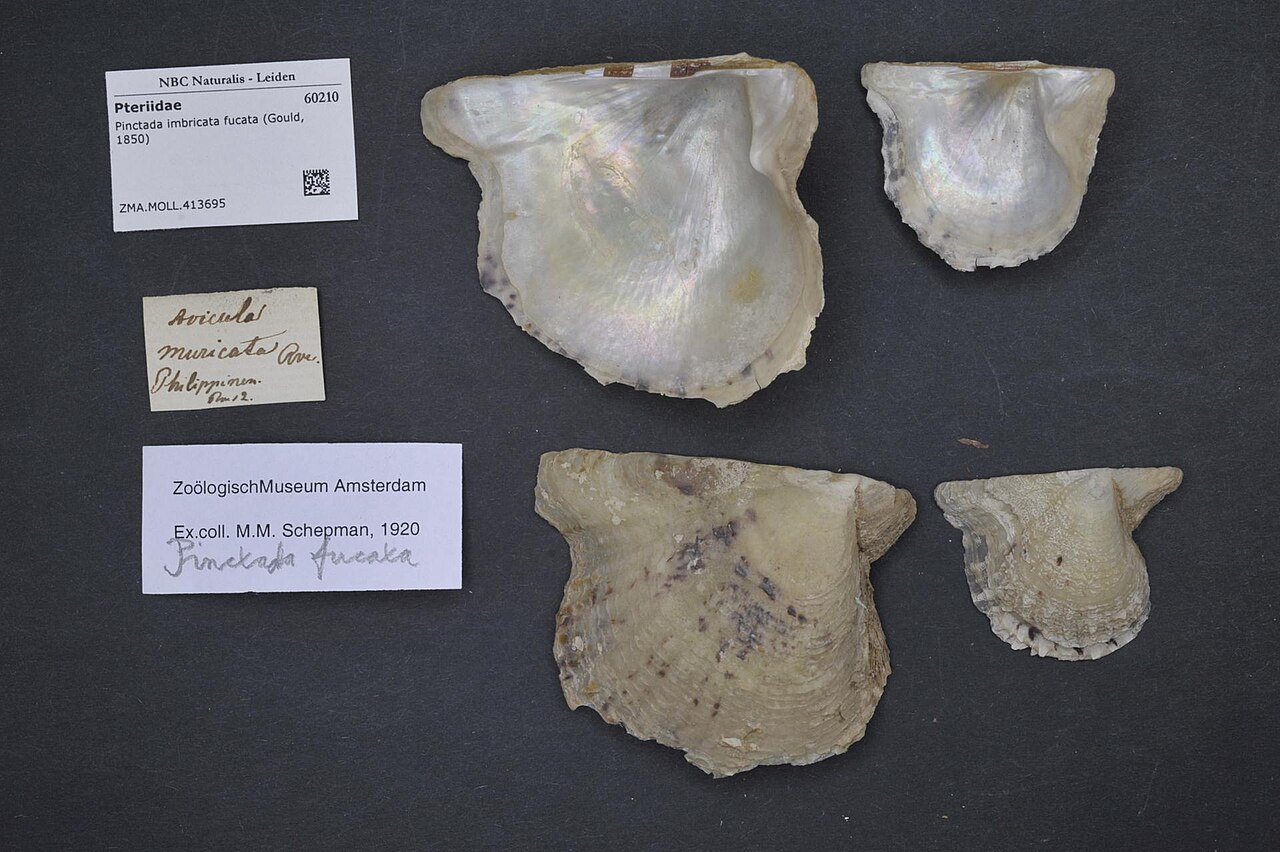
Pearl-oyster shell specimen (Pinctada imbricata fucata, Naturalis Biodiversity Center)
Naturalis Biodiversity Center - ZMA.MOLL.413695 - Pinctada imbricata fucata (Gould, 1850) - Pteriidae - Mollusc shell. Modern pearl-oyster identification, not archaeological shell or proof of a particular ancient fishing ground.
Photographed 2016-12-05
Pinctada fucata (Japanese pearl oyster) (Japan) – Modern pearl-oyster identification, not archaeological shell or proof of a particular ancient fishing ground
Pinctada fucata (Japanese pearl oyster) (Japan). Modern pearl-oyster identification, not archaeological shell or proof of a particular ancient fishing ground.

Photographed 2019-05-27 10:57:25
Salt workers of Marakkanam – Modern salt-production landscape
Salt workers of Marakkanam. Modern salt-production landscape; not an ancient saltworks excavation.
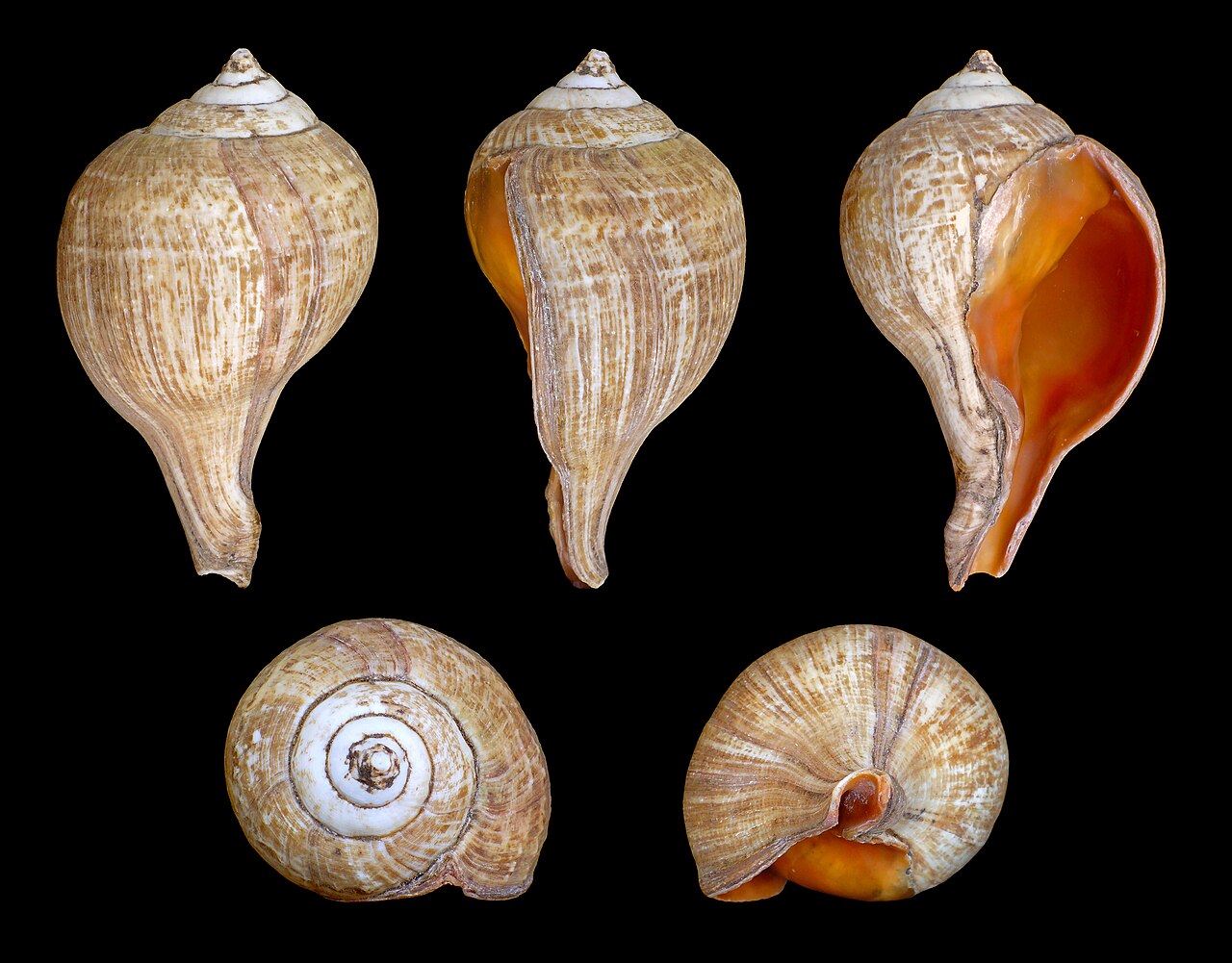
Photographed 2010-11-25
Turbinella pyrum 01 – Modern biological reference specimen of chank shell
Turbinella pyrum 01. Modern biological reference specimen of chank shell; distinguish it from excavated worked shell.
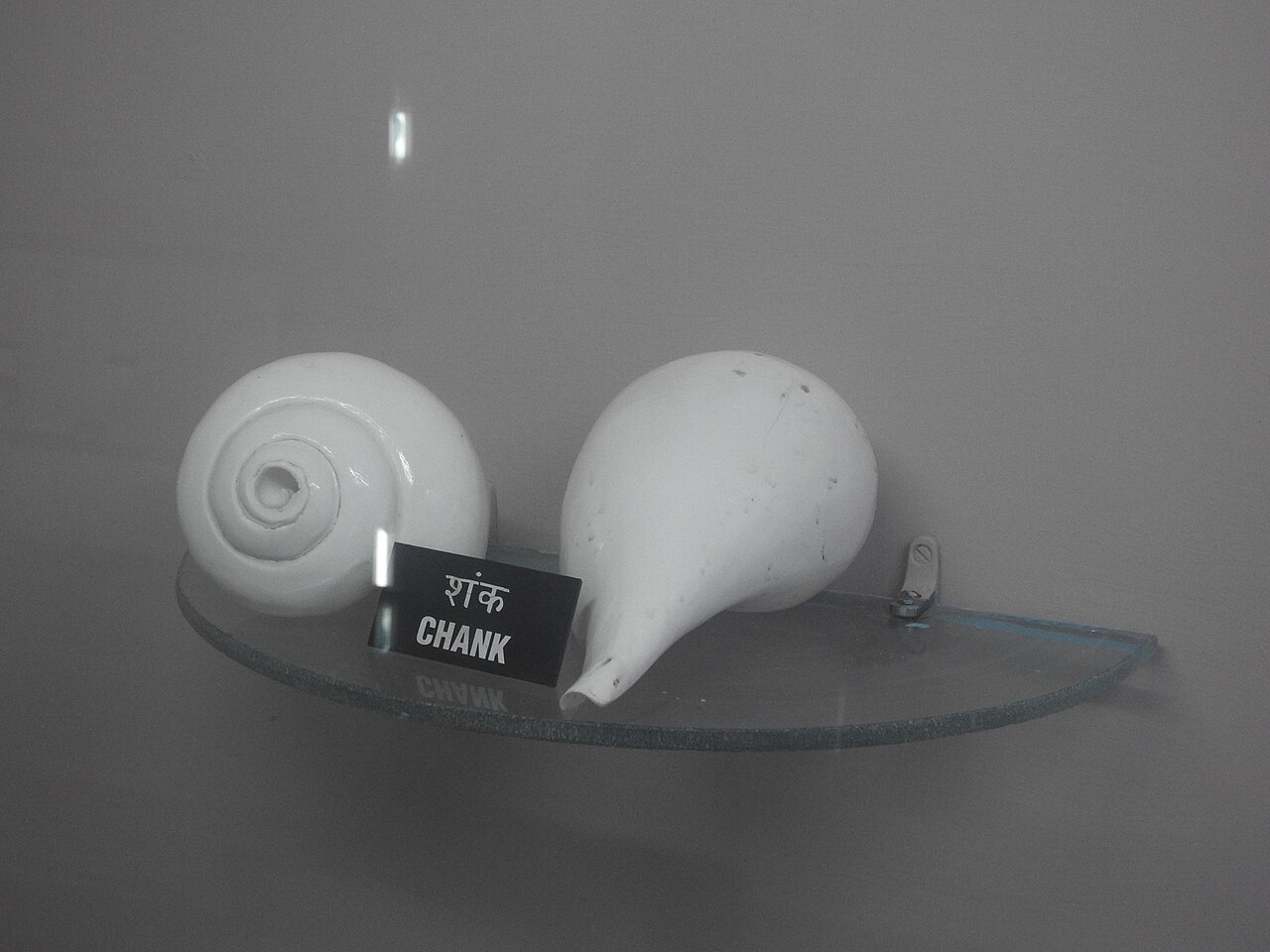
Photographed 2022-02-19 15:04:45
Sacred chank shell specimen (Turbinella pyrum, modern biological reference)
A modern chank-shell specimen (Turbinella pyrum), shown as a biological reference rather than an excavated worked-shell object. Includes source, credit and reuse information.
Photographed 2015-10-03 11:48:12
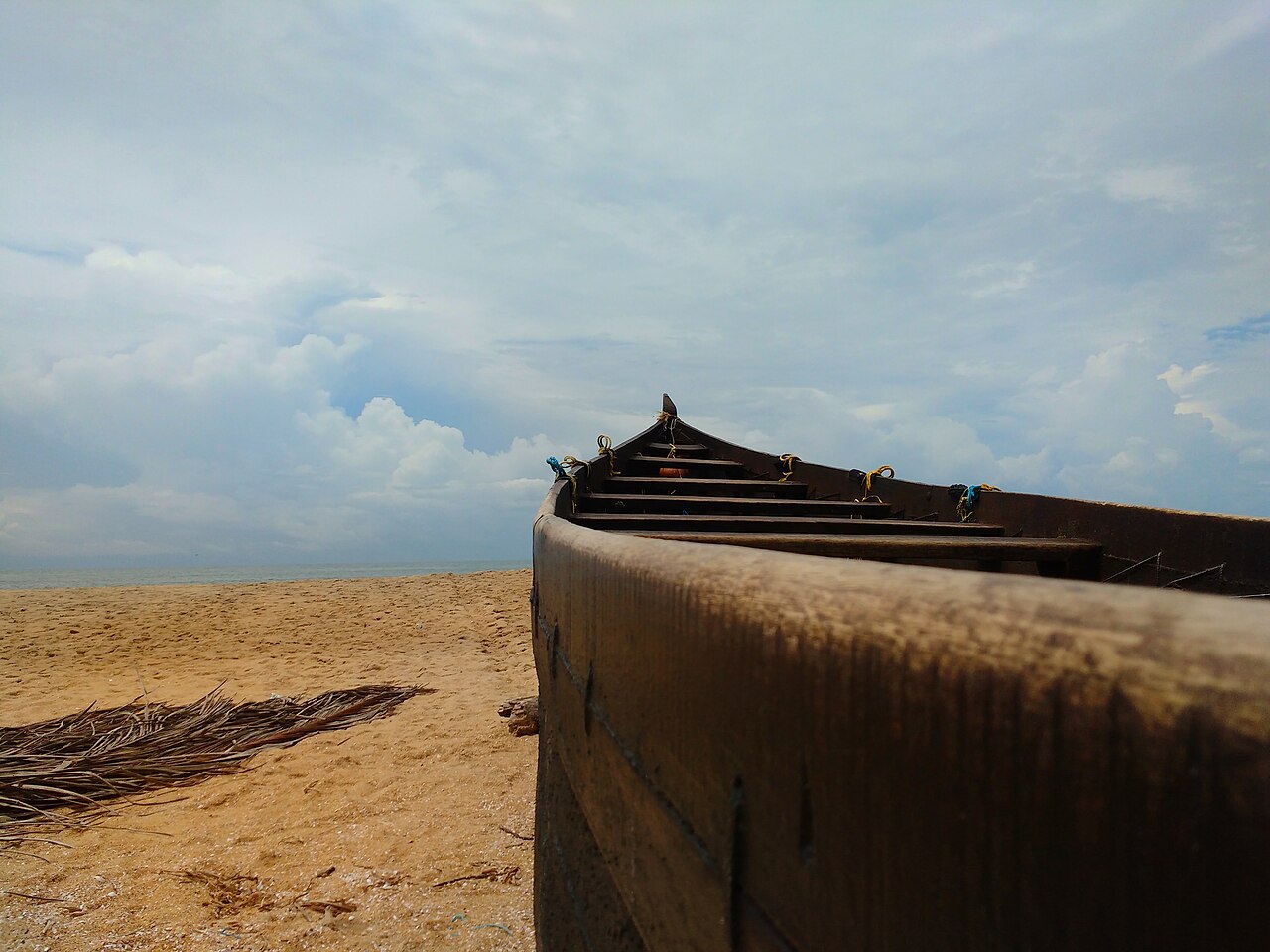
Traditional boat of kerala – Modern coast/fishing scene, for landscape comparison
Traditional boat of kerala. Modern coast/fishing scene, for landscape comparison; people and craft are modern.
Photographed 2012-06-07 11:31:25
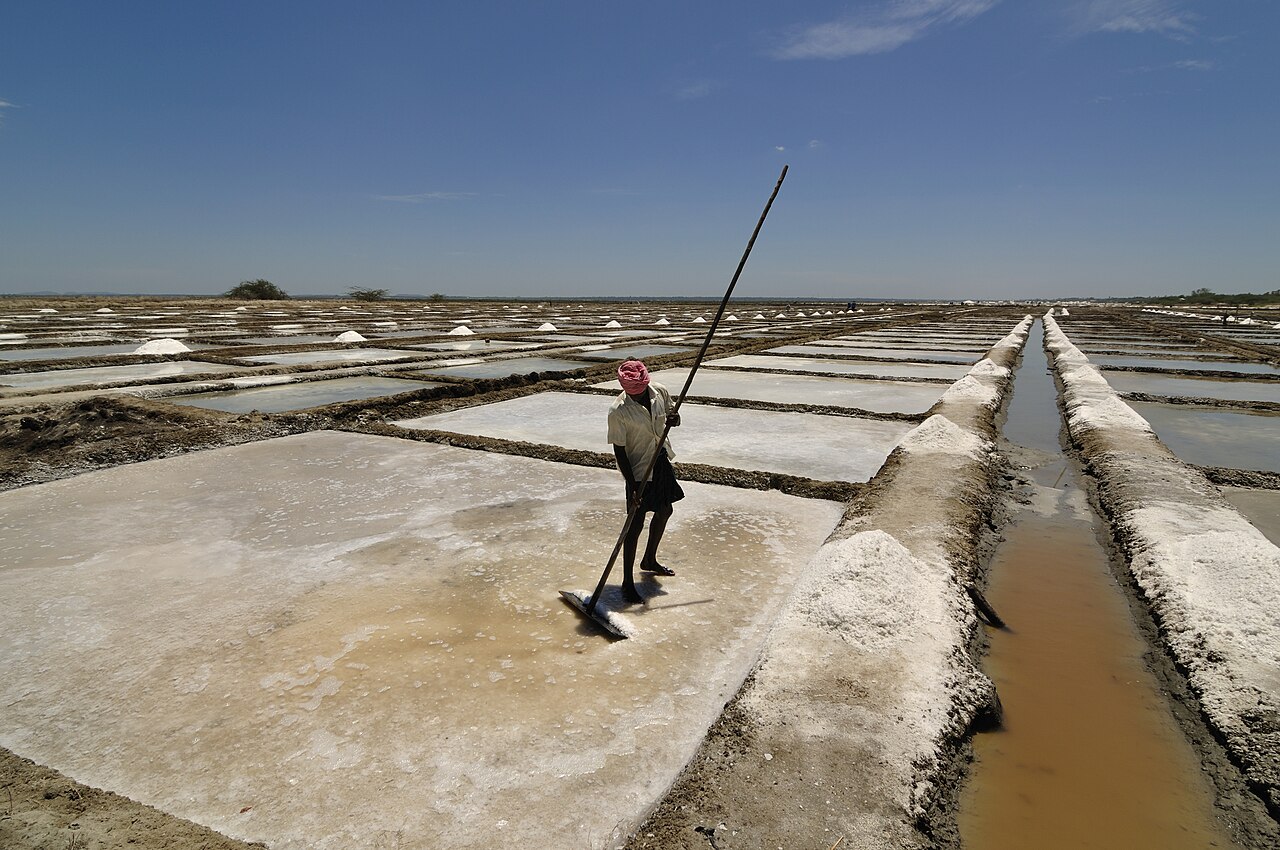
Marakkanam Salt Pans – Modern salt-production landscape
Marakkanam Salt Pans. Modern salt-production landscape; not an ancient saltworks excavation.
006Two views
Both views are shown at equal weight; this site does not choose between them.
How much social history the Parathavar fishing poems can carry
- One view
- A maximal reading takes the repeated fishing scenes to show a stable hereditary community. It projects later occupations back onto that community and assumes it staffed early Kerala ports.
- Another view
- A conservative reading, which this study favours, treats each poem as showing how a named group is represented in one genre and place. It tests continuity separately.
- What would settle it
- An explicit occupational term in a contemporary text or inscription, a donor label tied to the work, or a well-dated administrative document.
007Where next
Both studies read fish exchanged for paddy in early Tamil poems. Neither poem shows a fixed rate of exchange or that coin was absent.
On the atlasKorkaiProtected TNSDA site museum & excavation zone
Explore nextThe Salt Road: Coast, Carts and Inland GrainAll related studies, connected material, books and sources31 · 11
Elsewhere on this site
Read this study with a guided path: Follow a voyage
Excavation Atlas Sites: Korkai (Ancient Pearl-Fishery Port)
Junior Detective Quests: The Salt Road: Coast, Carts and Inland Grain
Multi-Script Glossary Terms: neytal (நெய்தல் / നെയ്തൽ) · kaḻi (கழி / കഴി) · timil (திமில் / തിമിൽ) · uppu (uppaḷam) (உப்பு / உப்பளம் / ഉപ്പ് / ഉപ്പളം) · paratavar (பரதவர் / പരതവർ)
Connected material
Photographs, drawings, books, videos and other studies linked to this study. A link helps you explore; it does not prove a historical claim.
- Traditional boat of kerala – Modern coast/fishing scene, for landscape comparisonphotographBackground
- Marakkanam Salt Pans – Modern salt-production landscapephotographBackground
- Salt workers of Marakkanam – Modern salt-production landscapephotographBackground
- Turbinella pyrum 01 – Modern biological reference specimen of chank shellphotographBackground
- Sacred chank shell specimen (Turbinella pyrum, modern biological reference)photographBackground
- Pinctada fucata (Japanese pearl oyster) (Japan) – Modern pearl-oyster identification, not archaeological shell or proof of a particular ancient fishing groundphotographBackground
- Pearl-oyster shell specimen (Pinctada imbricata fucata, Naturalis Biodiversity Center)photographBackground
- Salt on the movediagramAkanāṉūṟu 140 places salt pans at a Parathavar settlement and an umaṇar family carrying salt inland; the scene draws on that reading.
008Sources
The study lists the sources it consulted; we have not rechecked them. A working link does not show that a source was read, and a valid identifier does not show that it supports a claim. We do not link to unofficial uploads or copies of publications. Where a study cited one, we show the published citation, or a publisher, DOI or Internet Archive link when we have one. Tracking codes are removed from links, and the sources themselves are not republished here.
Tamil Virtual Academy, Akanāṉūṟu, selected digital text pages for poems 70, 140, 300, 340, 350 and 366.
Eva Wilden, A Critical Edition and an Annotated Translation of the Akanāṉūṟu (Part 1 – Kaḷiṟṟiyāṉainirai), 3 vols., Collection Indologie 134, 2018.
Naṟṟiṇai and Kuṟuntokai, selected poems
Tamil Virtual Academy, selected Naṟṟiṇai 175 and Kuṟuntokai 304 digital text pages.
Tamil Virtual Academy, Puṟanāṉūṟu, selected poems 24 and 378.
The Periplus of the Erythraean Sea
Anonymous, Periplus Maris Erythraei, §§54–56, Wilfred H. Schoff translation, 1912, Fordham Internet History Sourcebooks reproduction.
Excavations; Pattanam
Kerala Tourism / Muziris Heritage Project, Excavations and Pattanam project pages.
Tamil Nadu Department of Archaeology, Korkai official web summary.
Iravatham Mahadevan, Early Tamil Epigraphy: From the Earliest Times to the Sixth Century C.E., revised and enlarged second edition, 2014.
Inscriptions of Ceylon, Volume I: Containing Cave Inscriptions from 3rd Century B.C. to 1st Century A.C. and Other Inscriptions in the Early Brāhmī Script
Senarat Paranavitana, Inscriptions of Ceylon, Volume I, 1970.
Tamil Virtual Academy, Cilappatikāram digital edition with N. M. Venkatasami Nattar commentary.
D. P. Agrawal, S. K. Gupta and Sheela Kusumgar, 'Tata Institute Radiocarbon Date List IX,' Radiocarbon 13, no. 2 (1971): 442–449, at p. 447 (TF-987).
Researchers and institutions whose work this study uses: Iravatham Mahadevan, Eva Wilden, Wilfred H. Schoff, Tamil Virtual Academy
How we know The evidence, claims and dates behind this study
What this study draws on
- Close reading of Akanāṉūṟu 70, 140, 300, 340, 350 and 366, Naṟṟiṇai 175, Kuṟuntokai 304 and Puṟanāṉūṟu 24 and 378 in Tamil Virtual Academy texts.
- Ainkurunuru 47–49 in Vaidehi Herbert's translation and notes.
- Periplus sections 54–56 in Schoff's 1912 translation, for southwest-coast ports and navigation.
- Official summaries of Pattanam (wharf and canoe) and Korkai (port and pearl fishery).
Dates in this study
| What is dated | Date | How it was dated |
|---|---|---|
| TF-987 wood: 2680 ± 90 BP (5568-yr half-life, '730 BC') / 2755 ± 95 BP (5730-yr half-life); summarized on the official Korkai page as a 785 BCE charcoal result. | 785 BCE | Laboratory date |
| Tamil-Brahmi material broadly 300 BCE–200 CE in the official Korkai summary. | 300 BCE – 200 CE | How it was dated is not stated |
| Official Pattanam project pages describe occupation from the 2nd century BCE to the 10th century CE. | 200 BCE – 1000 CE | Period assigned by excavators or scholars |
| Conventionally mid-first century CE for the Periplus. | 40–70 CE | How it was dated is not stated |
See these dates on the timeline
The study’s claims
14 claims · 15 source passages · 52 paragraphs
Browse the study paragraph by paragraphSelected early Tamil poems repeatedly represent Parathavar in marine fishing and catch-processing contexts.
Supported in this study
Individual poem chronology remains unresolved. The claim is about repeated literary association, not every member of a historical population.
Akanāṉūṟu 350 represents Parathavar at Korkai driving off sharks and diving for valampuri conch.
Supported in this study
This is a Korkai-specific literary attestation.
Parathavar is not safely reducible to a fishing job-title because the label also appears in a political-military register.
Supported in this study
This rejects a simplistic lexical equation; it does not supply a complete sociology of the term.
Akanāṉūṟu 140 links a Parathavar coastal settlement to salt-pan production while explicitly assigning salt marketing and inland cart distribution to an umaṇar merchant household.
Supported in this study
Production setting, merchandising and transport should not be collapsed into one occupation.
Akanāṉūṟu 366 gives direct literary evidence that Parathavar had a consequential stake in shore salt damaged during conflict with paddy cultivators.
Supported with qualifications
Supports a salt-economy association, not proof of a single hereditary salt-maker occupation.
The salt passages support a differentiated coastal economy in which Parathavar, umaṇar, cultivators and other shoreline actors occupy distinguishable roles.
Supported in this study
Literary scenes do not provide a complete institutional map.
Periplus §§54–56 establish major southwest-coast shipping and difficult river-mouth/roadstead conditions, but the consulted Schoff wording does not directly state small-boat lighterage.
Supported in this study
Lighterage remains a possible logistical reconstruction, not a direct textual statement in the consulted wording.
Korkai provides the strongest checked place-specific conjunction of a Parathavar marine activity in literature and an independently documented early-historic port/pearl-fishery context.
Supported in this study
This is contextual convergence, not proof that a particular excavated individual belonged to the named literary group.
The attested boat term timil cannot on the checked evidence be equated automatically with modern 'thony' or with the profession of pilot.
Supported with qualifications
Hull morphology, later vernacular equivalence and occupational title require separate evidence.
No consulted target-region source yielded a Parathavar seafarer dedication or vow; Sri Lankan nāvika inscriptions remain an uninspected connected-region priority source to check rather than substitute evidence.
Unresolved in this study
negative result limited to the sources read. Paranavitana's relevant individual entries were not checked directly.
The surviving manuscript and modern critical-edition history requires separating represented ancient scenes from manuscript witness and publication dates.
Supported in this study
Modern edition date is not the composition date of a poem.
The inherited catalogue title overstates both the Kerala-specific Parathavar evidence and the direct evidence for piloting/lighterage.
Supported in this study
The topic remains valid if reframed around differentiated coastal labour.
Cilappatikāram was not established as load-bearing evidence for the specific Parathavar occupational question in the consulted sources performed.
Supported with qualifications
No absence claim for the complete work is made.
The checked evidence does not justify treating the early Parathavar label as an unchanged hereditary caste identity continuous in meaning and occupation across later centuries.
Supported with qualifications
Later historical communities may have complex relationships to the ancient term, but that bridge was not established here.
Trace one claim through the study’s records
Explore the evidenceOther source lists
Numbered citation links from the study
The numbered links in the study text point here.
கொடுந் திமிற் பரதவர் | தமிழ் இணையக் கல்விக்கழகம் TAMIL VIRTUAL ACADEMY
தமிழ் இணையக் கல்விக்கழகம் TAMIL VIRTUAL ACADEMY | தேமதுரத் தமிழோசை உலகமெலாம் பரவும் வகை செய்தல் வேண்டும்
தமிழ் இணையக் கல்விக்கழகம் TAMIL VIRTUAL ACADEMY | தேமதுரத் தமிழோசை உலகமெலாம் பரவும் வகை செய்தல் வேண்டும்
Internet History Sourcebooks Project: Ancient History
A Critical Edition and an Annotated Translation of the Akanāṉūṟu (Part 1 - Kaḷiṟṟiyāṉainirai) - École française d'Extrême-Orient
A Critical Edition and an Annotated Translation of the Akanāṉūṟu (Part 1 - Kaḷiṟṟiyāṉainirai) - École française d'Extrême-Orient
The Voyage around the Erythraean Sea
Korkai | Department Of Archaeology
Muziris Excavations | Kottappuram fort | Pattanam |
Silappathikaaram-முகப்பு | தமிழ் இணையக் கல்விக்கழகம் TAMIL VIRTUAL ACADEMY
கொடுந் திமிற் பரதவர் | தமிழ் இணையக் கல்விக்கழகம் TAMIL VIRTUAL ACADEMY
தமிழ் இணையக் கல்விக்கழகம் TAMIL VIRTUAL ACADEMY | தேமதுரத் தமிழோசை உலகமெலாம் பரவும் வகை செய்தல் வேண்டும்
tamilvu.org
சேந்தன் கண்ணனார் | தமிழ் இணையக் கல்விக்கழகம் TAMIL VIRTUAL ACADEMY
தென் பரதவர் மிடல் சாய | தமிழ் இணையக் கல்விக்கழகம் TAMIL VIRTUAL ACADEMY
கொடுந் திமிற் பரதவர் | தமிழ் இணையக் கல்விக்கழகம் TAMIL VIRTUAL ACADEMY
தமிழ் இணையக் கல்விக்கழகம் TAMIL VIRTUAL ACADEMY | தேமதுரத் தமிழோசை உலகமெலாம் பரவும் வகை செய்தல் வேண்டும்
தமிழ் இணையக் கல்விக்கழகம் TAMIL VIRTUAL ACADEMY | தேமதுரத் தமிழோசை உலகமெலாம் பரவும் வகை செய்தல் வேண்டும்
தமிழ் இணையக் கல்விக்கழகம் TAMIL VIRTUAL ACADEMY | தேமதுரத் தமிழோசை உலகமெலாம் பரவும் வகை செய்தல் வேண்டும்
தமிழ் இணையக் கல்விக்கழகம் TAMIL VIRTUAL ACADEMY | தேமதுரத் தமிழோசை உலகமெலாம் பரவும் வகை செய்தல் வேண்டும்
Early Tamil epigraphy by Iravatham Mahadevan | Open Library
Internet History Sourcebooks Project: Ancient History
Internet History Sourcebooks Project: Ancient History
சேந்தன் கண்ணனார் | தமிழ் இணையக் கல்விக்கழகம் TAMIL VIRTUAL ACADEMY
Inscriptions of Ceylon – Volume I – Early Brahmi Inscriptions – Senarat Paranavitana | archaeoSTORE
தென் பரதவர் மிடல் சாய | தமிழ் இணையக் கல்விக்கழகம் TAMIL VIRTUAL ACADEMY
Internet History Sourcebooks Project: Ancient History
கொடுந் திமிற் பரதவர் | தமிழ் இணையக் கல்விக்கழகம் TAMIL VIRTUAL ACADEMY
Naṟṟiṇai : a critical edition and an annotated translation of the Naṟṟiṇai - École française d'Extrême-Orient
Kuṟuntokai : a critical edition and an annotated translation of the Kuṟuntokai - École française d'Extrême-Orient
வேள் எவ்வி | தமிழ் இணையக் கல்விக்கழகம் TAMIL VIRTUAL ACADEMY
Korkai | Department Of Archaeology
Early Tamil epigraphy by Iravatham Mahadevan | Open Library
Silappathikaaram-முகப்பு | தமிழ் இணையக் கல்விக்கழகம் TAMIL VIRTUAL ACADEMY
About this study Status, corrections and how it was made
Status
Draft study, revision 8. No historian, archaeologist, or Tamil or Malayalam specialist has reviewed it yet.
How it was made
Compiled as an editorial synthesis from published scholarship around questions we framed. About this project & workflow
The summary, How sure lines and Two views notes on this page were prepared from this study and cross-checked against its passages. That is an editorial check, not a specialist review.
Corrections and updates
Technical details
Study code R172. The text fingerprint changes whenever the study text changes.
- The study text is shown as written. Links from its paragraphs to citations help you move around the study; they are not new claims or checked source passages.
See how this study’s records were extracted
Text fingerprint (SHA-256): R172 · 59c5cdf2901f5ec6454e9402… · v8
Evidence tables and technical details are on the web page: https://layersofthesouth.org/read/51c65fe2b7