Tamil-Brahmi inscription on the rock face at Arittapatti
Arittapatti
Photographed 2017-01-09
- Words & worlds
- 500–200 BCE
- 200 BCE–300 CE
Arittapatti's cave inscriptions name two early donors
Arittapatti’s early cave inscriptions name two donors (status not stated), not the Pandyan king Nedunchezhiyan or officer named at Mangulam, and are centuries older than Arittapatti’s Jain image and Shiva cave temple.
- This page
- 3,264 words · revision 6
Draft study · Awaiting specialist review · Updated
001Dates and places

No mapped place in this study.
1000–500 BCE
Different beginnings
500–200 BCE
Marks & materials
200 BCE–300 CE
Connected worlds
300–600 CE
Change & continuity
After 600 CE
- third century B.C.
- ca. 2nd century B.C.E.
- 2nd–1st centuries B.C.
- A.D. 9th century characters
- Date from writing, coins or texts
Each date belongs to what was dated (a sample, an object, a layer or a text), which is not always the event the study asks about.
Each period has the same width, so spacing is not to scale.
The full table of dates, with their ranges, is under How we know.
- 2 Well supported
- 1 Likely
- 1 Not known
002How sure
In brief
Arittapatti, a cave site in the Madurai region, has two early Tamil-Brahmi inscriptions, dated by letter shapes to about the second century BCE. The first, read by K. V. Raman and Y. Subbarayalu in 1971, records a man from Nelveli giving a cave. The second, reported in 2003, records Emayavaṉ, son of Elampērataṉ of Ilañci, doing the same. Neither names the Pandyan king Nedunchezhiyan or a commander called Cadakan; those names come from Mangulam. The two texts also contain no word for monk, charity or hermitage. A ninth-century inscription below a Jain image and a separate Shiva cave temple belong to much later phases. The second inscription is badly worn, and its 2003 reading differs from the later corpus reading. Its exact wording is not settled until the 2004 publication and good photographs are checked.
Key researchers cited in this study: Iravatham Mahadevan (Tamil-Brāhmī Epigraphy) · Y. Subbarayalu (Historical Geography & Epigraphy) · K. V. Raman (Uraiyur, Kanchipuram & Alagankulam Excavations) · Archaeological Survey of India (ASI) · Full bibliography
How sure
- Well supported
Inscription 7 records a man from Nelveli giving a cave.
Read in 1971 and in the current corpus, with only small changes after plaster was removed.
- Well supported
Nedunchezhiyan and Cadakan do not appear in the Arittapatti inscriptions.
Absent from both current readings; the names occur in Mangulam inscriptions 1 and 2.
- Likely
The early Arittapatti shelter was used by Jain monks.
Specialists infer it from cave form, drip ledge and later Jain use; the texts name no monk.
- Not known
The exact wording of inscription 90.
The stone is worn, readings have changed since 2003, and the 2004 publication was not obtained.
Why it matters
It removes a royal story wrongly attached to Arittapatti and shows how the reading of a worn inscription can change.
003Key findings
What the study concludes
- Arittapatti inscriptions 7 and 90 record donors causing caves to be given.
- Nedunchezhiyan and Kaṭalaṉ Vaḻuti are Mangulam names; 'Cadakan military commander' appears to mix Caṭikaṉ with Kaṭalaṉ Vaḻuti.
- Mangulam has explicit monk/charity/hermitage language and a broader patron network including a merchant guild.
- The ninth-century Jain image inscription and the separate Shiva cave temple are later/distinct phases.
In the study’s own words. How sure each point is, is shown above.
The summary above is the short read. The full study is the complete text it was drawn from, with its tables and source notes.
What the full study covers
004The study
Overview
What is recorded in the Arittapatti inscriptions, and how do they differ from Mangulam?
The central correction is clear. The early Arittapatti inscriptions presently represented in the Tamil-Brahmi corpus do not name the Pandyan king Nedunchezhiyan or a royal military officer called “Cadakan.” Arittapatti has two relevant early records: corpus no. 7 records a donor from Nelveli causing a cave to be given, while addendum no. 90 records Emayavaṉ, son of Elampērataṉ of (I)lañci, causing “this cave” to be given. The later corpus dates both approximately to the second century BCE. ↗1 ↗2
A rock-cut record stays where it was made; a written pot can travel. Drawing traced from a photograph by PJeganathan, CC BY-SA 4.0.
The rock surface is at Arittapatti; this study gives record no. 7, its corpus reading, its date and the 1971 correction.
Layers of the South editorial illustration (rock surface traced from a photograph by PJeganathan, Wikimedia Commons, CC BY-SA 4.0)
The royal names belong to Mangulam, a separate group of inscribed caves in the Madurai region. A widely repeated description credits Arittapatti's beds to the Pandyan king Nedunchezhiyan and a “military commander Cadakan”; both names come from Mangulam. Mangulam inscription 1 names Neṭuñceḻiyaṉ and Kaṭalaṉ Vaḻuti, his paṇavaṉ (servant or officer), and inscription 2 names Caṭikaṉ, father of Iḷañcaṭikaṉ. A modern archaeological synthesis likewise places Kadalanvaluti, Nedunjeliyan, Chatikan/Caṭikaṉ and Ilanchatikan at Mangulam rather than Arittapatti. “Mangulam's inscriptions name a ruler's servant, kin and a guild” covers the six Mangulam inscriptions in detail. ↗3 ↗4 ↗5
Vegetation rooted in the granite rock face at Arittapatti
Arittapatti
Photographed 2017-01-09
There is also an important difference in religious language. The Arittapatti early texts, as presently read, are essentially cave-gift formulas; they do not themselves name a monk, dhammam, or paḷḷi. Mangulam inscriptions 1–2 explicitly contain vocabulary interpreted as monk, charity and hermitage, while other Mangulam records document a merchant-guild contribution. The early Arittapatti shelter can reasonably be discussed in a Jain-associated archaeological setting, but that contextual classification should not be converted into words that the two early inscriptions themselves do not contain. ↗1 ↗2 ↗3 ↗6 ↗7
Finally, Arittapatti has later evidence that must remain chronologically separate. A topographical inscription catalogue records a ninth-century Vattezhuthu (Vaṭṭeḻuttu / Vatteluttu) inscription below a Jain Tirthankara image, associated with Ajjanandi and other named parties. The Tamil Nadu archaeology monument register also lists Arittapatti's Sivan Koil separately from its “Tamizhi Inscriptions and Theerthangara Sculpture.” These are not one undifferentiated “cavern” phase. ↗8 ↗9
Scope, chronology and source method
This study treats Arittapatti and Mangulam/Mankulam as separate inscriptional complexes in the Madurai region and compares them at the level of object identity, current corpus number, locus, reading, named persons, donation formula and publication history. The core period is early historic Tamil-Brahmi epigraphy within the 1000 BCE–600 CE period covered by Layers of the South. The ninth-century Arittapatti Jain image inscription, and the separate early-medieval Shiva cave monument, are retained only as later reception/comparison so that they are not folded backwards into the early record. ↗8 ↗9
Modern approach road and vegetation near the rocky hills of Arittapatti
Arittapatti
Photographed 2017-01-09
Priority was given to inscription editions and corpus-style resources. A. Ekambaranathan and C. K. Sivaprakasam's Jaina Inscriptions in Tamilnadu supplies numbered topographical entries and older publication references for both sites. Satyabhama Badhreenath's archaeological survey supplies cave-context comparison. The current digital Tamil-Brahmi corpus provides graphemic and normalized readings, translations, loci, lengths and textual notes attributed to Iravatham Mahadevan's corpus tradition. Bibliographic records identify Mahadevan's revised 2014 Early Tamil Epigraphy as the Central Institute of Classical Tamil edition covering Tamil-Brahmi inscriptions, but that printed edition itself was not read in full for this study. ↗10 ↗5 ↗8 ↗11
The digital corpus is especially useful here because its project documentation explains that renewed in-situ work and photographic recording were intended to correct readings derived from poor estampages; it specifically illustrates this problem with Mangulam. That makes it preferable to silently repeating older spellings, but it does not make this study an independent epigraphic re-reading of the rock surface. The readings below are attributed corpus readings. ↗12
The dating evidence is palaeographic/epigraphic, not radiometric. The current corpus gives approximately the second century BCE for both Arittapatti inscriptions and the Mangulam entries consulted. The 1987 topographical list often uses the broader “second–first centuries BCE,” while the introduction to South Indian Inscriptions XXII assigns the old Mangulam group to the third century BCE. These ranges document changing scholarly dating practice; no scientific sample directly dates the act of engraving. ↗1 ↗2 ↗3 ↗8 ↗13
Upright granite boulder in Arittapatti's rocky landscape
Arittapatti
Photographed 2017-01-09
In the South Indian Inscriptions series, the Mangulam cave records are discussed in South Indian Inscriptions, Vol. XXII, Part I, whose introduction identifies Mangulam nos. 460–465 among the inscriptions collected in 1906 and credits K. V. Subrahmanya Aiyar's 1924 treatment alongside later work by Mahadevan. ↗13
What the Arittapatti inscriptions actually record
The older Arittapatti record is corpus inscription 7, Arittapatti 1. Its normalized reading in the current digital corpus is:
nelveḷi-iy ciḻivaṉ atiṉaṉ veḷiyaṉ muḻākai koṭupitōṉ
The corpus interprets this as Ciḻivaṉ Atiṉṉaṉ Veḷiyaṉ of Nelveḷi causing the cave, muḻākai, to be given. The first donor's name Ciḻivaṉ has been compared with the Pāṇḍya title Ceḻiyaṉ (Badhreenath's survey renders it “Cheliyan … of Nelveli”), so a link to the ruling house cannot be excluded; the inscription itself states no royal title or office. The inscription is one line, about 240 cm long, on the brow of the cave at the foot of Kaḻiñcamalai, assigned approximately to the second century BCE. ↗1 ↗5
The reading itself has a useful revision history. The corpus notes that Raman and Subbarayalu's 1971 reading treated one sign differently; removal of a thin plaster coating revealed it as ḻā, and another letter also became visible after the plaster was removed. This is a concrete example of why an inscription's “exact reading” should be tied to a specific edition rather than treated as timeless. ↗1
The 1987 topographical catalogue lists this as its Arittapatti no. 216, places it on the brow of the cavern, dates it broadly to the second–first centuries BCE and cites K. V. Raman and Y. Subbarayalu, “A New Tamil-Brahmi Inscription in Arittapatti,” Journal of Indian History XLIX, nos. 145–147 (1971), pp. 229–232. Its older transliteration of the donor differs orthographically from the later corpus presentation, but its substantive summary is the same: a man from Nelveli caused the cave to be given. ↗8
The second early text is corpus inscription 90, Arittapatti 2, an addendum record. Its normalized corpus reading is:
[i]lañci-y eḷam pēr-ataṉ makaṉ emayavaṉ iv-muḻa-u-kai-y koṭupitavaṉ
The corpus translates the sense as Emayavaṉ, son of Elampērataṉ of (I)lañci, causing this cave to be given. It is one line and about 310 cm long. The inscription lies above the drip ledge and above inscription 7; because that higher position left it unprotected, the surface is badly worn. The corpus explicitly marks the initial letter as restored from context and regards the text as difficult to read. ↗2
This second inscription also has a consequential reading history. The September 2003 discovery report gave a reading including forms interpreted as Ilanjiy vel, mapparavan and nal-muzhaukai, and drew political conclusions from those readings. The later corpus instead reads [i]lañci-y eḷam pēr-ataṉ ... iv-muḻa-u-kai-y, without preserving those politically loaded elements in the same form. The 2003 report is therefore best treated as a discovery-stage reading, not as the last word on the text. ↗2 ↗14
The discovery chronology can consequently be bounded with reasonable precision. Tamil Nadu's archaeology page says the newer inscription is roughly four feet from another Brahmi inscription discovered in 1971. The second was publicly reported in September 2003 by a State Archaeology survey team including P. Rajendran, V. Vedachalam, C. Santhalingam and R. Jayaraman, while the later corpus cites “Vedachalam et al. 2004” for its measured length. The full 2004 publication was not obtained for this study. ↗2 ↗14 ↗15
| Arittapatti object | Current reading / content | Locus | Working date | Publication history |
|---|---|---|---|---|
| Corpus 7 / Arittapatti 1; topographical no. 216 | Nelveli donor causes muḻākai, the cave, to be given | Brow of cave at foot of Kaḻiñcamalai | ca. 2nd c. BCE in current corpus; 2nd–1st c. BCE in older catalogue | Raman & Subbarayalu 1971; later reading corrected after plaster removal |
| Corpus 90 / Arittapatti 2 | Emayavaṉ, son of Elampērataṉ of (I)lañci, causes “this cave” to be given | Above drip ledge and above no. 7; badly weathered | ca. 2nd c. BCE in current corpus | Reported 2003; corpus cites Vedachalam et al. 2004 |
The table derives from the current corpus, the earlier topographical edition and the 2003 discovery record. ↗1 ↗2 ↗14 ↗8
What the texts do not say is as important as what they do. Neither current Arittapatti reading names Nedunchezhiyan, Kaṭalaṉ Vaḻuti or Caṭikaṉ. Neither current reading says a Pandyan officer endowed beds with “pillow lofts.” The verbs concern causing a cave to be given. Physical stone beds may form part of the archaeological cave setting, but the physical feature and the linguistic content of the inscription must remain separate evidential statements. ↗1 ↗2
What Mangulam records and why it is different
Mangulam is a separate hill complex of inscribed caves with six early Tamil-Brahmi inscriptions in the current corpus; the official Tamil Nadu archaeology page counts five. They name the ruler Neṭuñceḻiyaṉ, his paṇavaṉ Kaṭalaṉ Vaḻuti, Caṭikaṉ and his son Iḷañcaṭikaṉ, the monk Nanta-siri Kuvaṉ, and members of the Veḷaṟai merchant guild. “Mangulam's inscriptions name a ruler's servant, kin and a guild” gives the full readings, the numbering of each inscription, its place on the hill and the site's study history. Here Mangulam matters only as the contrast set out in the comparison table below. ↗3 ↗4 ↗6 ↗7 ↗18 ↗19
Comparison and strongest uncertainties
The most important difference can be expressed without reconstructing more history than the inscriptions permit.
| Question | Arittapatti | Mangulam |
|---|---|---|
| Royal name Nedunchezhiyan? | No in inscriptions 7 or 90 | Yes, inscriptions 1–2 |
| Kaṭalaṉ Vaḻuti? | No | Yes, inscription 1 |
| Caṭikaṉ? | No | Yes, inscription 2 |
| Explicit monk term? | Not in current readings of 7/90 | Yes, kaṇi |
| Explicit charity term? | Not in current readings of 7/90 | Yes, dhammam/dhamam |
| Explicit hermitage term? | Arittapatti uses cave term muḻākai / muḻa-u-kai | Mangulam 1–2 use paḷḷi |
| Merchant-guild involvement? | Not in the two early texts | Yes, inscriptions 3 and 6 |
| Early inscription count in current corpus | Two | Six |
| Later Jain image inscription | Ninth-century Vatteluttu phase | Later Jain occupation/reception exists, but not needed to identify the royal names |
| Separate Shiva cave monument | Yes; separately catalogued by state archaeology | Not part of this comparison |
The epigraphic comparison is supported directly by the current Arittapatti and Mangulam corpus texts and the older topographical catalogue. ↗1 ↗2 ↗3 ↗4 ↗8
How Mangulam names came to be attached to Arittapatti can be reconstructed cautiously. Nedunchezhiyan was carried over from Mangulam. “Cadakan” does not match the officer actually named in Mangulam 1, Kaṭalaṉ Vaḻuti; it is closer graphically to Caṭikaṉ, who belongs to Mangulam 2. The role “military commander,” meanwhile, appears to have been transferred from the paṇavaṉ relationship of Kaṭalaṉ Vaḻuti. Thus the phrase “military commander Cadakan” likely combines the name of one Mangulam person with the status of another. ↗3 ↗4 ↗5
There is a second correction. Popular wording about “stone beds chiseled with pillow lofts … by Pandyan king Nedunchezhiyan and military commander Cadakan at Arittapatti” exceeds what the Arittapatti inscriptions state. The two current readings concern caves being caused to be given. At Mangulam, physical beds are archaeologically prominent, but even there the corpus distinguishes what is written from what is supplied from context – for example, “stone beds” in the interpretation of inscription 6. This distinction between observed feature, inscribed words, and editorial interpretation matters for any public account. ↗1 ↗2 ↗7 ↗5
The early Jain association is similarly stronger textually at Mangulam. At Arittapatti, the cave form, drip ledge, wider regional pattern and later Jain occupation support the site's Jain archaeological classification in specialist synthesis. But the two early texts themselves do not name a Jain teacher or use the explicit monastic cluster found at Mangulam. Badhreenath's survey appropriately combines archaeological characteristics and inscriptions when calling these early Jain caves; a public account should preserve that inferential layer rather than saying that an Arittapatti inscription “states that Jain monks received the beds.” ↗1 ↗2 ↗5
A third issue concerns dating. For Arittapatti, the 1987 catalogue gives the second–first centuries BCE and the current Mahadevan-derived digital corpus uses approximately the second century BCE. The safest formulation is therefore “early Tamil-Brahmi, conventionally around the second century BCE in the current corpus.” No direct radiometric date for the engraving was identified. “Mangulam's inscriptions name a ruler's servant, kin and a guild” sets out the separate dispute over the date of the Mangulam records, which an older SII introduction places in the third century BCE. ↗1 ↗2 ↗8 ↗3 ↗13
The most consequential unresolved textual issue is Arittapatti 90. Its worn condition is expressly noted by the current corpus, and its 2003 discovery-stage reading differs enough from the later corpus reading to change historical interpretation. What would best discriminate between alternatives is not another popular summary but the full Vedachalam et al. 2004 publication, its estampage or high-resolution photograph, and the corresponding plate/commentary in the 2014 revised Mahadevan edition or CICT photographic archive. ↗12 ↗2
Conclusions and limits
The study’s question can be answered clearly.
Arittapatti records two early cave gifts by named donors (status not stated), not the royal Pandyan endowment of Neṭuñceḻiyaṉ recorded at Mangulam. In corpus no. 7, Ciḻivaṉ Atiṉṉaṉ Veḷiyaṉ of Nelveli causes the cave to be given; his name Ciḻivaṉ has been compared with the Pāṇḍya title Ceḻiyaṉ, so a link to the ruling house cannot be excluded, though the stone states no title or office. In corpus no. 90, Emayavaṉ, son of Elampērataṉ of (I)lañci, causes “this cave” to be given. The second inscription is weathered and has a significant reading history, so its present normalized text should be attributed to the current corpus rather than represented as self-evident. ↗1 ↗2
Mangulam is the source of the royal/officer material. Its first inscription names Neṭuñceḻiyaṉ and Kaṭalaṉ Vaḻuti, interpreted as his paṇavaṉ, in an explicitly monastic/hermitage formula. Its second names Caṭikaṉ and his son Iḷañcaṭikaṉ, whom Mahadevan’s translation places in a marriage relationship (sālakaṉ) to Neṭuñceḻiyaṉ. Other records add merchant-guild participation. ↗3 ↗4 ↗6 ↗7
The royal attribution does not belong to Arittapatti. Nedunchezhiyan is not attested in the consulted Arittapatti texts. “Cadakan, military commander” appears to combine Caṭikaṉ's name with Kaṭalaṉ Vaḻuti's officer relationship at Mangulam, and “military commander” is itself stronger than the consulted corpus translation warrants. ↗3 ↗4
Beds, inscriptions and later monuments should remain separate evidence classes. Physical cave beds are part of the regional archaeological setting; early inscriptions must be quoted for what they actually record; the ninth-century Arittapatti Tirthankara/Vatteluttu record is a later Jain phase; and the Sivan Koil is separately catalogued by Tamil Nadu archaeology. ↗8 ↗9
In short, nearby cave sites preserve different patronage formulas: Arittapatti's surviving early texts record cave gifts by named donors (status not stated), whereas Mangulam explicitly names the king Neṭuñceḻiyaṉ alongside royal, monastic, and merchant connections. This formulation stays within the evidence and avoids importing later sculpture, architectural phases or literary royal identifications into the inscriptions themselves. ↗1 ↗2 ↗3 ↗5
These sources still need to be obtained before the readings can be checked against the originals:
| Priority | Exact target | Why it matters |
|---|---|---|
| High | K. V. Raman & Y. Subbarayalu, “A New Tamil-Brahmi Inscription in Arittapatti,” Journal of Indian History 49, 1971, pp. 229–232 | Inspect original reading, drawing/estampage and publication context |
| High | Full “Vedachalam et al. 2004” publication cited for Arittapatti 90 | Resolve the transition from the 2003 discovery reading to the later corpus reading |
| High | Mahadevan/CICT 2014 plates or CICT high-resolution archive for Arittapatti 7 and 90 | Publication-grade verification of restorations and damaged signs |
| Medium | Tamil Nadu Epigraphy Wing estampages, if preserved for these records | Independent source-surface comparison |
Tamil Nadu's archaeology department states that its epigraphy wing preserves large numbers of inscription estampages, making that archive a concrete place to consult original impressions. ↗21
No independent specialist has reviewed these readings, and no letter-by-letter reading of the stone or a facsimile was made for this study. Those limitations affect final philological certainty, especially for inscription 90; they do not overturn the well-supported site correction, because the current Arittapatti texts and Mangulam texts differ unmistakably in the named persons and formulas at issue. ↗1 ↗2 ↗3 ↗4
Bibliography and source-access register
Raman, K. V., and Y. Subbarayalu. “A New Tamil-Brahmi Inscription in Arittapatti.” Journal of Indian History 49, nos. 145–147 (1971): 229–232. Access: bibliographic reference verified; full article and plates not consulted. The citation is independently preserved in the later topographical catalogue. ↗8
Ekambaranathan, A., and C. K. Sivaprakasam. Jaina Inscriptions in Tamilnadu: A Topographical List. Research Foundation for Jainology, 1987. Access: full searchable digitized text for relevant entries. Arittapatti nos. 216–217 and Mangulam nos. 238 onward were read. ↗8
Badhreenath, Satyabhama. “Early Jaina Caves.” In Jaina Archaeological Heritage of Tamilnadu, seminar proceedings associated with the Department of Ancient History & Archaeology, University of Madras and All India Digamber Jain Mahasabha, seminar held 2004. Access: relevant article text read. ↗5
Mahadevan, Iravatham. Early Tamil Epigraphy: From the Earliest Times to the Sixth Century C.E. (Tamil-Brahmi Inscriptions). Revised and enlarged second edition, vol. 1. Chennai: Central Institute of Classical Tamil, 2014. ISBN 978-93-81744-14-7. Access: bibliographic metadata only for the physical edition; its corpus tradition was accessed through the attributed digital presentation below. URL: https://openlibrary.org/books/OL44265878M/Early_Tamil_epigraphy. ↗11 ↗22
Tamil Brahmi Search / M. V. Bhaskar presentation, readings and interpretations attributed to Iravatham Mahadevan. “Arittapatti 1 – Inscription 7.” Access: full textual corpus entry. URL: https://brahmi.mvbhaskar.com/Arittapatti/Arittapatti_02_07/Arittapatti_interactive_02_07.html. ↗1
Tamil Brahmi Search / M. V. Bhaskar presentation, readings and interpretations attributed to Iravatham Mahadevan. “Arittapatti 2 – Inscription 90.” Access: full textual corpus entry. URL: https://brahmi.mvbhaskar.com/Arittapatti/Arittapatti_02_90/Arittapatti_interactive_02_90.html. ↗2
Tamil Brahmi Search / M. V. Bhaskar presentation, readings and interpretations attributed to Iravatham Mahadevan. “Mangulam – Inscriptions 1–6.” Access: all six textual entries recovered; several directly opened and the remainder retrieved through indexed full-result text. URL: https://brahmi.mvbhaskar.com/Mangulam/Mangulam.html. ↗18 ↗3 ↗4 ↗7
Archaeological Survey of India, Epigraphy Branch. South Indian Inscriptions, Vol. XXII, Part I, inscriptions collected during 1906. Access: introduction through a third-party digitized mirror, not a complete inspection of the official printed volume. URL: https://www.whatisindia.com/inscriptions/south_indian_inscriptions/volume_22/part_1/introduction.html. ↗13
Department of Archaeology, Government of Tamil Nadu. “Ovamalai kalvettu.” Access: official web interpretation read. URL: https://www.tnarch.gov.in/node/419. The page is useful for official site context but its count of five inscriptions conflicts with the six-entry critical corpus. ↗19
Department of Archaeology, Government of Tamil Nadu. “Mangulam.” Access: official excavation summary read. It documents the 2006–07 excavation and later archaeological remains but is not itself the critical edition of the cave inscriptions. URL: https://www.tnarch.gov.in/mangulam. ↗23
Department of Archaeology, Government of Tamil Nadu. “Rock-cut Sivan Koil–Arittapatti.” Access: indexed page text read for the reported proximity of the newly noticed Brahmi record to the 1971 inscription. URL: https://www.tnarch.gov.in/SivanKoil-Arittapatti. ↗15
Department of Archaeology, Government of Tamil Nadu. “Monuments – District wise.” Access: official register read. URL: https://www.tnarch.gov.in/monuments-subnames. It separately lists Arittapatti's Sivan Koil and the Tamizhi inscription/Tirthankara monument. ↗24
Wikimedia Commons / MaduraiSelvam. “Arittapatti inscriptions in Tamil Brahmi mentioning Paravar.jpg,” 15 September 2003. The file description preserves the discovery-stage account and an archived link to the contemporary Hindu report; the photograph is stated to be CC BY-SA 4.0. Access: page and license read. URL: https://commons.wikimedia.org/wiki/File:Arittapatti_inscriptions_in_Tamil_Brahmi_mentioning_Paravar.jpg. The news text is derivative evidence and was not used to override the later epigraphic corpus. ↗14
005Photographs
Photographs of the places and objects this study discusses. Each item carries its creator’s credit, licence and documented source. See all 412 photographs and source images ↗

Arittapatti · Photographed 2017-01-09 11:41:18
Tamil-Brahmi inscription on the rock face at Arittapatti

Arittapatti · Photographed 2017-01-09 11:08:25
Vegetation rooted in the granite rock face at Arittapatti
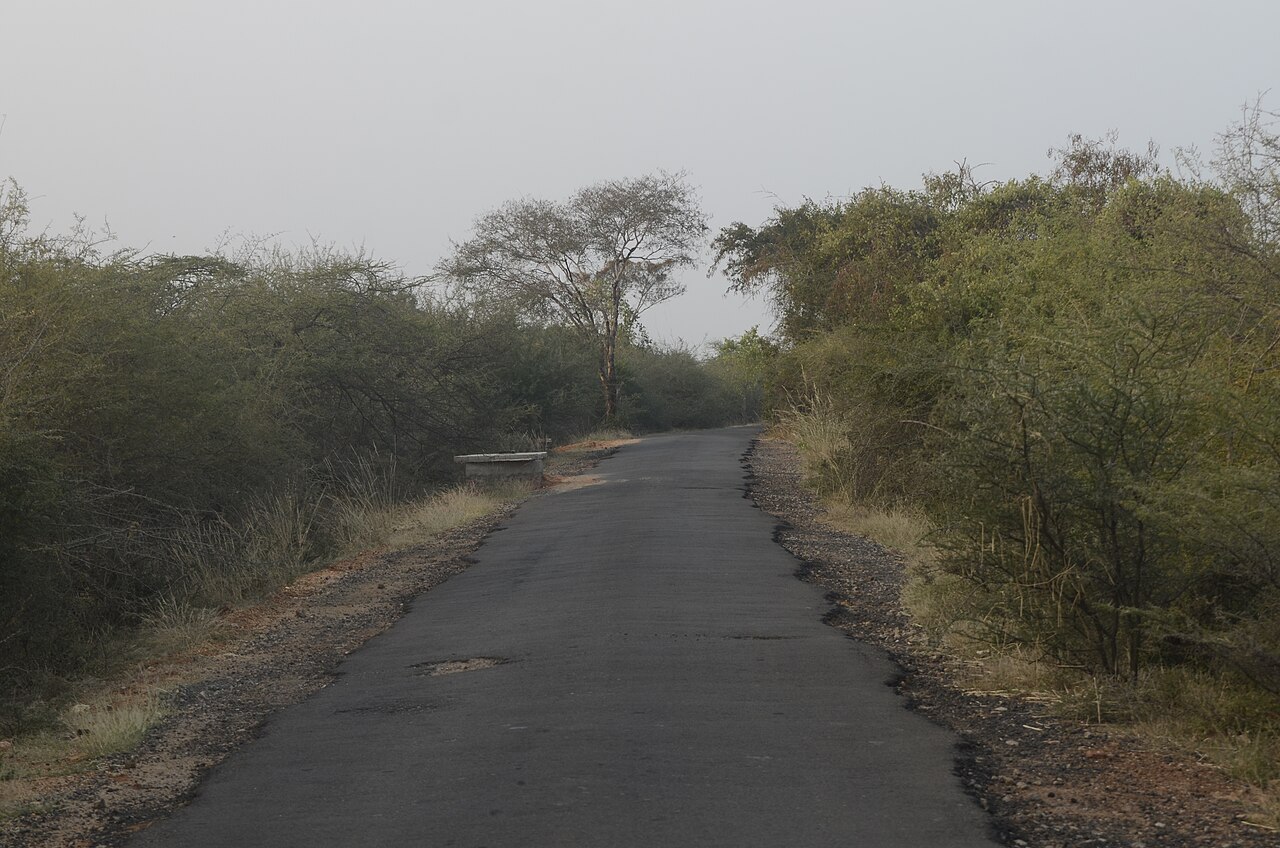
Arittapatti · Photographed 2017-01-09 07:06:02
Modern approach road and vegetation near the rocky hills of Arittapatti
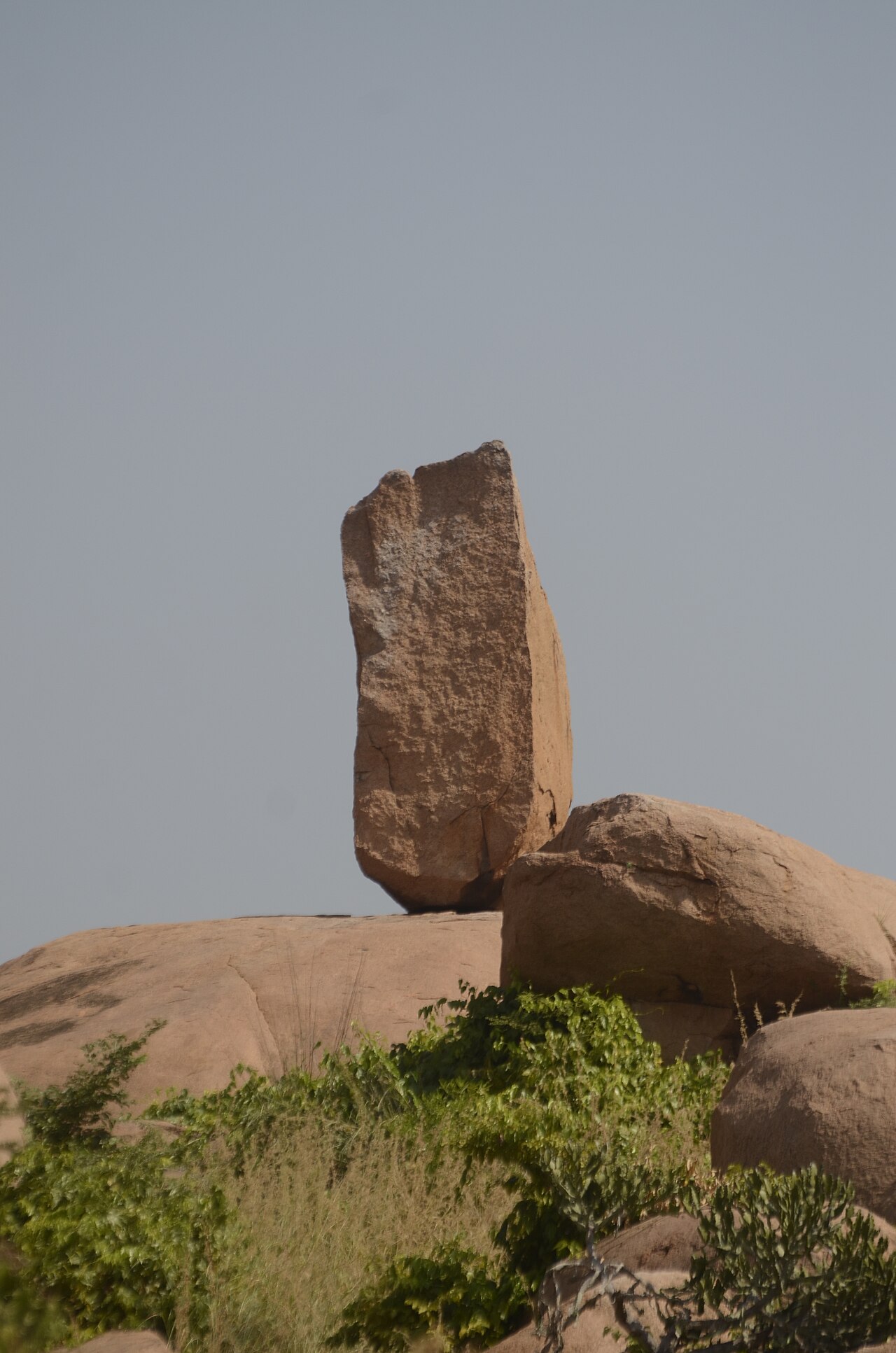
Arittapatti · Photographed 2017-01-09 11:01:18
Upright granite boulder in Arittapatti's rocky landscape
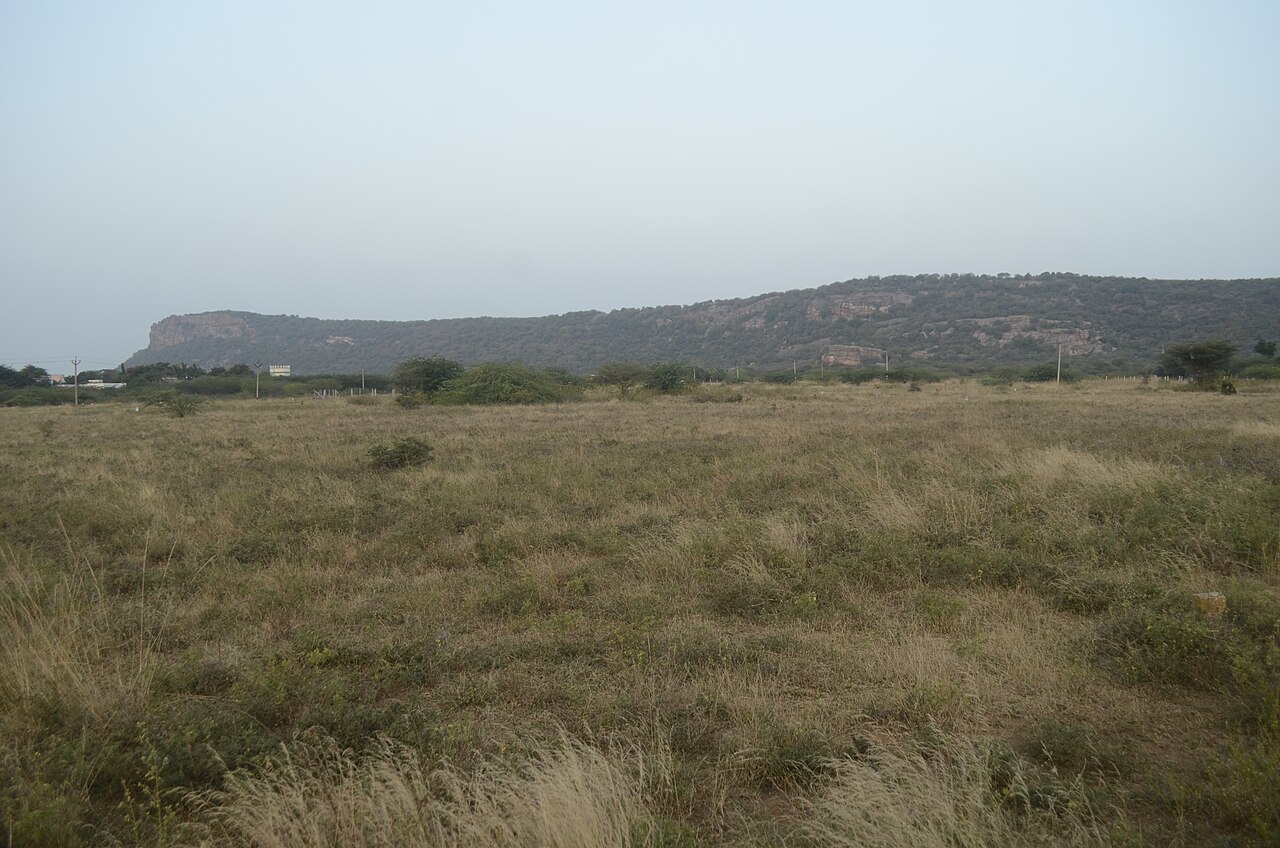
Arittapatti · Photographed 2017-01-09 06:54:30
Open habitat and rocky hills in the Arittapatti landscape
006Two views
Both views are shown at equal weight; this site does not choose between them.
What Arittapatti inscription 90 says
- One view
- The 2003 discovery report read forms such as 'Ilanjiy vel' and 'mapparavan' and drew political conclusions from them.
- Another view
- The later corpus, attributed to Mahadevan, reads Emayavaṉ, son of Elampērataṉ of Ilañci, causing this cave to be given.
- What would settle it
- The full Vedachalam et al. 2004 publication, its estampage or high-resolution photographs, and the revised corpus plates.
007Where next
All related studies, connected material, books and sources11 · 12
Elsewhere on this site
Multi-Script Glossary Terms: paḷi / paḷḷi & pāḻi (amaṇa-p-pāḻi) (பளி / பள்ளி & பாழி / പാഴി / പള്ളി) · nikamam (Merchant Guild / Market Town in Tamil-Brāhmī) (நிகமம் (வணிகர் குழு) / നിഗമം (വ്യാപാര സംഘം))
Connected material
Photographs, drawings, books, videos and other studies linked to this study. A link helps you explore; it does not prove a historical claim.
- Tamil-Brahmi inscription on the rock face at ArittapattiphotographShows the subject
- Open habitat and rocky hills in the Arittapatti landscapephotographBackground
- Modern approach road and vegetation near the rocky hills of ArittapattiphotographBackground
- Upright granite boulder in Arittapatti's rocky landscapephotographBackground
- Vegetation rooted in the granite rock face at ArittapattiphotographBackground
- Three surfaces, three kinds of survivaldiagramThe stone panel’s place, and its date of about the 2nd century BCE for the Arittapatti inscription, follow this study of its early Tamil-Brahmi records.
- Read the surface. Then the claim.diagramThe rock surface is at Arittapatti; this study gives record no. 7, its corpus reading, its date and the 1971 correction.
- How a surface carries a voiceillustrationThe Arittapatti reading, and the places of inscriptions 7 and 90 around the drip ledge, follow this study.
008Sources
The study lists the sources it consulted; we have not rechecked them. A working link does not show that a source was read, and a valid identifier does not show that it supports a claim. We do not link to unofficial uploads or copies of publications. Where a study cited one, we show the published citation, or a publisher, DOI or Internet Archive link when we have one. Tracking codes are removed from links, and the sources themselves are not republished here.
K. V. Raman and Y. Subbarayalu, "A New Tamil-Brahmi Inscription in Arittapatti," Journal of Indian History 49 (1971), 229–232.
Print or offline sourceSource recordA. Ekambaranathan and C. K. Sivaprakasam, Jaina Inscriptions in Tamilnadu: A Topographical List, Research Foundation for Jainology, 1987.
Online copy not linked · use the published editionSource recordSatyabhama Badhreenath, “Early Jaina Caves,” in A. Ekambaranathan (ed.), Jaina Archaeological Heritage of Tamilnadu, seminar proceedings.
Online copy not linked · use the published editionSource recordEarly Tamil Epigraphy: From the Earliest Times to the Sixth Century C.E. (Tamil-Brahmi Inscriptions), revised and enlarged second edition, vol. 1
Iravatham Mahadevan, Early Tamil Epigraphy: From the Earliest Times to the Sixth Century C.E., revised and enlarged 2nd ed., vol. 1, Central Institute of Classical Tamil, 2014.
Arittapatti 1 – inscription 7 (interactive Tamil-Brahmi corpus entry)
Tamil-Brahmi digital corpus, Arittapatti 1, inscription 7; reading and interpretation attributed to Iravatham Mahadevan.
Arittapatti 2 – inscription 90 (interactive Tamil-Brahmi corpus entry)
Tamil-Brahmi digital corpus, Arittapatti 2, inscription 90 (addendum); reading and interpretation attributed to Iravatham Mahadevan.
Mangulam inscriptions 1–6 (interactive Tamil-Brahmi corpus entries)
Tamil-Brahmi digital corpus, Mangulam inscriptions 1–6; readings and interpretation attributed to Iravatham Mahadevan.
South Indian Inscriptions, Volume XXII, Part I: Inscriptions Collected During the Year 1906
South Indian Inscriptions, Vol. XXII, Part I, inscriptions collected during 1906, Archaeological Survey of India; digitized mirror introduction.
Department of Archaeology, Government of Tamil Nadu, Ovamalai kalvettu / Mangulam pages.
Department of Archaeology, Government of Tamil Nadu, Rock-cut Sivan Koil–Arittapatti page.
Monuments – District wise
Department of Archaeology, Government of Tamil Nadu, district-wise monuments list.
Arittapatti inscriptions in Tamil Brahmi mentioning Paravar.jpg
Wikimedia Commons file page preserving metadata, CC license, and a reproduction/summary of The Hindu report of 15 September 2003 on the second Arittapatti inscription.
Researchers and institutions whose work this study uses: Iravatham Mahadevan, Y. Subbarayalu, K. V. Raman, Archaeological Survey of India
How we know The evidence, claims and dates behind this study
What this study draws on
- Current digital Tamil-Brahmi corpus entries for Arittapatti inscriptions 7 and 90, attributed to Iravatham Mahadevan.
- A 1987 topographical list of Jain inscriptions and a survey of early Jain caves in Tamil Nadu.
- Tamil Nadu archaeology department pages and the 2003 discovery account preserved with a published photograph.
- A side-by-side comparison with the Mangulam inscriptions; no new reading of the stone was made.
Dates in this study
| What is dated | Date | How it was dated |
|---|---|---|
| third century B.C. | 300–200 BCE | Date from writing, coins or texts |
| ca. 2nd century B.C.E. | 200–100 BCE | Date from writing, coins or texts |
| 2nd–1st centuries B.C. | 200–1 BCE | Date from writing, coins or texts |
| A.D. 9th century characters | 800–899 CE | Date from writing, coins or texts |
See these dates on the timeline
The study’s claims
17 claims · 19 source passages · 55 paragraphs
Browse the study paragraph by paragraphThe currently consulted corpus preserves two early Tamil-Brahmi inscriptions at Arittapatti: corpus no. 7 (Arittapatti 1) and addendum no. 90 (Arittapatti 2).
Supported in this study
The original publications/estampages were not both read in full.
Arittapatti inscription 7 names a donor from Nelveli and says that he caused the cave (muḻākai) to be given; it does not name Nedunchezhiyan, Kaṭalaṉ Vaḻuti or Caṭikaṉ.
Supported in this study
Normalized reading follows the consulted digital corpus; older publication spellings differ.
Arittapatti inscription 90 names Emayavaṉ, son of Elampērataṉ of (I)lañci, and says that he caused this cave to be given.
Supported in this study
The first letter is restored and the surface is badly worn.
The 2003 discovery-stage reading of Arittapatti 90 included terms interpreted as vēḷ, mapparavaṉ and 'auspicious cave', but the later corpus reading is more conservative and does not retain those elements in that form.
Supported with qualifications
This is a reading-history comparison; without the original estampage/field publication, the present run does not independently adjudicate individual damaged signs.
Nedunchezhiyan and Kaṭalaṉ Vaḻuti belong to Mangulam inscription 1, not to either read Arittapatti early inscription.
Supported in this study
This directly tests the catalogue carry-over hypothesis.
Mangulam inscription 1 describes Kaṭalaṉ Vaḻuti as the paṇavaṉ/servant-officer of Neṭuñceḻiyaṉ and connects him with the carving of a paḷḷi/hermitage for the monk Nanta-siri Kuvaṉ.
Supported in this study
Translation of paṇavaṉ as 'servant/officer' follows the corpus; 'military commander' is not the wording of the consulted edition.
Mangulam inscription 2 names Caṭikaṉ and Iḷañcaṭikaṉ in a relationship to Neṭuñceḻiyaṉ and attributes the making of a hermitage to Caṭikaṉ.
Supported in this study
The kinship term sālakaṉ has interpretive complexity; the corpus renders it through a marriage relationship.
The catalogue's 'Cadakan, military commander' is best explained as a conflation of two Mangulam persons: Caṭikaṉ of inscription 2 and Kaṭalaṉ Vaḻuti, the king's paṇavaṉ, of inscription 1.
Supported with qualifications
Inference from name similarity and role transfer; the catalogue's drafting history itself is unavailable.
Mangulam inscriptions 3 and 6 attest participation by the Veḷaṟai merchant guild; no comparable guild statement occurs in the two read Arittapatti early inscriptions.
Supported in this study
Mangulam's modern corpus contains six entries, while the official Tamil Nadu webpage says five; the corpus and epigraphic catalogues should control object-by-object work.
Supported with qualifications
The mismatch likely reflects different counting/documentation histories; the present run does not infer a reason not stated by the sources.
SII XXII Part I, not the inherited SII XXXIV lead, is the accessible SII volume that explicitly identifies Mangulam records in the 1906 collection and summarizes their early study history.
Supported in this study
This is a bounded source-recovery finding; SII XXXIV itself was not fully read, so irrelevance of every item in that volume is not claimed.
Arittapatti's first inscription was published/discovered by 1971; the second was reported in 2003 very close to it, and later entered the corpus as no. 90.
Supported with qualifications
The exact formal 2004 publication for the second inscription was not recovered in full.
The early Arittapatti texts speak of giving a cave; the consulted readings do not themselves state that a Pandyan king or officer endowed stone beds or pillow lofts.
Supported in this study
Stone beds and Jain association are archaeological/contextual features and should not be rewritten as words of the inscription.
Mangulam has much stronger explicit monastic language than Arittapatti: inscriptions 1–2 use terms interpreted as monk, charity and hermitage, while Arittapatti 7 and 90 are donor/cave-gift formulas.
Supported in this study
Religious affiliation is not inferred from script or language alone.
A ninth-century Arittapatti Vatteluttu inscription and Tirthankara image form a later Jain phase and must not be merged chronologically with the early Tamil-Brahmi cave-gift inscriptions.
Supported in this study
The Arittapatti rock-cut Shiva temple is a distinct monument record from the Tamizhi-inscription/Tirthankara complex and should not be used as the architectural phase of the early inscriptions.
Supported in this study
The present study did not attempt a fresh stylistic date of the Shiva temple.
The precise palaeographic dating remains edition-dependent: the modern digital corpus gives ca. 2nd century BCE for Arittapatti and Mangulam entries, while older catalogues/SII use broader or earlier ranges.
Supported with qualifications
No radiometric sample directly dates the engraving.
Trace one claim through the study’s records
Explore the evidenceOther source lists
Numbered citation links from the study
The numbered links in the study text point here.
Arittapatti 07 Interactive
Arittapatti 90 Interactive
Mangulam 1 Interactive
Mangulam 2 Interactive
Jaina Archaeological Heritage of Tamilnadu - Jain Quantum
Online copy not linked · use the published editionMangulam 3 Interactive
Mangulam 6 Interactive
Jaina Inscriptions in Tamilnadu - Jain Quantum
Online copy not linked · use the published editionMonuments G.O's - District wise | Department Of Archaeology
Tamil Brahmi Search Home
Early Tamil epigraphy by Iravatham Mahadevan | Open Library
About the CICT Tamil-Brahmi Photographic Survey
What Is India News Service
Arittapatti inscriptions in Tamil Brahmi mentioning Paravar.jpg
ROCK-CUT SIVAN KOIL– ARITTAPATTI | Department Of Archaeology
Mangulam 4 Interactive
Mangulam 5 Interactive
brahmi.mvbhaskar.com · Mangulam.html
Ovamalai kalvettu | Department Of Archaeology
Mangulam Inscriptions – Google Arts & Culture
Epigraphy | Department Of Archaeology
Early Tamil Epigraphy: From the Earliest Times to the Sixth Century C.E. (Tamil-Brahmi Inscriptions) - Iravatham Mahadevan: 9789381744147 - IberLibro
Mangulam | Department Of Archaeology
Monuments - District wise | Department Of Archaeology
About this study Status, corrections and how it was made
Status
Draft study, revision 6. No historian, archaeologist, or Tamil or Malayalam specialist has reviewed it yet.
How it was made
Compiled as an editorial synthesis from published scholarship around questions we framed. About this project & workflow
The summary, How sure lines and Two views notes on this page were prepared from this study and cross-checked against its passages. That is an editorial check, not a specialist review.
Technical details
Study code R220. The text fingerprint changes whenever the study text changes.
- The study text is shown as written. Links from its paragraphs to citations help you move around the study; they are not new claims or checked source passages.
See how this study’s records were extracted
Text fingerprint (SHA-256): R220 · 8b002d92c81a243ea75b9ec5… · v6
Evidence tables and technical details are on the web page: https://layersofthesouth.org/read/6f2e4658d3