Glass beads and gold-foiled beads displayed at Pattanam Museum
Pattanam
Photographed 2019-01-13
- Made by hand
- Porunthal
- Arikamedu
Glass beads: where glass was made, shaped and found can differ
Pattanam's glass beads, an Arikamedu museum string and Roman recycling studies show why a bead's making and findspot need separate evidence.
- This page
- 2,091 words · revision 5
Draft study · Awaiting specialist review · Updated
001Dates and places
Places on the atlas that name this study.
- Porunthal Habitation & Megalithic Grave Site
Coarse village orientation · Palani foothills, Dindigul
- Arikamedu
Protected ASI heritage site · Ariyankuppam River, Puducherry
Dates in this study are stated in words only.
- 1 Well supported
- 1 Likely
- 1 Possible
- 1 Not known
002How sure
In brief
Excavations at Pattanam in Kerala had produced more than 100,000 glass beads by Shinu Anna Abraham's 2021 review. A little over 8,100 beads from the 2007 to 2009 seasons were catalogued, most of them small drawn beads. Drawn beads are cut from a pulled hollow glass tube, so their holes were never drilled. Abraham notes that chemical data for the Pattanam beads were then lacking, so her chapter could not trace their glass to a source. A Corning Museum record attributes eleven beads to Arikamedu, about 200 BCE to 400 CE, and records doubt about one bead's technique. Roman glass studies from Aquileia and a French villa show that making, shaping and recycling glass can happen in different places. The Periplus lists crude glass among imports for the southern markets it describes. The sources used here do not show where the glass of Pattanam's beads was first made.
Key researchers cited in this study: Wilfred H. Schoff (Periplus Translation & Commentary) · Full bibliography
How sure
- Well supported
Most catalogued Pattanam glass beads are small drawn beads.
Reported from the catalogued excavation subset in Abraham's 2021 review.
- Likely
The Corning bead string comes from Arikamedu, about 200 BCE to 400 CE.
A museum catalogue attribution, not a newly checked excavation context.
- Possible
Glass was worked and recycled locally at Roman Aquileia.
Surface finds and matching compositions suggest it; the study reports no excavated furnace.
- Not known
Where the raw glass of Pattanam's beads was made.
Chemical data for the Pattanam beads were lacking when Abraham wrote.
Why it matters
It explains why a bead found at a port cannot by itself show where its glass was made or who shaped it.
003Key findings
What the study concludes
- Drawing a hollow glass tube and drilling a stone bead are different processes; similar finished shapes do not imply identical work.
- Raw-glass origins, secondary workshops and archaeological findspots need separate evidence.
- Recycling and mixed assemblages complicate provenance and chronology; later European studies are comparisons, not reconstructions of first-century Pattanam.
In the study’s own words. How sure each point is, is shown above.
The summary above is the short read. The full study is the complete text it was drawn from, with its tables and source notes.
What the full study covers
- Main findings
- A small object, more than one journey
- Pattanam: a large corpus, a smaller read subset
- A hole need not have been drilled
- Three locations rather than one origin
- How a production hypothesis becomes stronger
- Recycling changes the evidence as well as the object
- An ancient commercial list includes working material
- What the wearer adds
- What remains uncertain
- The next questions
- References and access notes
- Further reading and listening
004The study
Main findings
- Drawing a hollow glass tube and drilling a stone bead are different processes; similar finished shapes do not imply identical work.
- Raw-glass origins, secondary workshops and archaeological findspots need separate evidence.
- Recycling and mixed assemblages complicate provenance and chronology; later European studies are comparisons, not reconstructions of glassworking at Pattanam.
A small object, more than one journey
A glass bead seems to lead straight back to the person who shaped it. But the material may have had a history before the bead was shaped. It may also have entered another object after breaking. This study asks how to distinguish making glass, making something from glass, and finding that finished thing far from either working place. Those distinctions matter especially at a port, where goods can arrive at different stages of production, and an attractive object does not carry its maker’s identity visibly within it. We begin with the Pattanam assemblage, then use a museum record and Mediterranean studies to show how researchers test questions that visual resemblance alone cannot answer.
Ring fragments and glass-bangle fragments displayed at Pattanam Museum
Pattanam
Photographed 2019-01-13
Pattanam: a large corpus, a smaller read subset
Abraham’s 2021 chapter reports a then-total exceeding 100,000 glass beads, with a little over 8,100 catalogued from the 2007, 2008 and part of the 2009 seasons. It describes the dominance of small monochrome drawn beads while concentrating on less common types. The chapter also stresses disturbed stratigraphy and the difficulty of dating long-lived forms. These are historical study counts, not a freshly updated inventory. 1 The useful comparison is therefore between carefully described subsets, not between enormous totals imagined to represent a single year. A catalogued assemblage can reveal variation even while its chronological resolution remains limited. We should resist converting the number of surviving beads into the number made locally, sold in one season, or worn by one community. Those require different evidence. “Pattanam finds: wide trade links, unevenly dated and sourced” sets these counts within a wider inventory of published Pattanam finds.
A hole need not have been drilled
For the drawn bead technique described by Abraham, a hollow glass tube is extended and divided into small pieces. The opening belongs to the tube before the individual bead exists. That is materially different from boring through a stone. Other bead types involve other operations; the presence of a hole should not send every object through the same imagined workshop sequence. 2
The museum record for Corning 75.1.88 is valuable precisely because its technique field is qualified. The eleven red, black and blue beads are attributed to Arikamedu and broadly dated about 200 BCE–400 CE. Their recorded methods include drawing, marvering and probable winding, with uncertainty about a red oval bead. A catalogue can preserve observation and doubt together. 3 The record describes beads on a string, but that display does not establish an intact ancient necklace or the tastes of a known wearer. We can use the catalogue as an accessible object encounter while asking separately about excavation context, original arrangement and subsequent collecting history. Here the text was read; the image is neither reproduced nor presented as an independent analysis.
Three locations rather than one origin
The Aquileia study explains the distinction between primary furnaces making raw glass and secondary workshops transforming it into objects. It also considers recycled glass. This framework allows the place supplying raw material, the place shaping an object and the place discarding it to differ. A chemical attribution can therefore identify an earlier material relationship without locating every later act of workmanship. 4 Abraham’s Pattanam chapter states that chemical data were lacking for its discussed corpus at the time. Its comparisons among bead forms are therefore not a compositional fingerprint. Resemblance to a gemstone or to a bead found elsewhere can suggest questions, but cannot by itself demonstrate the workshop that made the glass or the route on which it reached the port. 5 “Arikamedu was a South Indian craft port, not a Roman colony” applies the same distinction at Arikamedu, where bead-working is attested but primary glassmaking is not established.
How a production hypothesis becomes stronger
At Aquileia, Zanini and colleagues analyze twenty-nine selected pieces from a larger surface collection, including chunks, artifacts and working waste. Similarities in composition support a relationship among materials that may have been worked locally. The evidence is suggestive of glassworking and recycling, not the excavation of a complete furnace. Plough disturbance and selection remain part of the interpretation. 6 This is a stronger question than asking whether glass occurs at the site. Finished vessels alone might have arrived for use. Material partly worked, residues and matching compositions supply a more specific argument about activity. Even then, certainty has degrees: a buried furnace may be a prediction to test, rather than something the analysis has already exposed.
Recycling changes the evidence as well as the object
Schibille and colleagues’ October 2026 study reports 145 finds from a villa in southwestern France, divided into four primary compositional groups and three associated with mixing and recycling. Combined evidence leads the authors to attribute local secondary production confidently only to a fourth-/fifth-century high-iron, manganese and titanium group. Earlier glass objects are presumed to have been worked elsewhere. The consulted evidence here is the publisher-indexed abstract, not raw spectra. 7 The abstract also reports changes in iron’s redox balance through recycling. An inherited material signature may therefore be altered during subsequent working. That makes recycling more than a social story about thrift: it is part of the analytical problem. We should not assume that every mixed signature identifies a deliberate standardized recipe, or that every reused fragment came from the same local supply. 8
An ancient commercial list includes working material
In the consulted Periplus translation, section 56 includes crude glass among imports for the southern markets just described. The earlier Barygaza list uses the different translated term flint glass. This wording is worth preserving: neither passage identifies a particular beadmaker, laboratory composition or shipment recovered at Pattanam. A commercial list is a starting point for investigating working materials, not a completed provenance analysis. 9 Our inference is that trade in glass could involve different kinds of movement: ingredients or raw glass, partly worked material, finished ornaments and material gathered for reuse. Those flows need evidence individually. Tracing all of them to one famous production center would hide rather than explain the possibilities raised by the sources.
What the wearer adds
Elemental analysis does not recover a wearer’s preference. Colour, arrangement, familiarity and meanings acquired through use are questions for an object’s social history. They cannot be explained entirely through provenance or assumed from a technical description. The strongest finding is that an object may have several material origins and several moments of making. Recognizing them does not make the world less tangible. It adds workers, decisions and movements that disappear when glass is treated as a finished thing produced once, in one place, for one purpose. Testing those histories needs securely contextualized samples rather than more geographical labels.
What remains uncertain
- Pattanam counts refer to Abraham’s 2021 chapter and its stated subset, not a current excavation census.
- The 2026 French-villa study was read at abstract level. Its raw data and site chronology were not independently reassessed.
- The Corning description is an institutional attribution, not a newly authenticated excavation context; no artifact photographs are included.
The next questions
- Seek a full compositional study tied to well-phased Pattanam glass contexts.
- Compare securely documented glassworking waste, raw material and finished objects rather than relying on finished beads alone.
- Study wear, restringing and collecting history alongside production technology.
References and access notes
1 Shinu Anna Abraham (2021). A Review of Selected Glass Bead Types from the 2007–2009 Seasons of Excavation at Pattanam, India. pp. 345–348; sections 1, 2, 2.1 and 2.2. Author-uploaded chapter text read, especially pp. 345–350 and methodological discussion. Artifact images are not reproduced here. A little over 8,100 catalogued beads is a subset of the then-reported total; chronology, production location and shape resemblance require separate tests. The chapter states that chemical data were then lacking. Open source: www.researchgate.net
2 Shinu Anna Abraham (2021). A Review of Selected Glass Bead Types from the 2007–2009 Seasons of Excavation at Pattanam, India. pp. 346–347, section 2.1: drawn tube or lada method. Author-uploaded chapter text read, especially pp. 345–350 and methodological discussion. Artifact images are not reproduced here. A little over 8,100 catalogued beads is a subset of the then-reported total; chronology, production location and shape resemblance require separate tests. The chapter states that chemical data were then lacking. Open source: www.researchgate.net
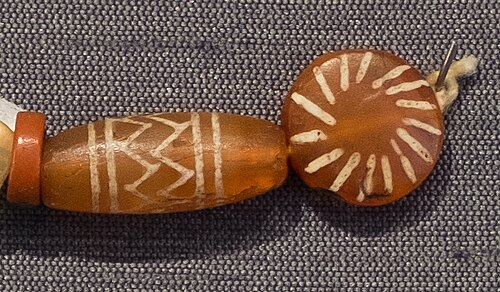
Etched carnelian beads and gold jewelry, Nilgiri Hills culture, 1st millennium CE, Asia, G33 South Asia (cropped)
Photographed 2020-11-27
No Kerala findspot is recorded, and the broad first-millennium CE date extends beyond 600 CE.
3 Corning Museum of Glass (Undated catalogue; object range about 200 BCE–400 CE). 11 Red, Black, and Blue Beads on a String – accession 75.1.88. Technique, Physical Description, Place Made and Date fields. Institutional descriptive text and accession metadata read. Image not reproduced; original beads and excavation context not examined. Arikamedu attribution and broad date are catalogue statements. The record retains uncertainty about a red bead’s technique. A displayed string is not proof of an intact ancient necklace. Open source: glasscollection.cmog.org
4 R. Zanini, G. Moro, E. F. Orsega, S. Panighello, V. S. Šelih, R. Jaćimović, J. T. van Elteren, L. Mandruzzato, L. M. Moretto and A. Traviglia (2023). Insights into the secondary glass production in Roman Aquileia: A preliminary study. PDF pp. 1–2: primary and secondary production, raw-glass movement and recycling. Repository abstract and parsed full-PDF text read, especially pp. 1–3 and conclusions. No table or micrograph remeasurement. Evidence supports a working/recycling hypothesis; it does not constitute excavation of a complete furnace. Egyptian and Syro-Palestinian raw-glass origins do not identify the workers’ ancestry. Open source: iris.unive.it
5 Shinu Anna Abraham (2021). A Review of Selected Glass Bead Types from the 2007–2009 Seasons of Excavation at Pattanam, India. pp. 347–348, section 2.2: scope and lack of chemical data. Author-uploaded chapter text read, especially pp. 345–350 and methodological discussion. Artifact images are not reproduced here. A little over 8,100 catalogued beads is a subset of the then-reported total; chronology, production location and shape resemblance require separate tests. The chapter states that chemical data were then lacking. Open source: www.researchgate.net
6 R. Zanini, G. Moro, E. F. Orsega, S. Panighello, V. S. Šelih, R. Jaćimović, J. T. van Elteren, L. Mandruzzato, L. M. Moretto and A. Traviglia (2023). Insights into the secondary glass production in Roman Aquileia: A preliminary study. PDF pp. 1–3: field-walking context, Research aim, sample selection and compositional comparison. Repository abstract and parsed full-PDF text read, especially pp. 1–3 and conclusions. No table or micrograph remeasurement. Evidence supports a working/recycling hypothesis; it does not constitute excavation of a complete furnace. Egyptian and Syro-Palestinian raw-glass origins do not identify the workers’ ancestry. Open source: iris.unive.it
7 N. Schibille, P. Tisseyre, L. Cormier and D. R. Neuville (2026). Multi-analytical study of the effects of secondary working and recycling in Roman glass. Abstract and highlights; Journal of Archaeological Science 194, 106681. Publisher-indexed abstract, highlights and October 2026 issue metadata read. Raw spectra and archaeological chronology not independently assessed. Its fourth-/fifth-century local-production conclusion is a later comparator, not a first-century Kerala claim. Open source: www.sciencedirect.com
Museum photograph of etched carnelian beads from India
Photographed 2020-11-27
No Kerala findspot is recorded, and the broad first-millennium CE date extends beyond 600 CE.
8 N. Schibille, P. Tisseyre, L. Cormier and D. R. Neuville (2026). Multi-analytical study of the effects of secondary working and recycling in Roman glass. Abstract: compositional groups, redox observations and secondary working. Publisher-indexed abstract, highlights and October 2026 issue metadata read. Raw spectra and archaeological chronology not independently assessed. Its fourth-/fifth-century local-production conclusion is a later comparator, not a first-century Kerala claim. Open source: www.sciencedirect.com
9 Anonymous; translated by Wilfred H. Schoff (1912 translation). The Periplus of the Erythraean Sea. §§49 and 54–56: translated glass terms and southern markets; translation notice. Relevant numbered sections read. University of Washington transcription of the 1912 translation, with some later editorial glosses. Ancient composition is usually placed around the middle of the first century CE, not the translation date. Schoff’s translation is public domain in the United States; no complete modern translation is reproduced. Open source: depts.washington.edu
Further reading and listening
Onward resources, not additional evidence for this article. The recorded access limits still apply. Shinu Anna Abraham (2016). Glass beads and glass production in early South India: Contextualizing Indo-Pacific bead manufacture. Opening abstract and bibliographic metadata consulted; full article was not read directly for this study. Not used to assert the final outcome of its critique. Further reading about models of Indo-Pacific bead production and distribution. Not an independent confirmation of each proposition summarized in the 2021 chapter. Open source: www.sciencedirect.com
005Photographs
Photographs of the places and objects this study discusses. Each item carries its creator’s credit, licence and documented source. See all 412 photographs and source images ↗
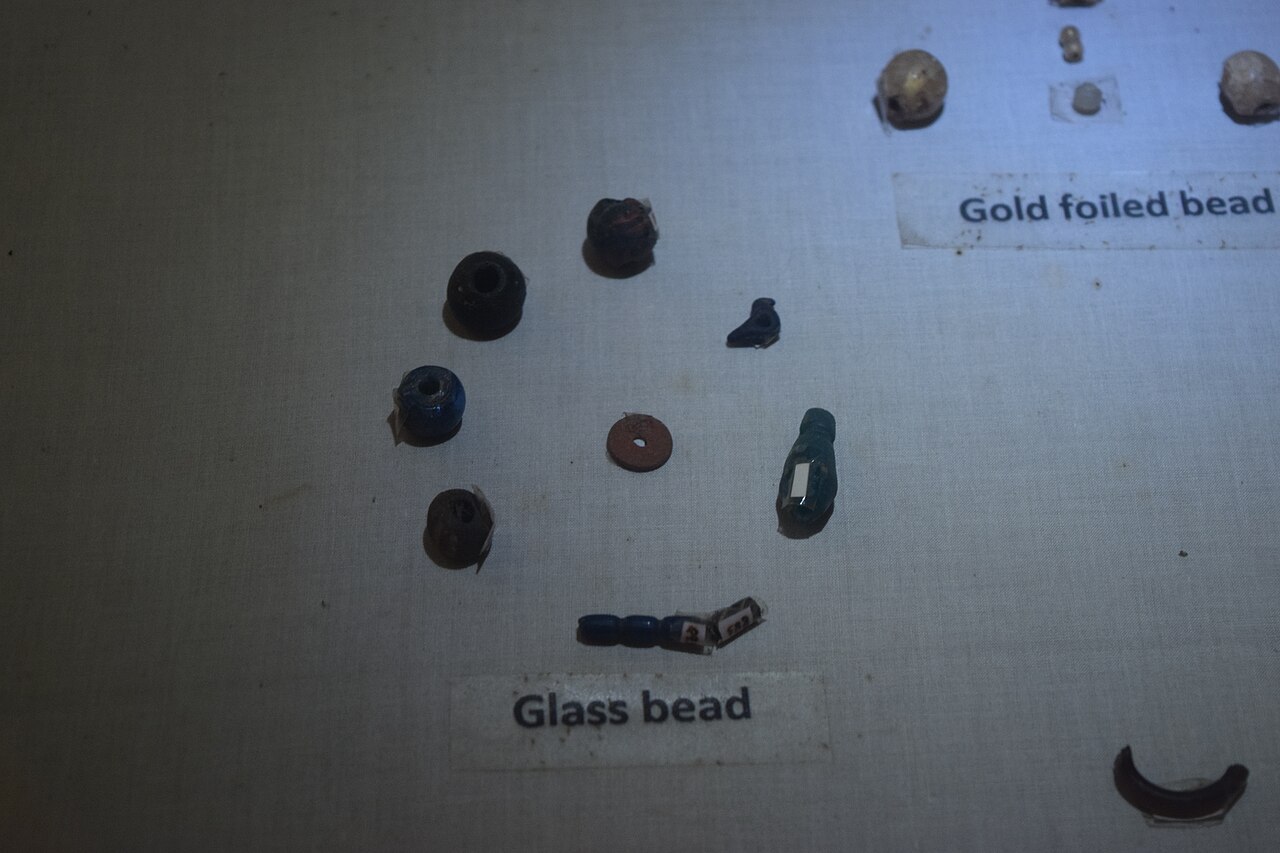
Pattanam · Photographed 2019-01-13 15:35:26
Glass beads and gold-foiled beads displayed at Pattanam Museum

Photographed 2020-11-27
Etched carnelian beads and gold jewelry, Nilgiri Hills culture, 1st millennium CE, Asia, G33 South Asia (cropped)
Museum display of etched carnelian beads and gold ornaments attributed to the Nilgiri Hills culture, broadly dated to the first millennium CE.
No Kerala findspot is recorded, and the broad first-millennium CE date extends beyond 600 CE.
Photographed 2020-11-27
Museum photograph of etched carnelian beads from India
No Kerala findspot is recorded, and the broad first-millennium CE date extends beyond 600 CE.
1st century CE
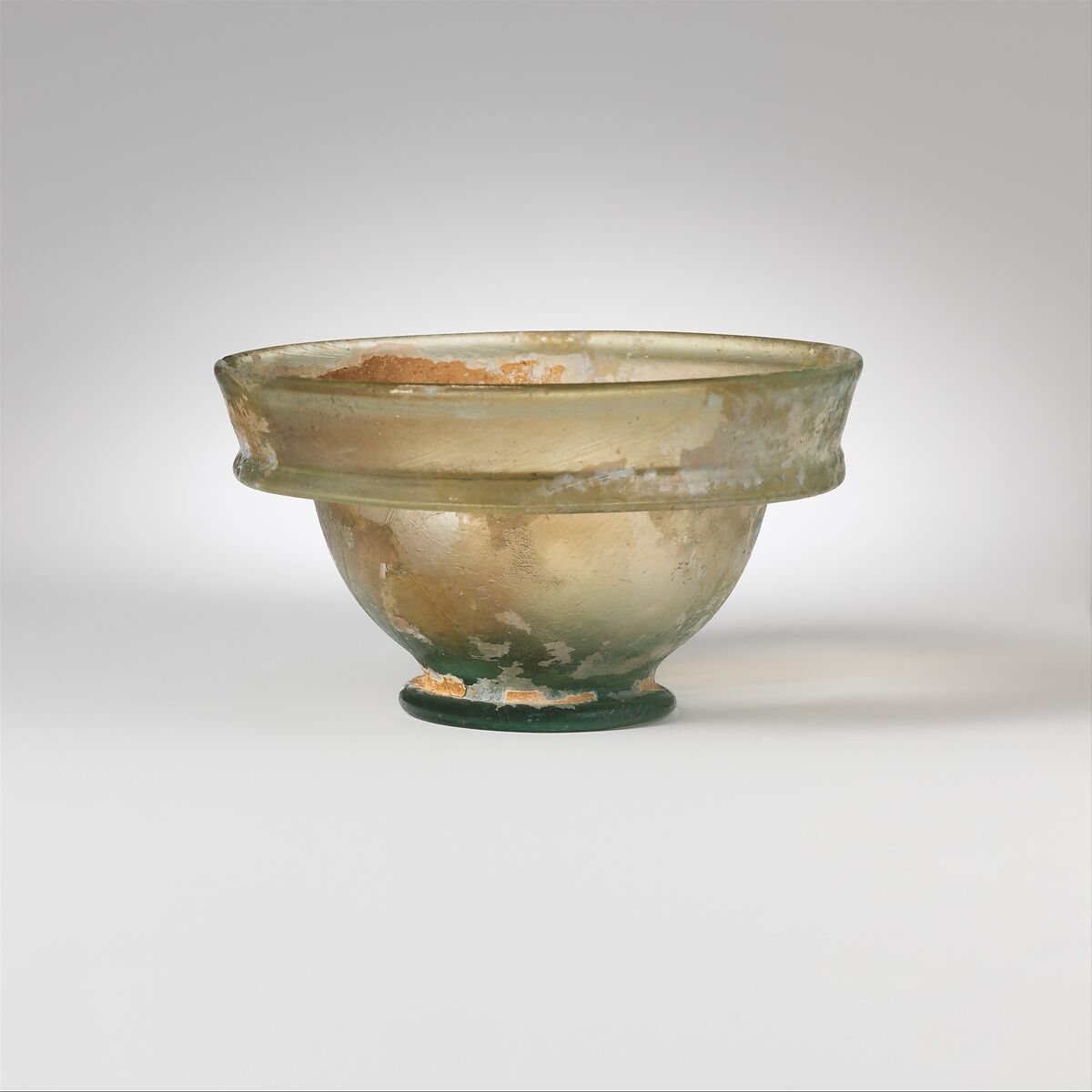
Glass bowl, 1st century CE
Glass bowl, 1st century CE. Comparative Roman object; no South Indian findspot established. A bowl photograph is not evidence for a particular maritime journey.
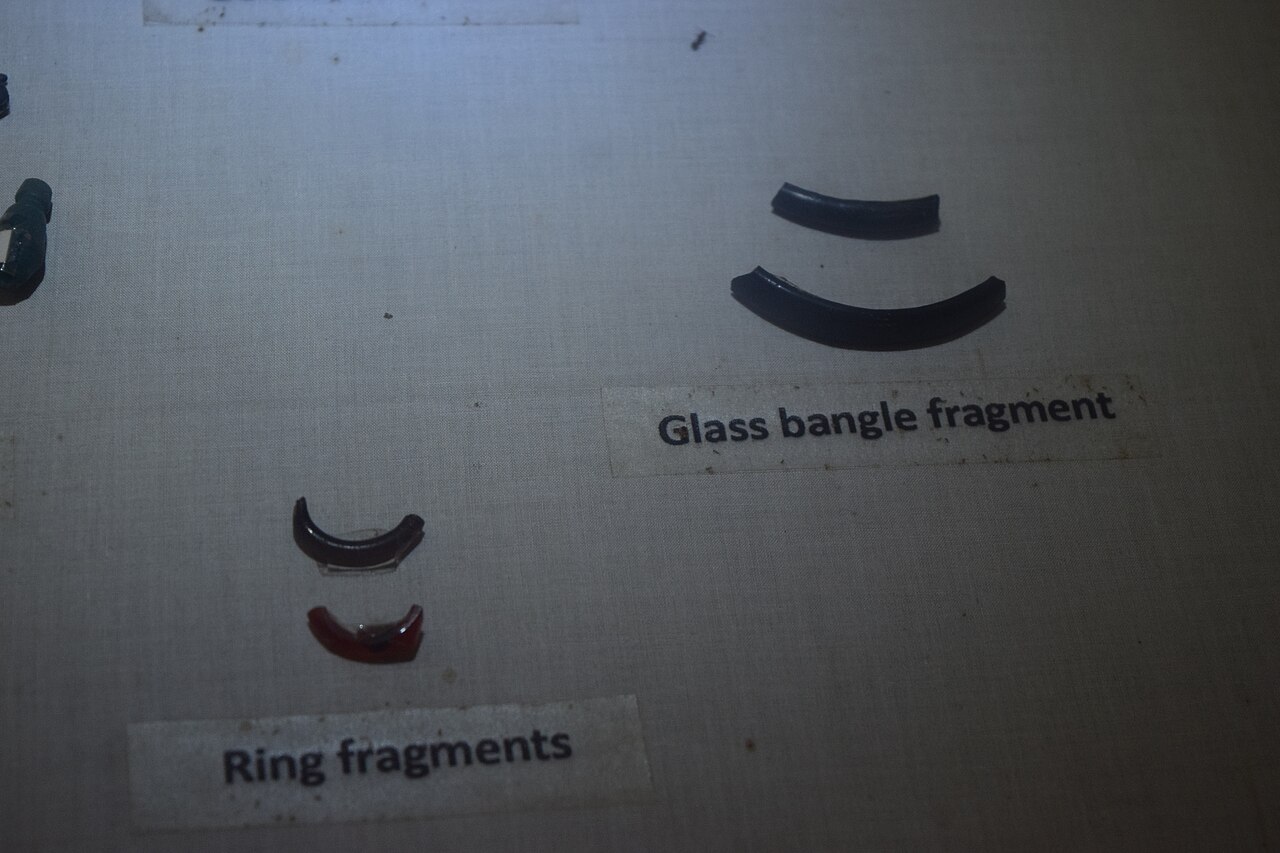
Pattanam · Photographed 2019-01-13 15:35:30
Ring fragments and glass-bangle fragments displayed at Pattanam Museum
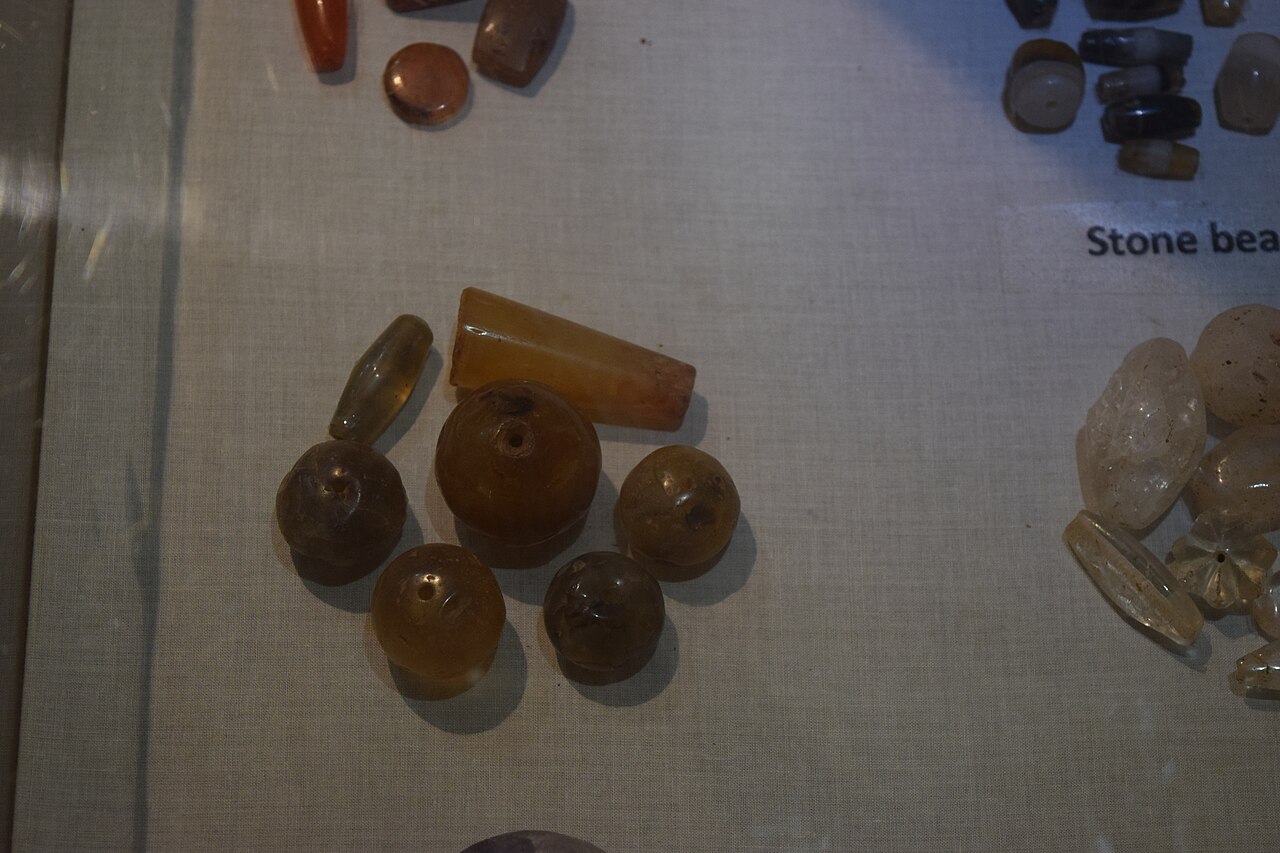
Pattanam · Photographed 2019-01-13 15:32:55
Stone beads on display at Pattanam Museum
006Where next
All related studies, connected material, books and sources12 · 9
Elsewhere on this site
Excavation Atlas Sites: Porunthal Habitation & Megalithic Grave Site · Arikamedu (Virampattinam / Poduke)
Multi-Script Glossary Terms: maṇi (மணி / മണി / കൽമുത്ത് (മുത്ത് = കടൽമുത്ത്)) · Twin-Cone Bead Drilling (Bow Drill) (இருமுனை மணித் துளைப்பான் (வில் துளைப்பான்) / ഇരട്ടക്കോൺ മുത്തുതുളയ്ക്കൽ (വില്ലുഡ്രിൽ))
Connected material
Photographs, drawings, books, videos and other studies linked to this study. A link helps you explore; it does not prove a historical claim.
- Stone beads on display at Pattanam MuseumphotographBackground
- Glass beads and gold-foiled beads displayed at Pattanam MuseumphotographShows the subject
- Ring fragments and glass-bangle fragments displayed at Pattanam MuseumphotographShows the subject
- Etched carnelian beads and gold jewelry, Nilgiri Hills culture, 1st millennium CE, Asia, G33 South Asia (cropped)photographBackground
- Museum photograph of etched carnelian beads from IndiaphotographBackground
- Glass bowl, 1st century CEphotographBackground
Books, videos and websites
Outside reading on this topic. These are not part of the study and we have not checked every claim in them. See all books and videos
- The Ancient Port of Arikamedu: New Excavations and Researches 1989–1992 (Vols. 1 & 2) Book · Vimala Begley, Peter Francis Jr., Iravatham Mahadevan, K. V. Raman, Steven Sidebotham, Kathleen Warner Slane & Elizabeth Lyding Will · 1996 & 2004 · Two-volume specialist reassessment of Arikamedu (Poduke), replacing Mortimer Wheeler's 1945 'Roman trading station' model with an indigenous South Indian port and Indo-Pacific glass/stone bead manufacturing hub.
- Lecture 174: "FUSION OF FIRE AND CULTURE: PABALUGALA AS A CENTRE FOR ANCIENT GLASS BEAD PRODUCTION" Video · Mangala Katugampola · University of Kelaniya; Central Cultural Fund / Sri Lanka Department of Archaeology advisory roles (organizer biography) · 1:15:31 · Katugampola presents excavated furnaces, production material and beads from the early-historic workshop complex at Pabalugala. A recent presentation by the project leader; supplies a regional craft-production comparison rather than a generic history of beads. The official abstract places peak activity in the second–fifth centuries CE. This is a different site, not direct evidence for a particular South Indian workshop. Its YouTube unlisted flag explains why ordinary searches may miss it; the organizer publicly provides the link.
007Sources
The study lists the sources it consulted; we have not rechecked them. A working link does not show that a source was read, and a valid identifier does not show that it supports a claim. We do not link to unofficial uploads or copies of publications. Where a study cited one, we show the published citation, or a publisher, DOI or Internet Archive link when we have one. Tracking codes are removed from links, and the sources themselves are not republished here.
Shinu Anna Abraham (2021). A Review of Selected Glass Bead Types from the 2007–2009 Seasons of Excavation at Pattanam, India. pp. 345–348; sections 1, 2, 2.1 and 2.2. Author-uploaded chapter text read, especially pp. 345– 350 and methodological discussion. Artifact images were not checked directly. A little over 8,100 catalogued beads is a subset of the then-reported total; chronology, production location and shape resemblance require separate tests. The chapter states that chemical data were then lacking.
Shinu Anna Abraham (2021). A Review of Selected Glass Bead Types from the 2007–2009 Seasons of Excavation at Pattanam, India. pp. 346–347, section 2.1: drawn tube or lada method. Author-uploaded chapter text read, especially pp. 345–350 and methodological discussion. Artifact images were not checked directly. A little over 8,100 catalogued beads is a subset of the then-reported total; chronology, production location and shape resemblance require separate tests. The chapter states that chemical data were then lacking.
Corning Museum of Glass (Undated catalogue; object range about 200 BCE–400 CE). 11 Red, Black, and Blue Beads on a String – accession 75.1.88. Technique, Physical Description, Place Made and Date fields. Institutional descriptive text and accession metadata read. Image not reproduced; original beads and excavation context not examined. Arikamedu attribution and broad date are catalogue statements. The record retains uncertainty about a red bead’s technique. A displayed string is not proof of an intact ancient necklace.
R. Zanini, G. Moro, E. F. Orsega, S. Panighello, V. S. Šelih, R. Jaćimović, J. T. van Elteren, L. Mandruzzato, L. M. Moretto and A. Traviglia (2023). Insights into the secondary glass production in Roman Aquileia: A preliminary study. PDF pp. 1–2: primary and secondary production, raw-glass movement and recycling. Repository abstract and parsed full-PDF text read, especially pp. 1–3 and conclusions. Screenshot and full text not yet checked; no table or micrograph remeasurement. Evidence supports a working/recycling hypothesis; it does not constitute excavation of a complete furnace. Egyptian and Syro-Palestinian raw-glass origins do not identify the workers’ ancestry.
Shinu Anna Abraham (2021). A Review of Selected Glass Bead Types from the 2007–2009 Seasons of Excavation at Pattanam, India. pp. 347–348, section 2.2: scope and lack of chemical data. Author-uploaded chapter text read, especially pp. 345–350 and methodological discussion. Artifact images were not checked directly. A little over 8,100 catalogued beads is a subset of the then-reported total; chronology, production location and shape resemblance require separate tests. The chapter states that chemical data were then lacking.
R. Zanini, G. Moro, E. F. Orsega, S. Panighello, V. S. Šelih, R. Jaćimović, J. T. van Elteren, L. Mandruzzato, L. M. Moretto and A. Traviglia (2023). Insights into the secondary glass production in Roman Aquileia: A preliminary study. PDF pp. 1–3: field-walking context, Research aim, sample selection and compositional comparison. Repository abstract and parsed full-PDF text read, especially pp. 1–3 and conclusions. Screenshot and full text not yet checked; no table or micrograph remeasurement. Evidence supports a working/recycling hypothesis; it does not constitute excavation of a complete furnace. Egyptian and Syro-Palestinian raw-glass origins do not identify the workers’ ancestry.
N. Schibille, P. Tisseyre, L. Cormier and D. R. Neuville (2026). Multi-analytical study of the effects of secondary working and recycling in Roman glass. Abstract and highlights; Journal of Archaeological Science 194, 106681. Publisher- indexed abstract, highlights and October 2026 issue metadata read. Direct full-page/PDF full text not yet checked; raw spectra and archaeological chronology not independently assessed. Publisher record was available when checked. Its fourth-/fifth-century local-production conclusion is a later comparator, not a first-century Kerala claim.
N. Schibille, P. Tisseyre, L. Cormier and D. R. Neuville (2026). Multi-analytical study of the effects of secondary working and recycling in Roman glass. Abstract: compositional groups, redox observations and secondary working. Publisher- indexed abstract, highlights and October 2026 issue metadata read. Direct full-page/PDF full text not yet checked; raw spectra and archaeological chronology not independently assessed. Publisher record was available when checked. Its fourth-/fifth-century local-production conclusion is a later comparator, not a first-century Kerala claim.
Anonymous; translated by Wilfred H. Schoff (1912 translation). The Periplus of the Erythraean Sea. §§49 and 54–56: translated glass terms and southern markets; translation notice. Relevant numbered sections read. University of Washington transcription of the 1912 translation, with some later editorial glosses. Ancient composition is usually placed around the middle of the first century CE, not the translation date. Schoff’s translation is public domain in the United States; no complete modern translation is reproduced.
Researchers and institutions whose work this study uses: Wilfred H. Schoff
How we know The evidence, claims and dates behind this study
What this study draws on
- Abraham's 2021 review of selected glass bead types from the 2007-2009 Pattanam seasons.
- Corning Museum of Glass catalogue record 75.1.88 for eleven beads attributed to Arikamedu.
- Compositional studies of Roman glass from Aquileia (2023) and a French villa (2026, abstract only).
- Periplus sections 49 and 54-56 in Schoff's 1912 translation.
Dates in this study
This study has no dates recorded in a form we can chart, so there is no date chart. Any dates it gives are in the full study.
The study’s claims
0 claims · 0 source passages · 22 paragraphs
Browse the study paragraph by paragraphThis study has no separately listed claims. Its paragraphs can be browsed one by one.
About this study Status, corrections and how it was made
Status
Draft study, revision 5. No historian, archaeologist, or Tamil or Malayalam specialist has reviewed it yet.
How it was made
Compiled as an editorial synthesis from published scholarship around questions we framed. About this project & workflow
The summary, How sure lines and Two views notes on this page were prepared from this study and cross-checked against its passages. That is an editorial check, not a specialist review.
Technical details
Study code R056. The text fingerprint changes whenever the study text changes.
- The study text is shown as written. Links from its paragraphs to citations help you move around the study; they are not new claims or checked source passages.
See how this study’s records were extracted
Text fingerprint (SHA-256): R056 · abac1833c3d58072f145aeb1… · v5
Evidence tables and technical details are on the web page: https://layersofthesouth.org/read/b4249e5154