Iron artifacts displayed in the Iron Age to Early Historic section of Pattanam Museum
Pattanam
Photographed 2019-01-05
- Made by hand
- Kodumanal
- Mayiladumparai
Iron or steel: four questions to ask of early South Indian finds
A short guide to telling iron from steel, using Mel-siruvalur crucibles, an analysed burial sword and an ancient trade list.
- This page
- 1,743 words · revision 5
Draft study · Awaiting specialist review · Updated
001Dates and places
Places on the atlas that name this study.
- Kodumanal
Excavated site zone · Noyyal River, Erode District
- Mayiladumparai Iron Age & Microlithic-to-Early Historic Site
Excavated upland zone · Krishnagiri District
Dates in this study are stated in words only.
- 1 Well supported
- 2 Likely
- 1 Not known
002How sure
In brief
Finds of iron and steel raise four separate questions: the metal, its structure, its place of making and its date. At Mel-siruvalur in South India, S. Srinivasan's 1994 study described closed crucibles, glassy surfaces and small metal droplets called prills. These support crucible-steel production there, but the paper left the age of that work open. A sword from a megalithic burial at Thelunganur in Tamil Nadu was reported in 2020 as ultra-high-carbon steel. This study read only that report's abstract. A 2023 study of an axe from Ambal and a sword from Mangadu combined microscopy with X-ray equipment that could not measure carbon. The Periplus, a trade guide usually dated to the mid-first century CE, lists Indian iron and steel from Ariaca. A patterned blade surface does not by itself identify crucible steel. This study does not settle when crucible steel was first made in South Asia.
Key researchers cited in this study: K. Rajan (Kodumanal & Porunthal Excavations / Epigraphy) · V. Selvakumar (Maritime & Prehistoric Archaeology) · Wilfred H. Schoff (Periplus Translation & Commentary) · Sharada Srinivasan (High-Tin Bronze & Crucible Steel Archaeometallurgy) · Full bibliography
How sure
- Likely
Crucible steel was made at Mel-siruvalur.
Published analyses of crucibles and metal prills support it; the paper's figures were not rechecked here.
- Not known
When the Mel-siruvalur steelmaking took place.
The 1994 paper itself leaves the age of the production activity open.
- Likely
The Thelunganur burial sword is ultra-high-carbon steel.
Reported by its analysts in 2020; this study read only the published abstract.
- Well supported
A patterned surface alone does not identify crucible steel.
Shown by published experiments and a patterned museum blade that did not fit the high-carbon group.
Why it matters
It shows how to test claims about famous South Indian steel by asking what each kind of evidence can show.
003Key findings
What the study concludes
- Crucible-production remains, the microstructure of a finished object and a commercial label are different kinds of evidence.
- The Mel-siruvalur study supports production identification but does not securely date that activity to a particular early period.
- Later patterned blades and modern experiments clarify processes; they do not identify the material of an otherwise undocumented first-century tool.
In the study’s own words. How sure each point is, is shown above.
The summary above is the short read. The full study is the complete text it was drawn from, with its tables and source notes.
What the full study covers
- Main findings
- Begin with the ordinary tool
- Four questions that should not collapse into one
- A vessel that helped make a metal
- A sword is a specimen, not a national average
- The instrument matters as much as the impressive number
- Indian steel in a commercial description
- Pattern welding and crucible-derived patterns
- What the metallurgical evidence establishes
- What remains uncertain
- The next questions
- References and access notes
004The study
Main findings
- Crucible-production remains, the microstructure of a finished object and a commercial label are different kinds of evidence.
- The Mel-siruvalur study supports production identification but does not securely date that activity to a particular early period.
- Later patterned blades and modern experiments clarify processes; they do not identify the material of an early tool that has not itself been analysed.
Begin with the ordinary tool
A reader need not begin with a celebrated sword. Begin with the question of what a cutting edge was made from, who could maintain it, and what evidence would let us distinguish one kind of metal from another. The attraction of the word wootz is understandable: it seems to promise an answer before we have examined the object. This study takes the opposite route. It asks what different investigations actually demonstrate about material, process and date. The scope is narrower than a history of all Indian iron. A production-debris study, analyses of particular objects, an ancient commercial description and a later experimental comparison provide a method for understanding technology. They do not assign exceptional material to every chisel or establish an uninterrupted lineage from an Iron Age burial to a museum blade.
Four questions that should not collapse into one
Smelting extracts metal from ore; smithing works metal already obtained. A bloom is a mass of iron and slag requiring further work, not necessarily a poured liquid. Crucible processing uses a heat-resistant vessel. Finding worked iron is therefore different from identifying the production of crucible steel. 1 We should therefore ask four separate questions. Is the object iron or steel? What can its structure suggest about treatment? Is there evidence of production at its findspot? How is it dated? One strong answer does not fill the other three boxes. A successful analysis can establish a material while leaving its workshop unknown; a workshop can be convincingly identified while its chronology remains poorly resolved.
A vessel that helped make a metal
Srinivasan’s Mel-siruvalur investigation describes closed-crucible fragments, vitrified surfaces and small metal prills, and its microscopy and analysis support high-carbon steel production at the site. 3 The same paper explicitly leaves the antiquity of the activity for further investigation, so the production identification is stronger than its date. 4 A steelmaker’s success also depended on a ceramic container, so refractory making belongs beside metallurgy; the evidence does not name the people who made those vessels or how they were employed. “South India made early high-carbon steel; early wootz is unproven” covers the Mel-siruvalur crucibles, prills and dating problem in more detail.
A sword is a specimen, not a national average
Park, Rajan and Ramesh report an ultra-high-carbon steel sword from a megalithic burial at Thelunganur and propose an early use of sophisticated control over the metal’s structure. Only the published abstract was read for this study, so neither a precise absolute date nor the complete reconstruction of manufacturing steps has been checked here. 5 One analysed sword is valuable evidence, but claims about every workshop, the origin of a tradition or the normal quality of household tools would need more dated objects and production contexts. “South India made early high-carbon steel; early wootz is unproven” discusses the Thelunganur sword in more detail.
Iron implements from Adichanallur, plate V in Alexander Rea's 1915 catalogue
Adichanallur
The instrument matters as much as the impressive number
Srivastava and colleagues compare an axe from Ambal with a sword from Mangadu using material from surviving metallic cores. The study combines elemental and microscopic approaches; its X-ray fluorescence setup could not measure carbon. That limitation is essential when reading an article about steel. The authors’ interpretation depends on more than an elemental screen, and corrosion affects the material available for sampling. 6 A reader can evaluate such work without becoming a metallurgist. Ask what was sampled, whether it was original metal or corrosion, which instrument could detect which element, and how the proposed process follows from the observed structure. A modern technique’s name is not an assurance that every relevant property was directly measured. Nor does sampling an object automatically verify every date associated with the site.
Indian steel in a commercial description
Section 6 of the Periplus lists Indian iron and steel among imports from the district of Ariaca into the Adulis trading context; it does not name their furnaces or say that the steel was made in crucibles. This study uses Schoff’s 1912 translation, not a new analysis of the Greek terms. 7 A trader’s list is evidence for a recognised commercial material, not a substitute for excavated technology. “South India made early high-carbon steel; early wootz is unproven” discusses this passage and its limits in more detail.
Pattern welding and crucible-derived patterns
Verhoeven, Pendray and Dauksch distinguish a pattern produced by joining different pieces of steel from one associated with bands of carbide particles inside crucible-derived material. Their experiments and analyses address the relationship between composition, internal structure and visible pattern. The principal museum comparisons concern blades many centuries later than the early first century CE; they illuminate a technical distinction, not the make-up of much earlier objects. 8 Their re-examination is instructive because one blade in an earlier museum study did not fit the same high-carbon category as the others, despite having an attractive surface pattern. Appearance alone was not decisive, so patterned steel cannot be assumed to share one secret or one manufacturing history. 9
What the metallurgical evidence establishes
Workshop interpretation benefits from distinguishing manufacture from maintenance, an object’s requirements, a worker’s observable choices and properties now known through analysis. A prestigious material name does not settle any of these questions. Modern laboratory knowledge should not be attributed automatically to an ancient maker. The most defensible finding is therefore neither a sweeping invention date nor a dismissal of early technical achievement. It is that different kinds of evidence preserve different accomplishments. Production debris, an analyzed edge and a commercial description are each valuable. Keeping their limits visible allows the technology to remain impressive for what is actually established.
What remains uncertain
- This study does not settle the earliest South Asian crucible-steel date or certify the complete chronological claims of every cited object study.
- The figures and numerical tables of the Mel-siruvalur paper were not checked for this study. Its textual conclusions are reported, not independently reproduced.
- The Thelunganur study was read only in its published abstract.
The next questions
- Investigate ordinary tool edges and repairs, not only exceptional blades.
References and access notes
1 S. Srinivasan (1994). Wootz Crucible Steel: A Newly Discovered Production Site in South India – full-text witness. pp. 54–58: furnace debris, proposed bloom production and crucible processing. Parsed full PDF text read, especially pp. 52–58; figures and numerical tables were not visually verified. Production identification is stronger than the site chronology. No new metallography performed. Open source: student-journals.ucl.ac.uk
2 G. R. Tabor, D. Molinari and G. Juleff (2005). Computational simulation of air flows through a Sri Lankan wind-driven furnace. Introduction: iron smelting, reconstructed furnaces and products. Publisher-indexed abstract, introduction and selected model/conclusion text read; full figures and numerical results not reanalysed. The abstract locates the industry in the later first millennium CE; the conclusion mentions the seventh–eleventh centuries. Simulation assumptions are not measurements of an ancient firing. Open source: www.sciencedirect.com
Iron axe and chisel displayed at Pattanam Museum
Pattanam
Photographed 2019-01-05
3 S. Srinivasan (1994). Wootz Crucible Steel: A Newly Discovered Production Site in South India – full-text witness. pp. 54–58: Analytical results and discussion; Conclusions. Parsed full PDF text read, especially pp. 52–58; figures and numerical tables were not visually verified. Production identification is stronger than the site chronology. No new metallography performed. Open source: student-journals.ucl.ac.uk
4 S. Srinivasan (1994). Wootz Crucible Steel: A Newly Discovered Production Site in South India – full-text witness. pp. 52–53: context and dating; p. 58: further work on antiquity. Parsed full PDF text read, especially pp. 52–58; figures and numerical tables were not visually verified. Production identification is stronger than the site chronology. No new metallography performed. Open source: student-journals.ucl.ac.uk
5 J.-S. Park, K. Rajan and R. Ramesh (2020). High-carbon steel and ancient sword-making as observed in a double-edged sword from an Iron Age megalithic burial in Tamil Nadu, India. Abstract; online 2019 and print 2020 publication metadata. Publisher abstract and bibliographic information read; full analytical argument, dating evidence and plates were not checked directly. The abstract reports high-carbon material and a proposed technical interpretation, but does not supply a securely checked absolute object date for this study. A specimen does not date an entire production tradition. Open source: onlinelibrary.wiley.com
6 N. Srivastava, A. K. Singh, A. K. Kanungo, A. Arora, K. Rajan and V. Selvakumar (2023). Comparative microstructural and elemental analysis of iron artefacts from Kaveri valley archaeological sites. Materials and Methods: sampling, XRF and microstructural work; Results and Discussion. Full HTML text read, including Materials and Methods and discussion. No new phase identification, sample analysis or independent chronological review. Corrosion and sampling affect what can be observed; the reported XRF setup did not measure carbon. Site-associated dates are not recast here as directly measured ages of the metal. Open source: onlinelibrary.wiley.com
Iron weapons and implements from Adichanallur, plate III in Alexander Rea's 1915 catalogue
Adichanallur
7 Anonymous; translated by Wilfred H. Schoff (1912 translation). The Periplus of the Erythraean Sea. §6: imports from Ariaca into the Adulis context; translation notice. Relevant numbered sections read. University of Washington transcription of the 1912 translation, with some later editorial glosses. Ancient composition is usually placed around the middle of the first century CE, not the translation date. Schoff’s translation is public domain in the United States; no complete modern translation is reproduced. Open source: depts.washington.edu
8 J. D. Verhoeven, A. H. Pendray and W. E. Dauksch (1998). The Key Role of Impurities in Ancient Damascus Steel Blades. Introduction; Damascus Steel; The Swords. Publisher HTML text read, especially Introduction, Damascus Steel, The Swords and Zschokke Swords. No independent reanalysis of micrographs. Main historical objects are much later than the early first century CE. Some unit symbols in online text are corrupted; no quantitative microstructural measurements are transcribed here. Open source: www.tms.org
9 J. D. Verhoeven, A. H. Pendray and W. E. Dauksch (1998). The Key Role of Impurities in Ancient Damascus Steel Blades. Zschokke Swords: discussion of sword 8. Publisher HTML text read, especially Introduction, Damascus Steel, The Swords and Zschokke Swords. No independent reanalysis of micrographs. Main historical objects are much later than the early first century CE. Some unit symbols in online text are corrupted; no quantitative microstructural measurements are transcribed here. Open source: www.tms.org
005Photographs
Photographs of the places and objects this study discusses. Each item carries its creator’s credit, licence and documented source. See all 412 photographs and source images ↗
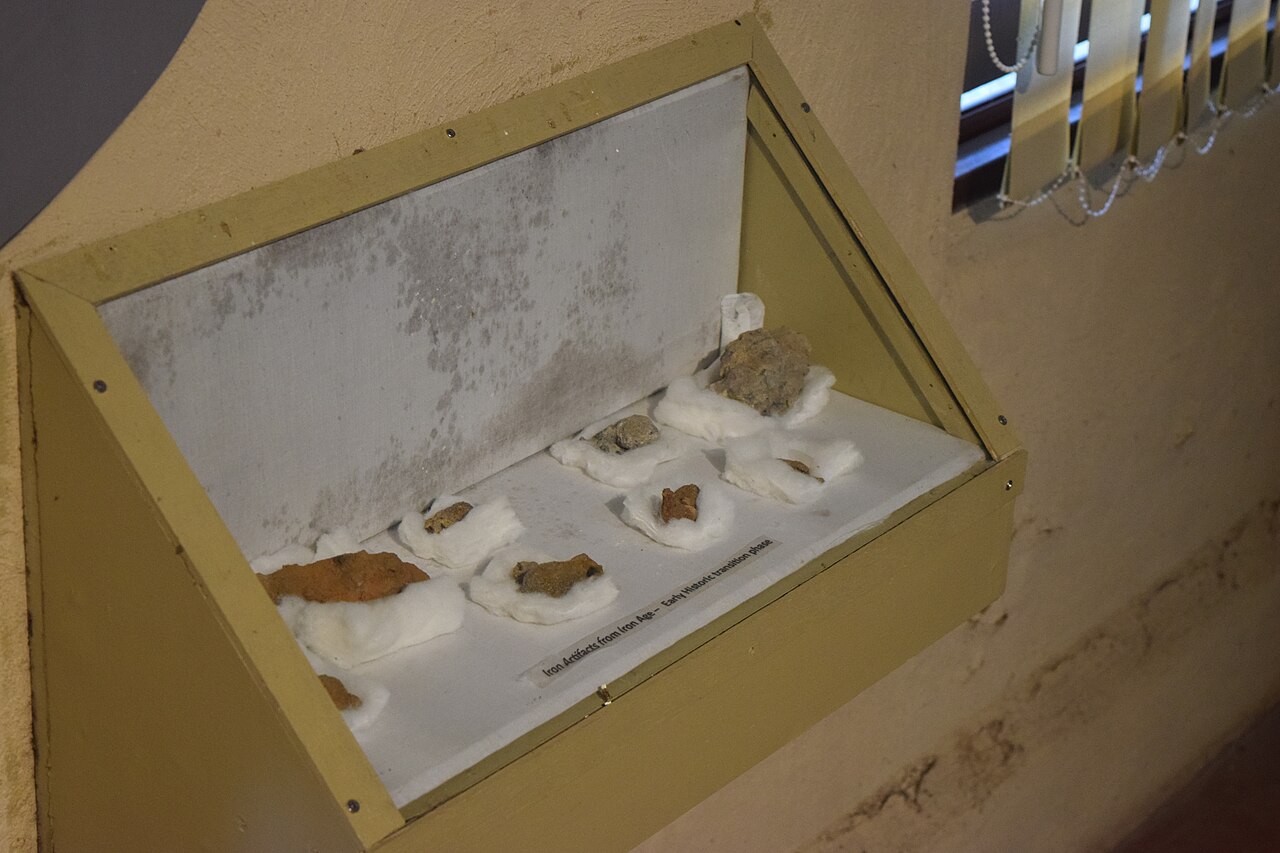
Pattanam · Photographed 2019-01-05 16:27:39
Iron artifacts displayed in the Iron Age to Early Historic section of Pattanam Museum

Adichanallur
Iron implements from Adichanallur, plate V in Alexander Rea's 1915 catalogue
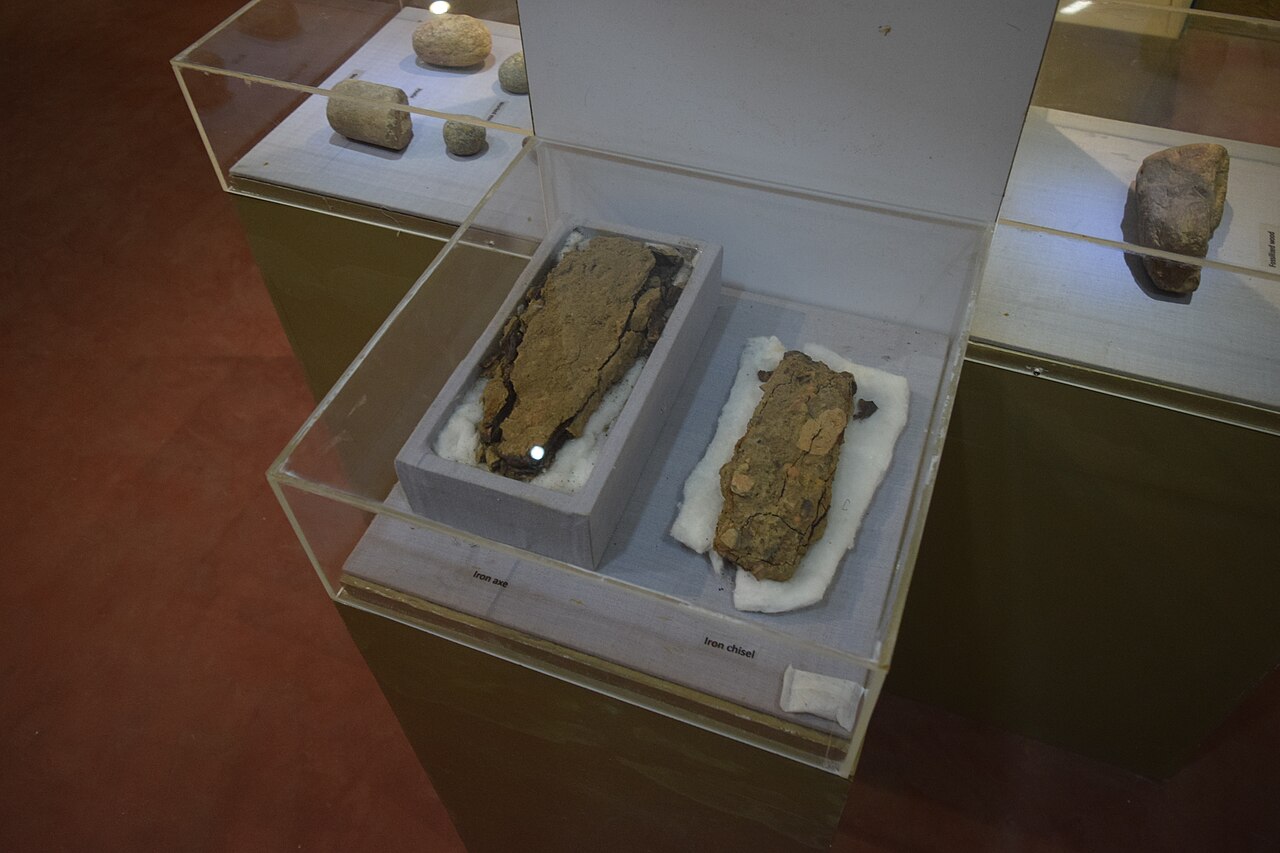
Pattanam · Photographed 2019-01-05 16:42:23
Iron axe and chisel displayed at Pattanam Museum

Adichanallur
Iron weapons and implements from Adichanallur, plate III in Alexander Rea's 1915 catalogue
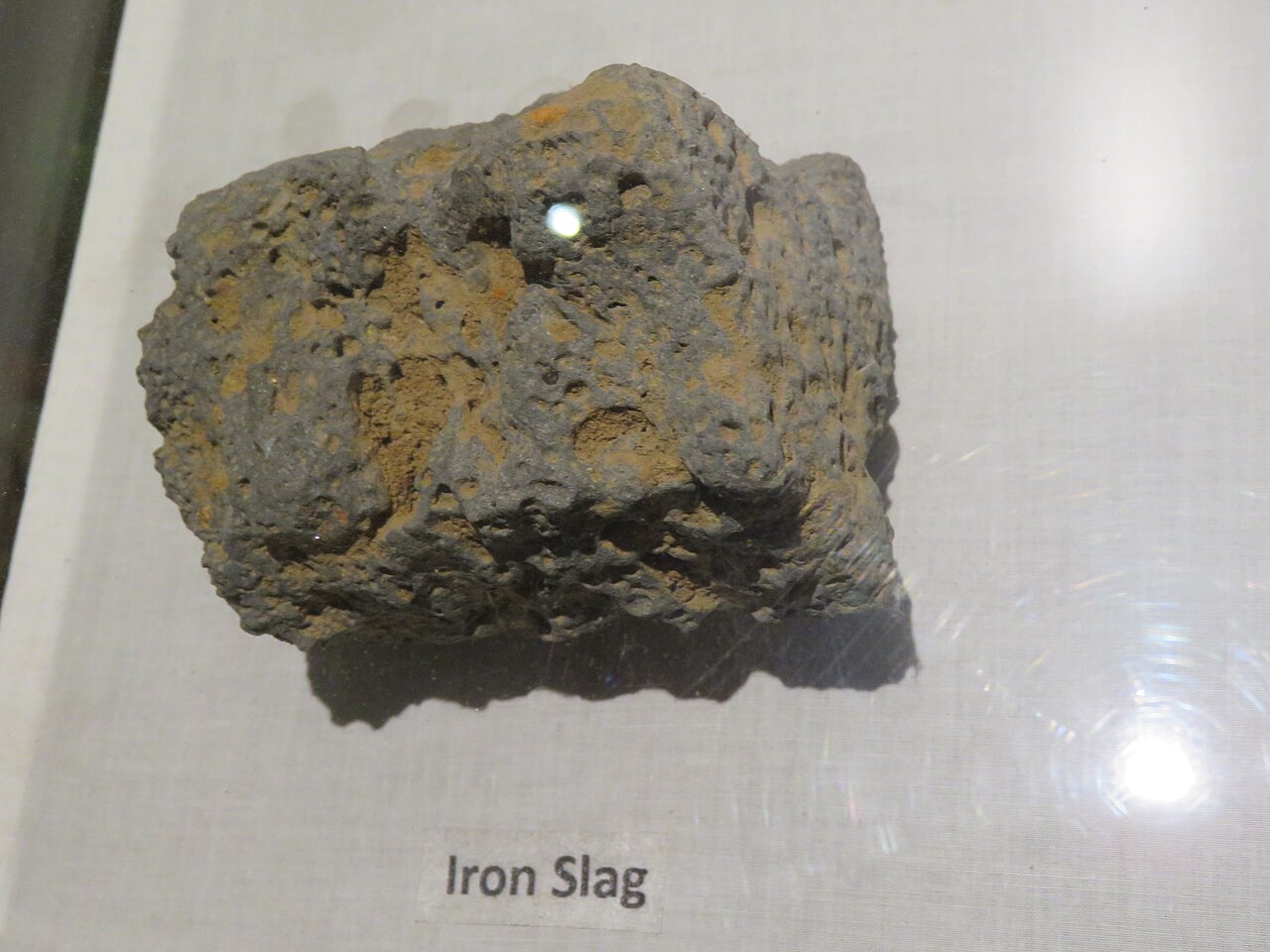
Pattanam · Photographed 2018-01-21 00:42
A piece of iron slag displayed at Pattanam Museum

Adichanallur
Iron tools and weapons from Adichanallur, plate IV in Alexander Rea's 1915 catalogue
006Where next
Both studies ask how to tell iron from steel in early South Indian finds, including the crucibles from Mel-Siruvalur.
On the atlasKodumanalExcavated site zone · Noyyal River, Erode District
Explore nextThe Metal Detective: Iron, Steel and High-Tin BronzeAll related studies, connected material, books and sources17 · 9
Elsewhere on this site
Excavation Atlas Sites: Kodumanal (Noyyal River Craft & Trade Town) · Mayiladumparai Iron Age & Microlithic-to-Early Historic Site
Junior Detective Quests: The Metal Detective: Iron, Steel and High-Tin Bronze
Classroom Lesson Plans: Module 5 · Iron, Stone Monuments & Everyday Craft: Technology in Early South India
Multi-Script Glossary Terms: urukku / eḵku (Kannada/Telugu ukku) (உருக்கு / எஃகு / ഉരുക്ക്) · turutti (துருத்தி / തുരുത്തി) · irumpu īmapporuṭkaḷ (Megalithic Iron Hoards) (இரும்பு ஈமப்பொருட்கள் / മഹാശിലായുഗ ഇരുമ്പായുധങ്ങൾ) · ūtu-kuḻal (Terracotta Tuyère / Bellows Nozzle) (ஊதுகுழல் (உலைக் குழாய்) / ഊതുകുഴൽ (ചൂളക്കുഴൽ / ട്യൂയർ)) · irumpu-k-kiṭṭam (Metallurgical Tap Slag & Furnace Bloom) (இரும்புக் கிட்டம் / ഇരുമ്പുകിട്ടം (സ്ലാഗ്))
Connected material
Photographs, drawings, books, videos and other studies linked to this study. A link helps you explore; it does not prove a historical claim.
- Iron axe and chisel displayed at Pattanam MuseumphotographShows the subject
- Iron artifacts displayed in the Iron Age to Early Historic section of Pattanam MuseumphotographShows the subject
- A piece of iron slag displayed at Pattanam MuseumphotographShows the subject
- Iron weapons and implements from Adichanallur, plate III in Alexander Rea's 1915 cataloguehistorical printed plateBackground
- Iron tools and weapons from Adichanallur, plate IV in Alexander Rea's 1915 cataloguehistorical printed plateBackground
- Iron implements from Adichanallur, plate V in Alexander Rea's 1915 cataloguehistorical printed plateBackground
- Fire leaves a material recorddiagramThe crucible panel shows the closed crucibles this study describes from Mel-siruvalur, whose date is still open.
Books, videos and websites
Outside reading on this topic. These are not part of the study and we have not checked every claim in them. See all books and videos
- Early Writing System: A Journey from Graffiti to Brahmi Book · K. Rajan · 2015 · Synthesizes decades of stratigraphic excavations at Kodumanal, Porunthal, and Mayiladumparai, cataloguing over 1,000 post-firing graffiti marks and Tamil-Brāhmī potsherds recovered from habitation and burial contexts.
- Dr Oishi Roy. Understanding Early Iron Age: Zonal Differences in Indian Subcontinent. Nov 1, 2025 Video · Oishi Roy · IISER Mohali, Palaeo-Arch Lab, postdoctoral fellow at event · 1:50:15 · Research lecture comparing regional Iron Age developments and metal technologies across the Indian subcontinent. Offers a specialist framework for distinguishing regional evidence instead of assuming a single uniform Iron Age. Do not advertise this as confirming the earliest dates claimed for Sivagalai or Mayiladumparai; no such segment was verified.
007Sources
The study lists the sources it consulted; we have not rechecked them. A working link does not show that a source was read, and a valid identifier does not show that it supports a claim. We do not link to unofficial uploads or copies of publications. Where a study cited one, we show the published citation, or a publisher, DOI or Internet Archive link when we have one. Tracking codes are removed from links, and the sources themselves are not republished here.
S. Srinivasan (1994). Wootz Crucible Steel: A Newly Discovered Production Site in South India – full-text witness. pp. 54–58: furnace debris, proposed bloom production and crucible processing. Parsed full PDF text read, especially pp. 52–58. Web screenshot requests and local full text not yet checked; figures and numerical tables were not visually verified. Same study as another source in this list, now read through a fuller textual witness: not independent corroboration. Production identification is stronger than the site chronology. No new metallography performed.
G. R. Tabor, D. Molinari and G. Juleff (2005). Computational simulation of air flows through a Sri Lankan wind-driven furnace. Introduction: iron smelting, reconstructed furnaces and products. Publisher-indexed abstract, introduction and selected model/conclusion text read; full figures and numerical results not reanalysed. The abstract locates the industry in the later first millennium CE; the conclusion mentions the seventh–eleventh centuries. Neither is early-first-century Pattanam. Simulation assumptions are not measurements of an ancient firing.
S. Srinivasan (1994). Wootz Crucible Steel: A Newly Discovered Production Site in South India – full-text witness. pp. 54–58: Analytical results and discussion; Conclusions. Parsed full PDF text read, especially pp. 52–58. Web screenshot requests and local full text not yet checked; figures and numerical tables were not visually verified. Same study as another source in this list, now read through a fuller textual witness: not independent corroboration. Production identification is stronger than the site chronology. No new metallography performed.
S. Srinivasan (1994). Wootz Crucible Steel: A Newly Discovered Production Site in South India – full-text witness. pp. 52–53: context and dating; p. 58: further work on antiquity. Parsed full PDF text read, especially pp. 52–58. Web screenshot requests and local full text not yet checked; figures and numerical tables were not visually verified. Same study as another source in this list, now read through a fuller textual witness: not independent corroboration. Production identification is stronger than the site chronology. No new metallography performed.
J.-S. Park, K. Rajan and R. Ramesh (2020). High-carbon steel and ancient sword-making as observed in a double-edged sword from an Iron Age megalithic burial in Tamil Nadu, India. Abstract; online 2019 and print 2020 publication metadata. Publisher abstract and bibliographic information read; full analytical argument, dating dossier and plates not yet checked directly. The abstract reports high-carbon material and a proposed technical interpretation, but does not supply a securely checked absolute object date for this study. A specimen does not date an entire production tradition.
N. Srivastava, A. K. Singh, A. K. Kanungo, A. Arora, K. Rajan and V. Selvakumar (2023). Comparative microstructural and elemental analysis of iron artefacts from Kaveri valley archaeological sites. Materials and Methods: sampling, XRF and microstructural work; Results and Discussion. Full HTML text read, including Materials and Methods and discussion. No new phase identification, sample analysis or independent chronological review. Corrosion and sampling affect what can be observed; the reported XRF setup did not measure carbon. Site-associated dates are not recast here as directly measured ages of the metal.
Anonymous; translated by Wilfred H. Schoff (1912 translation). The Periplus of the Erythraean Sea. §6: imports from Ariaca into the Adulis context; translation notice. Relevant numbered sections read. University of Washington transcription of the 1912 translation, with some later editorial glosses. Ancient composition is usually placed around the middle of the first century CE, not the translation date. Schoff’s translation is public domain in the United States; no complete modern translation is reproduced.
J. D. Verhoeven, A. H. Pendray and W. E. Dauksch (1998). The Key Role of Impurities in Ancient Damascus Steel Blades. Introduction; Damascus Steel; The Swords. Publisher HTML text read, especially Introduction, Damascus Steel, The Swords and Zschokke Swords. No independent reanalysis of micrographs. Main historical objects are much later than the early first century CE. Some unit symbols in online text are corrupted; no quantitative microstructural measurements are transcribed here.
J. D. Verhoeven, A. H. Pendray and W. E. Dauksch (1998). The Key Role of Impurities in Ancient Damascus Steel Blades. Zschokke Swords: discussion of sword 8. Publisher HTML text in
J. D. Verhoeven, A. H. Pendray and W. E. Dauksch (1998). The Key Role of Impurities in Ancient Damascus Steel Blades. Zschokke Swords: discussion of sword 8. Publisher HTML text read, especially Introduction, Damascus Steel, The Swords and Zschokke Swords. No independent reanalysis of micrographs. Main historical objects are much later than the early first century CE. Some unit symbols in online text are corrupted; no quantitative microstructural measurements are transcribed here.
Researchers and institutions whose work this study uses: K. Rajan, V. Selvakumar, Wilfred H. Schoff, Sharada Srinivasan, Gill Juleff
How we know The evidence, claims and dates behind this study
What this study draws on
- Srinivasan's 1994 report on the Mel-siruvalur crucibles, prills and refractories, read in its full text (especially pp. 52-58).
- The published abstract of Park, Rajan and Ramesh's 2020 analysis of the Thelunganur sword.
- Srivastava and colleagues' 2023 microscopy and X-ray fluorescence study of iron from Ambal and Mangadu.
- Periplus section 6 in Schoff's 1912 translation, and Verhoeven, Pendray and Dauksch's 1998 blade studies.
Dates in this study
This study has no dates recorded in a form we can chart, so there is no date chart. Any dates it gives are in the full study.
The study’s claims
0 claims · 0 source passages · 20 paragraphs
Browse the study paragraph by paragraphThis study has no separately listed claims. Its paragraphs can be browsed one by one.
About this study Status, corrections and how it was made
Status
Draft study, revision 5. No historian, archaeologist, or Tamil or Malayalam specialist has reviewed it yet.
How it was made
Compiled as an editorial synthesis from published scholarship around questions we framed. About this project & workflow
The summary, How sure lines and Two views notes on this page were prepared from this study and cross-checked against its passages. That is an editorial check, not a specialist review.
Technical details
Study code R053. The text fingerprint changes whenever the study text changes.
- The study text is shown as written. Links from its paragraphs to citations help you move around the study; they are not new claims or checked source passages.
See how this study’s records were extracted
Text fingerprint (SHA-256): R053 · 93fefd42931e627e4b3bbbb1… · v5
Evidence tables and technical details are on the web page: https://layersofthesouth.org/read/23ee660c49