Modern photograph of a house gecko
Photographed 2017-07-08
- Everyday lives
Omens and dreams in Sangam poems are acts of interpretation
Early Tamil love poems show omens and overheard words being interpreted by one person for another, not read from a fixed code.
- This page
- 1,560 words · revision 4
Draft study · Awaiting specialist review · Updated
001Dates and places

No mapped place in this study.
Dates in this study are stated in words only.
- 1 Well supported
- 1 Likely
- 1 Not known
002How sure
In brief
Many early Tamil love poems show a woman waiting for an absent man. This study reads how signs work in a few of them, using Tamil texts and Vaidehi Herbert's translations. In the Mullaippattu, older women hear a herding woman tell calves that their mothers will soon return. They take her words as a good omen for the waiting woman, who still weeps. In Natrinai 246, a friend combines a lizard's call, a cuckoo and a rumbling sky to reassure the woman. Kuruntokai 16 shows that not every animal in a poem is an omen. In Kuruntokai 30, a dream deceives rather than foretells. The study finds that reading a sign is something people do for one another. It cannot show how common omen-reading was, and the verses have not been checked against a critical edition.
Key researchers cited in this study: Vaidehi Herbert (Sangam Poetry Translations & Commentaries) · Full bibliography
How sure
- Well supported
In the Mullaippattu, words overheard by older women are taken as a good omen.
Read directly in the Tamil passage and Herbert's translation of about lines 7 to 23.
- Likely
Not every animal in these poems is an omen.
Kuruntokai 16 uses a lizard's call as imagery, while poem 140 explicitly links a reptile with omens.
- Not known
How often omen-reading happened, or whether specialists offered it.
The poems show particular scenes, not how frequent or organised the practice was.
Why it matters
It treats popular belief in early Tamil poetry as a relationship between people, not a list of superstitions.
The summary above is the short read. The full study is the complete text it was drawn from, with its tables and source notes.
What the full study covers
003The study
Main findings
- The selected poems show reassurance and interpretation as relationships between people, not simply lists of beliefs.
- An animal image, a favorable utterance and a dream need not perform the same literary or evidentiary function.
The useful historical question is not simply whether people believed in omens. We need to ask who noticed a sign, who interpreted it, who repeated that interpretation, and whether the person addressed found it convincing. A poem can preserve those differences even when it cannot establish how frequently a practice occurred. Its voices may disagree without presenting a formal debate about religion.
Before treating a poem as a record
The institutional description of Eva Wilden’s Manuscript, Print and Memory emphasizes the long passage from oral predecessors through anthologies, commentaries, surviving manuscripts, and print. That transmission is central to the evidence problem. A poem, its traditional speaker label, a commentator’s narrative setting, and a modern translator’s explanation are related but different witnesses. The book description was consulted here, not the whole monograph or its manuscript apparatus. 1 The essay identifies poems by collection and number rather than assigning all of them to an exact decade. A recognizable custom does not justify moving a modern handbook backwards through two thousand years. Particular transmitted poems make particular forms of interpretation intelligible.
Words intended for calves become reassurance for a woman
Near the beginning of Mullaippattu, elderly women bring paddy and flowers and listen for a favorable utterance. A herding woman comforts tethered calves by saying that their mothers will soon return. The older women take what they have heard as encouraging for the absent man’s return and convey that encouragement to the waiting woman. Repeated reassurance does not immediately stop her tears. This reading follows the Tamil passage and Vaidehi Herbert’s translation of approximately lines 7–23; descriptive modern headings are not independent evidence for a named royal household. 2 The interpretive action matters. A remark about one anticipated return is heard as bearing upon another. It was not originally an answer to the waiting woman’s question. Listeners make the connection. In the English vocabulary of this essay, the occurrence becomes a sign through an act of attention and application. That description analyzes the scene; it does not claim to reconstruct every historical explanation of the practice. It also changes how we understand the older women. Calling them merely superstitious would miss what they are doing for someone. Calling them infallible bearers of collective wisdom would miss the woman’s continuing distress. They can be sincere, affectionate, experienced, and unable to supply the certainty she needs. None of those possibilities requires a caricature of either age or belief. The woman’s tears are not a philosophical manifesto. They do not prove rejection of divination or make grief a moral failure. Receiving comfort and accepting its explanation are different acts; the passage should not be made to collapse them.
A cluster of signs is still an argument
Natrinai 246 places a lizard’s call on a high wall alongside a cuckoo’s repeated call, flowering growth, and a rumbling sky. In the transmitted dramatic framing, a friend uses these indications to reassure a woman about the return of a man who has gone in search of wealth. The passage brings perceived auspiciousness and seasonal observation into one persuasive address. It does not set out an exhaustive table of directions, call counts, body parts, or inevitable outcomes. 3 The distinction between a cluster and a codebook is consequential. The poem’s force depends on the situation, the speaker’s purpose, and the listener’s concern. Extracting “lizard equals return” loses the friend who is speaking and the woman for whom she speaks. Adding an elaborate modern system would create a precision that this source has not supplied. A season can provide a practical reason to expect a traveller, while an animal’s call offers another kind of encouragement. The two forms of assurance need not have identical force for every speaker. Their distinction should remain part of the reading rather than becoming a single evidential category.
Not every animal in a poem is an omen
Kuruntokai 16 describes a lizard calling to its mate and compares the sound with work on an arrow. Its emotional setting involves an absent lover and a difficult route. The creature can participate in an association about companionship without every detail constituting a separate prediction. By contrast, poem 140 explicitly brings a reptile associated with travelers’ omens into its language. The Tamil electronic text and Herbert’s translation were compared at these selected entries. Modern zoological identifications remain less secure than the poetic descriptions. 4 / 5 This is a useful restraint on overinterpretation. A bird can indicate weather, recall a beloved, interrupt a conversation, furnish a comparison or be treated as auspicious. A reading should identify the function supported by the particular passage rather than turn every animal image into a prediction. The same restraint applies to naming plants and animals. A familiar English species name can sound satisfyingly concrete while importing a translator’s conjecture. Where identification has not been checked against a critical commentary, “the lizard on the wall” may be more responsible than an exact modern species. This is not a license to be vague everywhere. It is a reason to direct verification toward the detail on which the scene genuinely depends.
A dream can disclose an absence, not a future
In Kuruntokai 30, a woman describes dreaming of contact with her lover, waking, and touching the bedding in his absence. The dream is presented as deceptive rather than as a reliable notice of his impending arrival. The relevant Tamil wording and modern translation make this a valuable counterexample to the assumption that every literary dream is prophetic. 4 / 5 My reading is that the dream briefly provides the bodily nearness which waking life withholds. What matters afterward is not a decoded symbol but an absence felt more sharply. This is an interpretation of the poem’s movement, not a retrospective clinical diagnosis. We do not need to call the speaker traumatized, delusional, or unusually rational to understand the loss the scene makes present. This links the dream passages to the poems’ treatment of waiting, which “In Tamil love poems, who speaks matters as much as the landscape” discusses through Kuruntokai 228. A dream can change the experience of the following morning without supplying new information about the absent traveller. The woman’s inner life should not be treated as a literal report of events elsewhere.
What remains open
Several checks remain outstanding: the selected verses have not been read against a critical edition and apparatus; the semantic range and transmission of terms associated with favorable utterance need verification; and the chronology of more elaborate lizard-omen systems needs separate study. None of those checks has been replaced by this literary reading. The poems offer more than lists of beliefs. They allow interpretation to be examined as something people do for and to one another. The gap between an offered assurance and the experience of the person receiving it remains central.
What remains uncertain
- The semantic range and transmission of terms for favorable utterance require further philological work.
- The poems do not establish a specialist omen-reading service at any particular place or date.
References and access notes
1 Eva Maria Wilden, 2014; University of Hamburg institutional book record. Manuscript, Print and Memory: Relics of the Cankam in Tamilnadu. Source type: Institutional description of scholarly monograph. Access scope: Description and contents, especially the account of oral predecessors, anthologization, commentary, manuscript and print transmission. Full monograph and manuscript apparatus not read. Limitations: The corpus has a transmission history; the record does not provide an exact date for every poem. Consulted date: 2026-10-10. Open source: www.csmc.uni-hamburg.de
2 Ancient Tamil poem; Tamil text, translation and notes by Vaidehi Herbert. Mullaippattu. Source type: Ancient literary text with modern translation. Access scope: Selected opening passage, especially lines 7–23: favorable utterance, calves and continuing grief. Tamil text, translation and surrounding framing consulted. Not a manuscript collation. Limitations: Literary scene, not a survey of local practice or securely dated royal incident. Modern headings are not separate ancient evidence. Consulted date: 2026-10-10. Open source: sangamtranslationsbyvaidehi.com
3 Ancient Tamil poem; Tamil text, translation and notes by Vaidehi Herbert. Natrinai 246. Source type: Ancient literary text with modern translation. Access scope: Poem 246 and its explanatory framing consulted. Other poems on the long webpage are not claimed as newly researched here. Limitations: A situational cluster of signs, not a universal omen table or confirmed species identification. Consulted date: 2026-10-10. Open source: sangamtranslationsbyvaidehi.com
4 Ancient Tamil poems; Tamil text, translation and notes by Vaidehi Herbert. Kuruntokai 16, 30 and 140. Source type: Ancient literary text with modern translation. Access scope: Selected entries 16, 30 and 140 consulted. Modern explanatory additions distinguished from poem text. Limitations: Mate-call imagery is not automatically divination; a deceptive dream is not automatically a prophecy. Consulted date: 2026-10-10. Open source: sangamtranslationsbyvaidehi.com
5 Project Madurai, electronic edition 0110. Kuruntokai – Tamil electronic text. Source type: Ancient primary text in a modern electronic edition. Access scope: Selected numbered entries used to compare wording with the translation. Not an independently examined manuscript or newly produced critical edition. Limitations: Same underlying poems as another source in this list: comparison witness, not independent confirmation of historical events. Consulted date: 2026-10-10. Open source: www.projectmadurai.org
004Photographs
Photographs of the places and objects this study discusses. Each item carries its creator’s credit, licence and documented source. See all 412 photographs and source images ↗
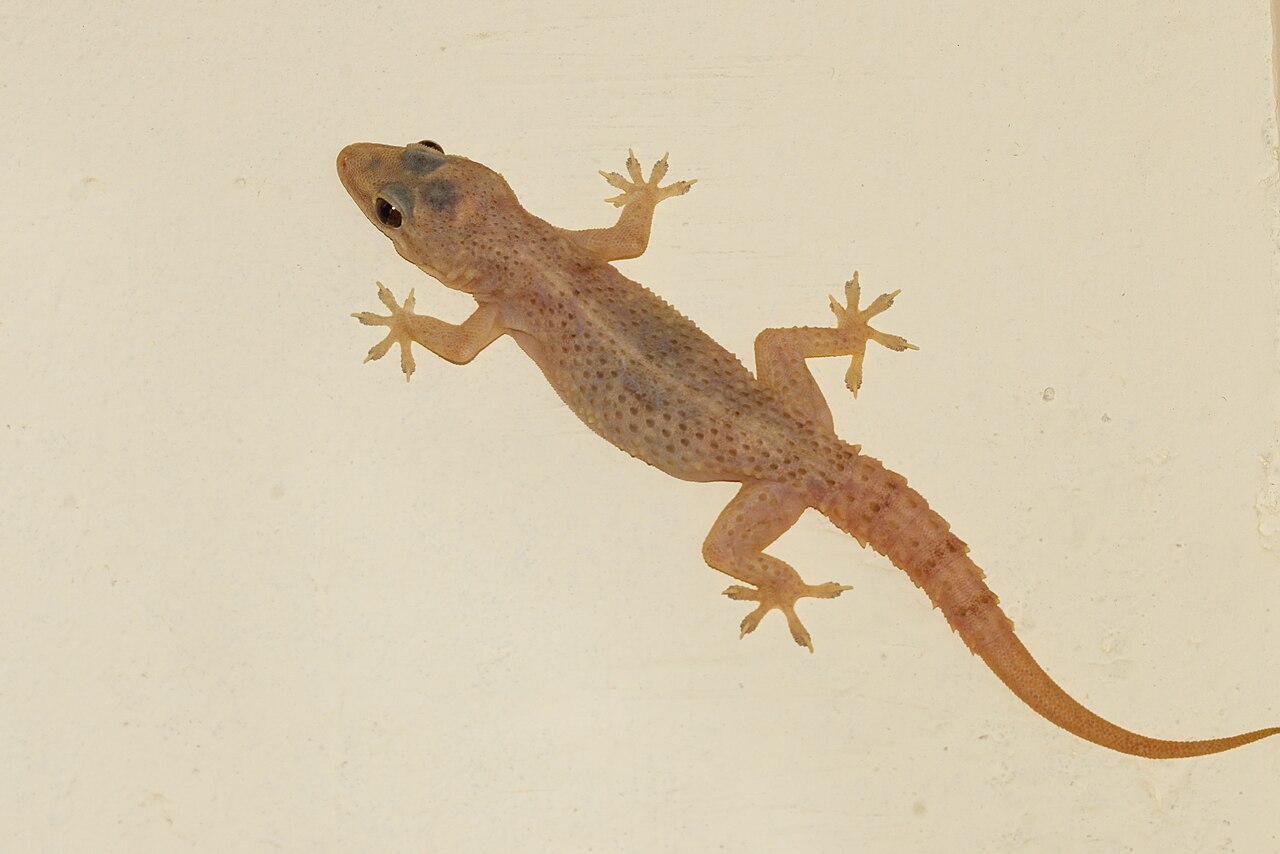
Photographed 2017-07-08 08:04:16
Modern photograph of a house gecko
Modern photograph of a house gecko, a natural-history reference for the study on lizard omens; it is not evidence that a particular ancient omen occurred.
005Where next
 Related study
All related studies, connected material, books and sources17 · 5
Elsewhere on this site
Connected material
Photographs, drawings, books, videos and other studies linked to this study. A link helps you explore; it does not prove a historical claim.
- Modern photograph of a house geckophotographBackground
006Sources
The study lists the sources it consulted; we have not rechecked them. A working link does not show that a source was read, and a valid identifier does not show that it supports a claim. We do not link to unofficial uploads or copies of publications. Where a study cited one, we show the published citation, or a publisher, DOI or Internet Archive link when we have one. Tracking codes are removed from links, and the sources themselves are not republished here.
Eva Maria Wilden, 2014; University of Hamburg institutional book record. Manuscript, Print and Memory: Relics of the Cankam in Tamilnadu. Source type: Institutional description of scholarly monograph. Access scope: Description and contents, especially the account of oral predecessors, anthologization, commentary, manuscript and print transmission. Full monograph and manuscript apparatus not read. Limitations: The corpus has a transmission history; the record does not provide an exact date for every poem. Consulted date: 2026-10-10.
Ancient Tamil poem; Tamil text, translation and notes by Vaidehi Herbert. Mullaippattu. Source type: Ancient literary text with modern translation. Access scope: Selected opening passage, especially lines 7–23: favorable utterance, calves and continuing grief. Tamil text, translation and surrounding framing consulted. Not a manuscript collation. Limitations: Literary scene, not a survey of local practice or securely dated royal incident. Modern headings are not separate ancient evidence. Consulted date: 2026-10-10.
Ancient Tamil poem; Tamil text, translation and notes by Vaidehi Herbert. Natrinai 246. Source type: Ancient literary text with modern translation. Access scope: Poem 246 and its explanatory framing consulted. Other poems on the long webpage are not claimed as newly researched here. Limitations: A situational cluster of signs, not a universal omen table or confirmed species identification. Consulted date: 2026-10-10.
Ancient Tamil poems; Tamil text, translation and notes by Vaidehi Herbert. Kuruntokai 16, 30 and 140. Source type: Ancient literary text with modern translation. Access scope: Selected entries 16, 30 and 140 consulted. Modern explanatory additions distinguished from poem text. Limitations: Mate-call imagery is not automatically divination; a deceptive dream is not automatically a prophecy. Consulted date: 2026-10-10.
Project Madurai, electronic edition 0110. Kuruntokai – Tamil electronic text. Source type: Ancient primary text in a modern electronic edition. Access scope: Selected numbered entries used to compare wording with the translation. Not an independently examined manuscript or newly produced critical edition. Limitations: Same underlying poems as another source in this list: comparison witness, not independent confirmation of historical events. Consulted date: 2026-10-10.
Researchers and institutions whose work this study uses: Vaidehi Herbert
How we know The evidence, claims and dates behind this study
What this study draws on
- Tamil text and Vaidehi Herbert's translations of the Mullaippattu, Natrinai 246 and Kuruntokai 16, 30 and 140
- Project Madurai's Kuruntokai text, used to compare wording with the translation
- The institutional description of Eva Wilden's 2014 book on how the poems were transmitted; the book itself was not read
Dates in this study
This study has no dates recorded in a form we can chart, so there is no date chart. Any dates it gives are in the full study.
The study’s claims
0 claims · 0 source passages · 14 paragraphs
Browse the study paragraph by paragraphThis study has no separately listed claims. Its paragraphs can be browsed one by one.
About this study Status, corrections and how it was made
Status
Draft study, revision 4. No historian, archaeologist, or Tamil or Malayalam specialist has reviewed it yet.
How it was made
Compiled as an editorial synthesis from published scholarship around questions we framed. About this project & workflow
The summary, How sure lines and Two views notes on this page were prepared from this study and cross-checked against its passages. That is an editorial check, not a specialist review.
Technical details
Study code R089. The text fingerprint changes whenever the study text changes.
- The study text is shown as written. Links from its paragraphs to citations help you move around the study; they are not new claims or checked source passages.
See how this study’s records were extracted
Text fingerprint (SHA-256): R089 · 1909418d73ffa03ed67a1a06… · v4
Evidence tables and technical details are on the web page: https://layersofthesouth.org/read/f6b2141b38