Mature cotton boll in Raichur, Karnataka – Modern cotton botanical reference
Photographed 2025-11-17
- Everyday lives
Spinning and weaving in early Tamil Nadu and the Red Sea
Keezhadi (Keeladi) spindle whorls, a Purananuru poem and cotton sails at Berenike show stages of cloth-making, but not how the work was organised.
- This page
- 1,977 words · revision 7
Draft study · Awaiting specialist review · Updated
001Dates and places

No mapped place in this study.
Dates in this study are stated in words only.
- 1 Well supported
- 1 Likely
- 1 Possible
- 1 Not known
002How sure
In brief
Cloth-making has separate stages: preparing fibre, spinning yarn and weaving it into fabric. This study asks which stages the surviving evidence actually shows. The Tamil Nadu Department of Archaeology lists spindle whorls among the finds at Keeladi. Its summary gives no date, weight or context for each one. Purananuru 326, an early Tamil poem, places a woman's cotton work beside a small lamp. At Berenike, an Egyptian port on the Red Sea, cotton fragments came from a first-century CE rubbish heap. Felicity and John Peter Wild (2001) interpreted them as sail remains. They link the Z-spun cotton to Indian imports, but only their abstract was read here. Two other Berenike fragments, of wool and flax and of goat hair, have no secure date in the records used. How much work was done in households or in workshops is not known.
Key researchers cited in this study: Vaidehi Herbert (Sangam Poetry Translations & Commentaries) · Full bibliography
How sure
- Well supported
Spindle whorls, tools for spinning yarn, were found at Keeladi.
Listed in the Tamil Nadu Department of Archaeology's official summary of finds.
- Likely
Cotton fragments from first-century CE Berenike were used as ship sails.
Specialists interpreted them as sails; this study read only their abstract.
- Possible
The Berenike sail cotton was spun in India.
Rests on the spinning direction, which supports but does not settle an origin.
- Not known
How cloth production was organised between households and workshops.
No source used here records the scale of production or who did the work.
Why it matters
It separates the stages of cloth-making, so that one tool or one poem is not read as evidence for a whole industry.
003Key findings
What the study concludes
- Textile manufacture contains distinguishable stages of work: a spindle whorl at Keeladi is evidence for spinning yarn, not a surviving plan of an entire loom.
- Purananuru 326 situates a woman’s cotton work inside a domestic evening scene alongside hospitality rather than treating cotton solely as an export cargo.
In the study’s own words. How sure each point is, is shown above.
The summary above is the short read. The full study is the complete text it was drawn from, with its tables and source notes.
What the full study covers
004The study
Begin with the unfinished material
A piece of cloth looks complete. Its edges, surface, and pattern make it easy to overlook earlier decisions: before there was anything to wear or hoist on a mast, someone had to prepare the fiber and spin the yarn. This study brings together distinct kinds of evidence: an early Tamil poem, excavated spindle whorls from Keeladi, surviving Indian Ocean textiles from Berenike, and experimental textile research. Read together with their boundaries intact, they offer a firmer starting point than a single imagined workshop.
Spinning is not another name for weaving
Spinning makes yarn; weaving interlaces thread systems into fabric. In a woven cloth, the warp is held under tension while the weft crosses it. Tapestry makes the distinction especially visible: coloured wefts can turn back within separate parts of the width, building areas of colour rather than crossing the whole fabric each time. The Victoria and Albert Museum explains this discontinuous-weft technique. Its European examples clarify the mechanism; their loom designs and estimated working times are not measurements of ancient South Indian production. 1 That distinction changes how we read a tool label. A whorl belongs to the problem of rotating a spindle and controlling yarn production. A loom belongs to the different problem of arranging and interlacing threads. Finding one component does not locate every other stage nearby. A responsible workshop reconstruction therefore begins by separating operations, then asking which have actual evidence at the site. It should not start with a familiar modern loom and search afterward for objects that appear to justify it. This is the functional approach advocated by the Copenhagen textile project. 2
A small tool, a larger question
The Tamil Nadu Department of Archaeology includes spindle whorls among the antiquities reported from Keeladi, together with ornaments, implements, beads and ceramics. This is a useful regional observation. The public summary does not, however, provide an individual date, weight, context and associated fabric for each whorl, so it cannot establish the precise yarn produced by one specimen. 3 Plant remains add another strand: “Crops at six sites: millets and pulses persist as rice spreads” reports cotton seeds from excavations at Kodumanal. Specimen-level records would say more than general claims about a textile industry. A perforated object’s dimensions, material, wear and context help constrain its interpretation. Several objects securely associated with working debris may support a different argument from one displaced object. These are analytical steps, not additional Keeladi findings. It is also worth resisting a false choice between sophisticated industry and domestic work. Our selected evidence does not require us to decide that all production belonged either to large workshops or to isolated households. The question must remain open at the scale of each place and operation: how much work, performed by whom, using whose materials, and with what connections to other workers? A site summary cannot settle that entire organization.
A woman, cotton and an interruption
In Purananuru 326, Vaidehi Herbert’s translation places a woman’s cotton work beside a small light. A frightened hen recognizes its mate in the illumination. The poem also describes hospitality and the generosity of a fighting lord. These details are part of praise poetry, not entries in a production register. Nevertheless, cotton work has a place inside the poem’s imagined domestic and social world rather than appearing only as an export commodity. 4 The interruption matters as much as the activity. The poem permits work, an animal’s movement and human generosity to occupy one scene. It does not tell us how many hours the woman worked, whether she sold yarn, or what legal status she held. Those limitations should remain beside its value as a literary witness.
Women finishing woven cloth by hand in a Mising community (modern comparative craft context)
Photographed 2026-01-16
When cotton helped move a ship
Felicity and John Peter Wild describe cotton fragments from a first-century CE midden at Berenike reinforced by a rectangular arrangement of cotton strips. They interpret them as sail remains, discussing webbing and comparing another ancient sail. Their abstract also links the predominant Z-spinning of the cotton to Indian imports. Only the abstract was read for this study, so the identification and origin argument are reported as the authors’ interpretation, not as a fresh examination of the objects. 5 The important positive result is a wider range of textile uses. A maritime connection can concern the working fabric of a ship, not only fine material bought for clothing. Conversely, a sail fragment cannot establish the cut of a tunic or the identity of its wearer. Spinning direction is a technical observation within an argument about provenance, not a passport. A reading of the full paper would need to check the contexts, stitching, reinforcement pattern and alternative functions before any detailed reconstruction of the sail. 6
Look closely at a surviving fragment
The Roman Textile Database records Berenike specimen BE98 1076 as a small tabby fragment combining wool and flax in different thread systems, with tapestry decoration. The recorded piece measures 95 by 70 millimetres. The fibre identifications are described as naked-eye observations; the retrieved fields do not give a secure ancient date. That is sufficient to ask about mixed materials and decorative construction, but not to call it a first-century curtain or assign it to a named room. 7 A second record, BE98 0708, describes a goat-hair rectangle with a simple selvedge and a line of stitches. Its yarn is recorded as plied, rather than single. The record again preserves an excavation context and study history without supplying a dated wardrobe. These details illustrate the kinds of observations that remain possible even when a complete object does not survive: material, yarn structure, edge and sewing. 8 Neither record is used here as evidence of Indian cloth; both show what a surviving fragment can reveal. The lesson is not that every fragment is too incomplete to matter. It is that different surviving features answer different questions. An intact edge can address a boundary of the cloth; sewing can show a join; a thread system can reveal construction. The original object’s name may remain uncertain while its making becomes clearer. That is a satisfying form of historical knowledge in its own right.
What an experiment can add
Copenhagen’s project calls for precise tool replicas, informed choices of raw material, skilled practitioners, documented work and outside analysis of the products. It specifically asks for tests by more than one craftsperson. Its Bronze Age Mediterranean remit is not evidence for a South Indian loom; its strength here is an explicit method for investigating what a reconstructed tool can do. 9 Tracy Hudson’s critique identifies practitioner experience, details of reconstructed spindles, fibre preparation and spinning methods as variables that can alter interpretation. Only the publisher’s abstract was read here; no particular experimental measurement is adopted. Read alongside the project’s methods, the critique makes a fixed conversion from whorl weight to ancient output look unjustifiably simple. 10 A demonstration should disclose its chosen fibre, tool, operator and purpose. It might show how a thread is controlled or a join changes a surface; it should not announce a fixed output for an entire ancient household. The concentration embodied in a small movement can be explained without claiming that every stage has been recovered.
What remains uncertain
- The Keeladi summary used here gives no specimen-level data for the spindle whorls and no reconstructed loom.
- The Berenike catalogue records used here do not themselves provide ancient dates for the individual fragments; modern excavation and study dates must not be substituted.
- The Berenike sail paper and Hudson spinning critique were read only as abstracts; their full technical tables were not consulted directly for this study.
The next questions
- Retrieve contextual measurements, weights, and drawings for spindle whorls and loom weights from Keeladi, Kodumanal, and Pattanam.
- Inspect the full Berenike cotton sail study and compare Z-spun Indian cotton finds across Red Sea ports.
References and access notes
1 Victoria and Albert Museum (undated). What is tapestry?. Sections explaining weave structure and looms. Technical explanation of warp, weft and discontinuous weft read. Used to explain the operation of tapestry, not to transfer European loom forms or modern production estimates to ancient South India. Open source: www.vam.ac.uk
2 Centre for Textile Research, University of Copenhagen (undated project account). Tools, Textiles and Contexts: methods, tools and experiments. TTC: Interpretation of function and Textile Tools; methodological application, not local reconstruction. Full project text read. The project concerns the central/eastern Mediterranean in the third and second millennia BCE. Used for methods, not as direct evidence for first-century Pattanam. Open source: ctr.hum.ku.dk
3 Tamil Nadu Department of Archaeology (undated excavation summary). Keeladi: key findings. Key Findings – Keeladi Excavation, antiquities paragraph. Indexed official Key Findings text read; direct fetch did not return the page. The summary reports spindle whorls but does not supply their individual contextual dates, complete dimensions or a reconstructed loom. Keeladi is a comparison site, not Pattanam. Open source: www.tnarch.gov.in
Terracotta spindle whorls displayed at the Keezhadi museum
Keezhadi
Photographed 2024-12-26
4 Thankal Porkollanar (traditional attribution); translation and notes by Vaidehi Herbert (ancient poem; modern online translation). Purananuru 326: cotton work, a lamp and hospitality. Purananuru 326, lines 1–12; translation and notes. Tamil text, English translation and notes for poem 326 read. A separate poem record on the same webpage as another source in this list; these are not independent translations. The small-lamp scene is literary evidence, not a dated household census or identification of the fuel. Open source: sangamtranslationsbyvaidehi.com
5 Felicity C. Wild and John Peter Wild (2001). Sails from the Roman port at Berenike, Egypt. International Journal of Nautical Archaeology 30(2), 211–220; abstract. Publisher-indexed abstract read; full article and specimen figures were not consulted directly for this study. Cotton fragments from a first-century CE midden are interpreted as sail remains. The alternative Elsevier DOI 10.1006/ijna.2001.0354 identifies the same work, not independent corroboration. Open source: doi.org
6 Felicity C. Wild and John Peter Wild (2001). Sails from the Roman port at Berenike, Egypt. Abstract; implications and limits of the proposed sail identification. Publisher-indexed abstract read; full article and specimen figures were not consulted directly for this study. Cotton fragments from a first-century CE midden are interpreted as sail remains. The alternative Elsevier DOI 10.1006/ijna.2001.0354 identifies the same work, not independent corroboration. Open source: doi.org
7 Felicity Wild and John Peter Wild; data entered by Bela Dimova (study 1994–2001; online catalogue undated). Berenike BE98 1076: mixed-fibre tabby and tapestry decoration. Catalogue BE98 1076; inventory 1611 I; context BE98 21.004 PB16. Indexed catalogue fields read; the live catalogue page and object images were not consulted directly for this study. Records wool and flax in different thread systems with tapestry inserts. Fibre identification is listed as naked-eye observation. No ancient object date is supplied in the retrieved fields. Open source: rtdb.eu
Handloom lungi weaving at Dohar, Bangladesh
Photographed 2014-05-09
8 Felicity Wild and John Peter Wild; data entered by Bela Dimova (study 1994–2001; online catalogue undated). Berenike BE98 0708: goat-hair tabby. Catalogue BE98 0708; inventory 0538 I; context BE98 19.009 PB21. Indexed catalogue and sewing fields read; physical specimen and image not independently examined. Goat-hair rectangle with a selvedge and stitches. No ancient date or secure original garment function appears in the retrieved fields. Open source: rtdb.eu
9 Centre for Textile Research, University of Copenhagen (undated project account). Tools, Textiles and Contexts: methods, tools and experiments. TTC Methods; Interpretation of function, experimental principles. Full project text read. The project concerns the central/eastern Mediterranean in the third and second millennia BCE. Used for methods, not as direct evidence for first-century Pattanam. Open source: ctr.hum.ku.dk
10 Tracy P. Hudson (2014). Variables and Assumptions in Modern Interpretation of Ancient Spinning Technique and Technology Through Archaeological Experimentation. EXARC Journal 2014/1, 15 February; abstract; persistent identifier ark:/88735/10147. Publisher-indexed abstract and author metadata read; the full article was not read directly for this study. The abstract identifies practitioner experience, reconstructed equipment and preparation/method choices as variables. Detailed results are not represented as read. Open source: exarc.net
005Photographs
Photographs of the places and objects this study discusses. Each item carries its creator’s credit, licence and documented source. See all 412 photographs and source images ↗
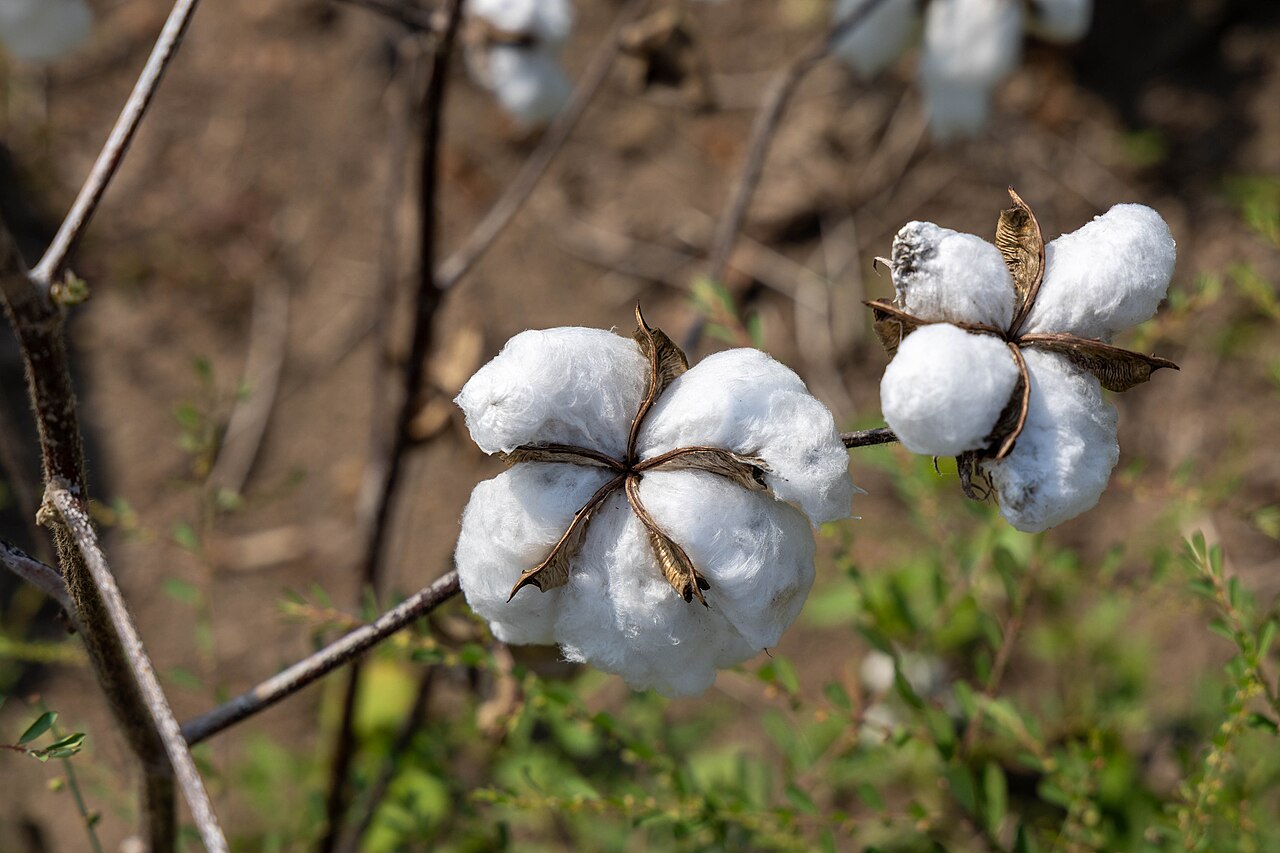
Photographed 2025-11-17 12:01:40
Mature cotton boll in Raichur, Karnataka – Modern cotton botanical reference
Mature cotton boll in Raichur, Karnataka. Modern cotton botanical reference; not an excavated textile or evidence of an ancient cotton species.
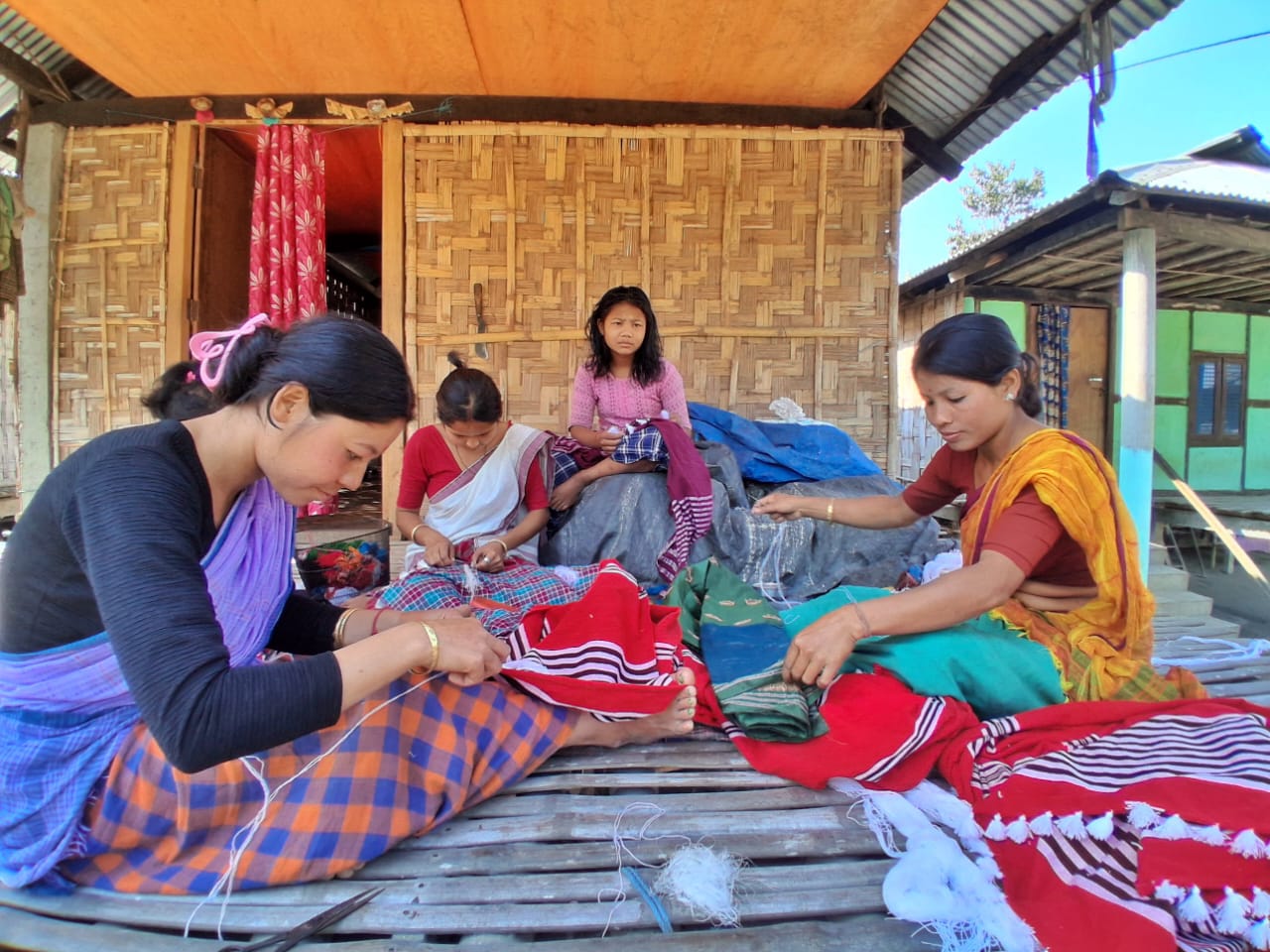
Photographed 2026-01-16
Women finishing woven cloth by hand in a Mising community (modern comparative craft context)
Women finishing woven textiles and fringes by hand in a Mising community (titled handloom weaving in the photographer's record; no loom appears in frame). Modern comparative craft context; this does not establish an ancient loom design or gender division of labour.
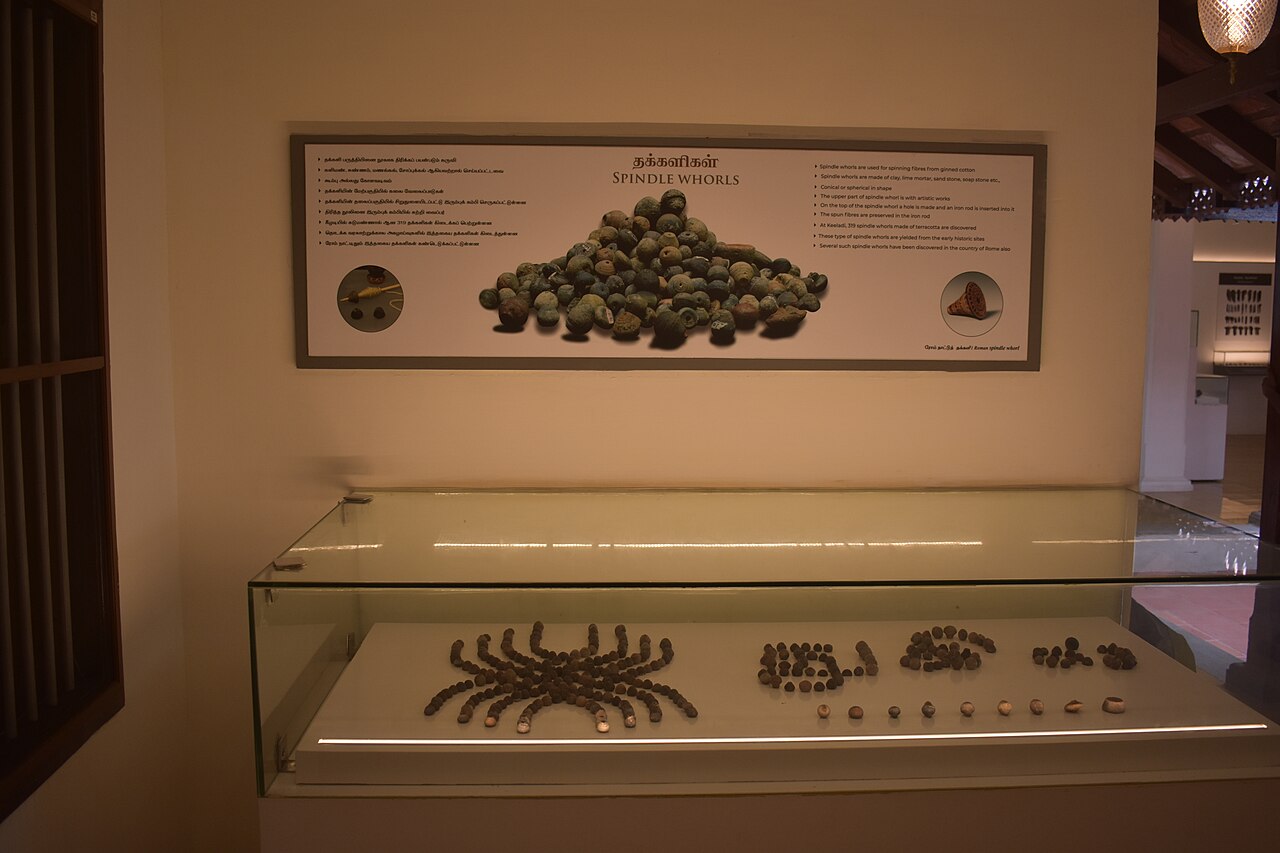
Keezhadi · Photographed 2024-12-26 10:57:01
Terracotta spindle whorls displayed at the Keezhadi museum
Terracotta spindle whorls (spinning weights) photographed in a Keezhadi museum display case labelled 'SPINDLE WHORLS' in Tamil and English; individual trench findspots require separate catalogue verification.

Photographed 2014-05-09 17:02:11
Handloom lungi weaving at Dohar, Bangladesh
Handloom lungi weaving at Dohar, Bangladesh. A modern comparative view of thread, warp and loom operation; not a reconstruction of ancient Tamilakam or a Kerala weaving workshop.
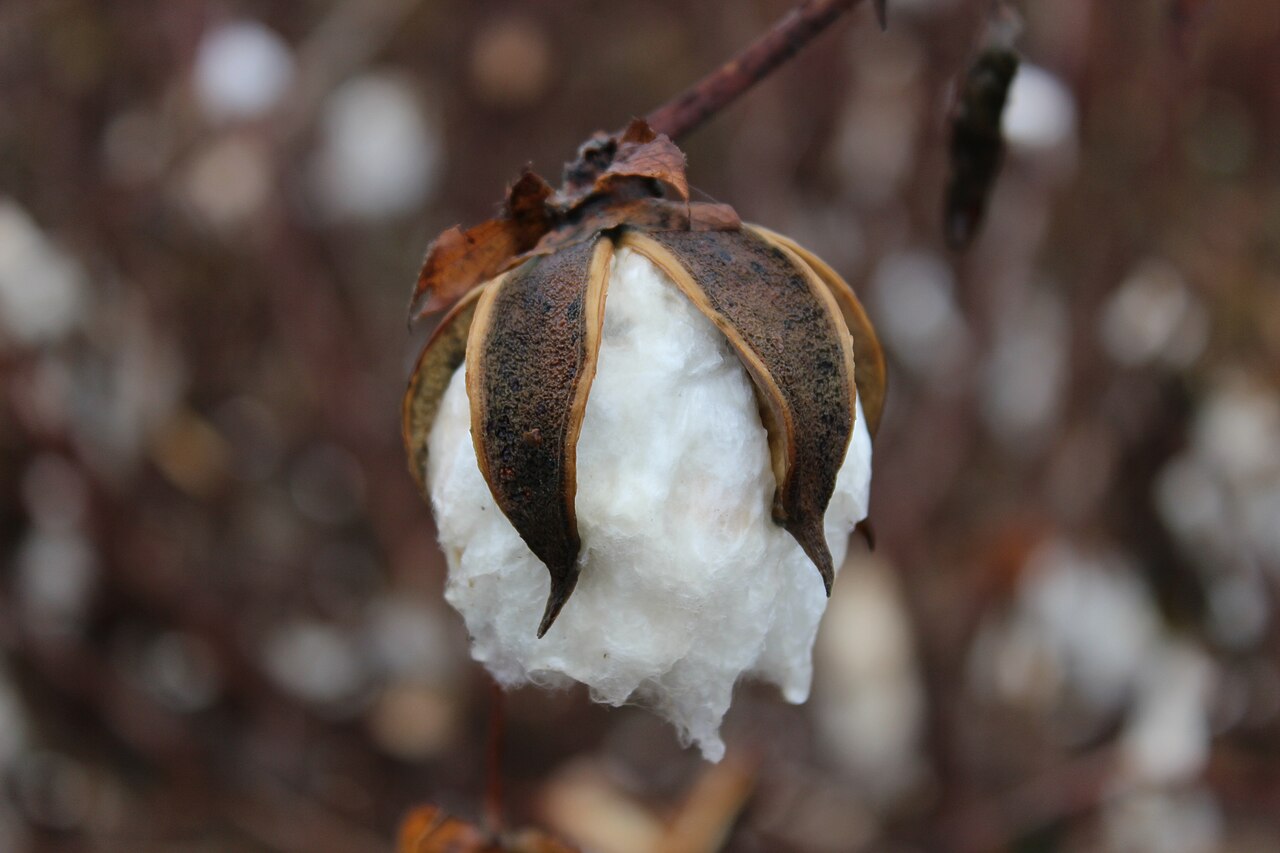
Photographed 25 November 2014, 11:01
Cotton boll nearly ready for harvest – Modern cotton botanical reference
Cotton boll nearly ready for harvest. Modern cotton botanical reference; not an excavated textile or evidence of an ancient cotton species.
006Where next

All related studies, connected material, books and sources15 · 10
Elsewhere on this site
Junior Detective Quests: Pepper Jar: Two Objects, Two Stories
Multi-Script Glossary Terms: kōṭi / tukil (கோடி / துகில் / കോടി / തുകിൽ) · takkaḷi / nūṟpu-k-katir (Terracotta Spindle Whorls & Loom Weights) (தக்களி / நூற்புக் கதிர் & தறி எடைக்கற்கள் / തക്ലി / നൂൽക്കതിരും തറിക്കല്ലുകളും)
Connected material
Photographs, drawings, books, videos and other studies linked to this study. A link helps you explore; it does not prove a historical claim.
- Terracotta spindle whorls displayed at the Keezhadi museumphotographBackground
- Indigofera tinctoria1 – Modern indigo plant identification, for dye contextphotographBackground
- Indigofera tinctoria Guadeloupe – Modern indigo plant identification, for dye contextphotographBackground
- Indian madder flowers and buds (Rubia cordifolia L., modern botanical context)photographBackground
- Indian madder plant (Rubia cordifolia, modern botanical context)photographBackground
- Cotton boll nearly ready for harvest – Modern cotton botanical referencephotographBackground
- Mature cotton boll in Raichur, Karnataka – Modern cotton botanical referencephotographBackground
- Handloom lungi weaving at Dohar, BangladeshphotographBackground
- Women finishing woven cloth by hand in a Mising community (modern comparative craft context)photographBackground
007Sources
The study lists the sources it consulted; we have not rechecked them. A working link does not show that a source was read, and a valid identifier does not show that it supports a claim. We do not link to unofficial uploads or copies of publications. Where a study cited one, we show the published citation, or a publisher, DOI or Internet Archive link when we have one. Tracking codes are removed from links, and the sources themselves are not republished here.
Victoria and Albert Museum (undated). What is tapestry?. Sections explaining weave structure and looms. Technical explanation of warp, weft and discontinuous weft read. Used to explain the operation of tapestry, not to transfer European loom forms or modern production estimates to ancient South India.
Centre for Textile Research, University of Copenhagen (undated project account). Tools, Textiles and Contexts: methods, tools and experiments. TTC: Interpretation of function and Textile Tools; methodological application, not local reconstruction. Full project text read. The project concerns the central/eastern Mediterranean in the third and second millennia BCE. Used for methods, not as direct evidence for first-century Pattanam.
Tamil Nadu Department of Archaeology (undated excavation summary). Keeladi: key findings. Key Findings – Keeladi Excavation, antiquities paragraph. Indexed official Key Findings text read; direct fetch did not return the page. The summary reports spindle whorls but does not supply their individual contextual dates, complete dimensions or a reconstructed loom. Keeladi is a comparison site, not Pattanam.
Thankal Porkollanar (traditional attribution); translation and notes by Vaidehi Herbert (ancient poem; modern online translation). Purananuru 326: cotton work, a lamp and hospitality. Purananuru 326, lines 1–12; translation and notes. Tamil text, English translation and notes for poem 326 read. A separate poem record on the same webpage as another source in this list; these are not independent translations. The small-lamp scene is literary evidence, not a dated household census or identification of the fuel.
Felicity C. Wild and John Peter Wild (2001). Sails from the Roman port at Berenike, Egypt. International Journal of Nautical Archaeology 30(2), 211–220; abstract. Publisher-indexed abstract read; full article and specimen figures were not consulted directly for this study. Cotton fragments from a first-century CE midden are interpreted as sail remains. The alternative Elsevier DOI 10.1006/ijna.2001.0354 identifies the same work, not independent corroboration.
Felicity C. Wild and John Peter Wild (2001). Sails from the Roman port at Berenike, Egypt. Abstract; implications and limits of the proposed sail identification. Publisher-indexed abstract read; full article and specimen figures were not consulted directly for this study. Cotton fragments from a first-century CE midden are interpreted as sail remains. The alternative Elsevier DOI 10.1006/ijna.2001.0354 identifies the same work, not independent corroboration.
Felicity Wild and John Peter Wild; data entered by Bela Dimova (study 1994–2001; online catalogue undated). Berenike BE98 1076: mixed-fibre tabby and tapestry decoration. Catalogue BE98 1076; inventory 1611 I; context BE98 21.004 PB16. Indexed catalogue fields read; the full page was not read directly and no image or sample was independently analysed. Records wool and flax in different thread systems with tapestry inserts. Fibre identification is listed as naked-eye observation. No ancient object date is supplied in the retrieved fields.
Felicity Wild and John Peter Wild; data entered by Bela Dimova (study 1994–2001; online catalogue undated). Berenike BE98 0708: goat-hair tabby. Catalogue BE98 0708; inventory 0538 I; context BE98 19.009 PB21. Indexed catalogue and sewing fields read; physical specimen and image not independently examined. Goat-hair rectangle with a selvedge and stitches. No ancient date or secure original garment function appears in the retrieved fields.
Centre for Textile Research, University of Copenhagen (undated project account). Tools, Textiles and Contexts: methods, tools and experiments. TTC Methods; Interpretation of function, experimental principles. Full project text read. The project concerns the central/eastern Mediterranean in the third and second millennia BCE. Used for methods, not as direct evidence for first-century Pattanam.
Tracy P. Hudson (2014). Variables and Assumptions in Modern Interpretation of Ancient Spinning Technique and Technology Through Archaeological Experimentation. EXARC Journal 2014/1, 15 February; abstract; persistent identifier ark:/88735/10147. Publisher-indexed abstract and author metadata read; direct article and alternate- host requests remained unavailable directly. The abstract identifies practitioner experience, reconstructed equipment and preparation/method choices as variables. Detailed results are not represented as read.
Researchers and institutions whose work this study uses: Vaidehi Herbert
How we know The evidence, claims and dates behind this study
What this study draws on
- The Tamil Nadu Department of Archaeology's summary of finds from Keeladi.
- Purananuru 326 in Vaidehi Herbert's online translation and notes.
- Wild and Wild (2001) on the Berenike sails, read as an abstract, and two Roman Textile Database records, BE98 1076 and BE98 0708.
- Methods from the Copenhagen Tools, Textiles and Contexts project and Tracy Hudson's 2014 critique of spinning experiments.
Dates in this study
This study has no dates recorded in a form we can chart, so there is no date chart. Any dates it gives are in the full study.
The study’s claims
0 claims · 0 source passages · 19 paragraphs
Browse the study paragraph by paragraphThis study has no separately listed claims. Its paragraphs can be browsed one by one.
About this study Status, corrections and how it was made
Status
Draft study, revision 7. No historian, archaeologist, or Tamil or Malayalam specialist has reviewed it yet.
How it was made
Compiled as an editorial synthesis from published scholarship around questions we framed. About this project & workflow
The summary, How sure lines and Two views notes on this page were prepared from this study and cross-checked against its passages. That is an editorial check, not a specialist review.
Corrections and updates
Technical details
Study code R021. The text fingerprint changes whenever the study text changes.
- The study text is shown as written. Links from its paragraphs to citations help you move around the study; they are not new claims or checked source passages.
See how this study’s records were extracted
Text fingerprint (SHA-256): R021 · 00239e522de582c916997da9… · v7
Evidence tables and technical details are on the web page: https://layersofthesouth.org/read/c794b570b5