
D2-SC1 · From a text
What the documents say
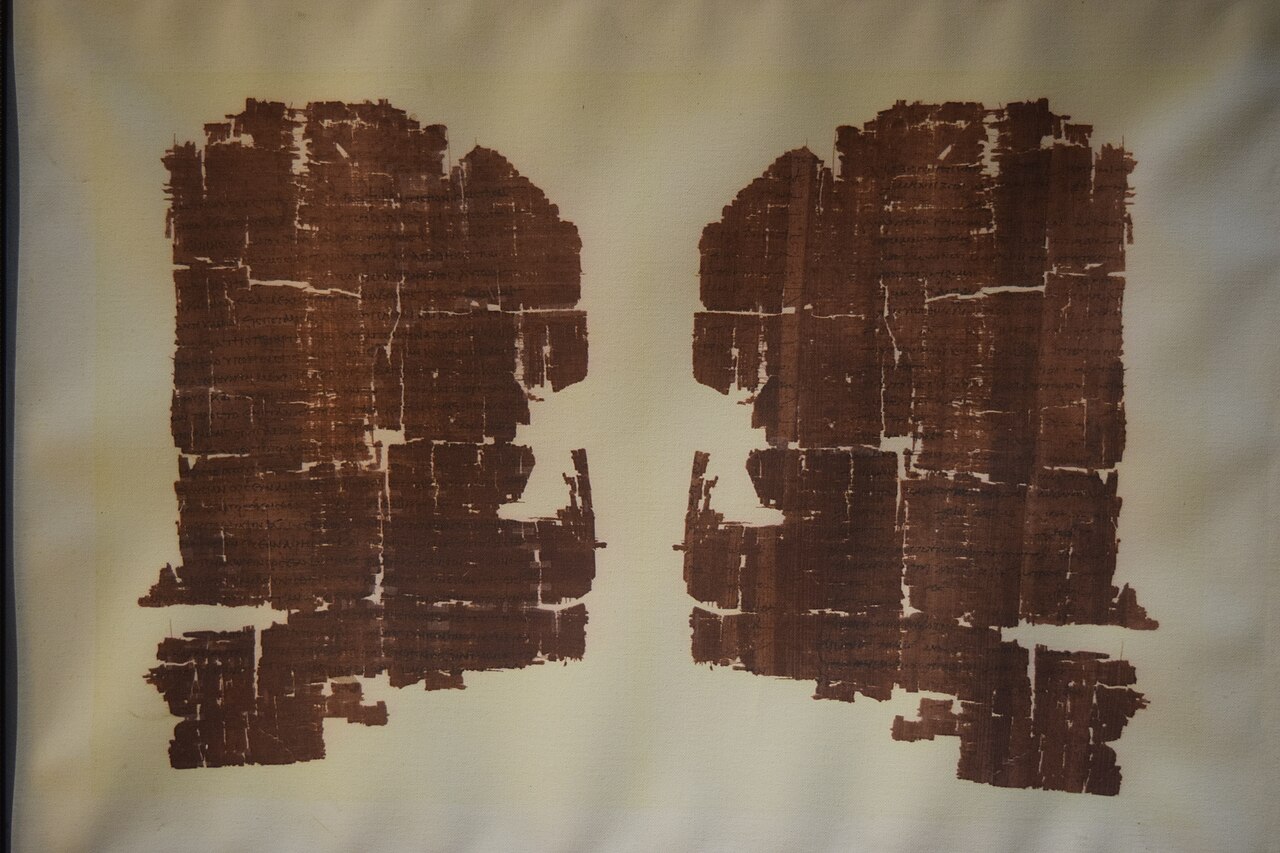
Photo: KannanVM (Wikimedia Commons). Licence: CC BY-SA 4.0 (https://creativecommons.org/licenses/by-sa/4.0). Source: https://commons.wikimedia.org/wiki/File:Muziris_Papyrus.jpg
- The Muziris Papyrus is a Greek papyrus placed by its handwriting around the mid-second century CE. Stands on: R121-C001 · a claim the study makes (not graded)
- It sets out how the cargo was to be moved: from a Red Sea arrival point across the desert to Koptos, into public warehouses, on a Nile boat and on to Alexandria. Stands on: R121-C004 · a claim the study makes (not graded)
- Its pepper quantities are reconstructions from damaged figures, arithmetic and parallels, not labels that can be read on the papyrus. Stands on: R121-C014 · a claim the study makes (not graded)
- The Periplus, a Greek guide for sea traders, names Cottonara as the inland pepper district. Stands on: R033-HS1 · Well supported #806951
- Early Tamil poems probably use the word Yavana for people in several different roles: the study read the Tamil through one modern translation. Stands on: R039-HS1 · Likely #63a4f9
What it cannot tell us Documents survive in pieces: the papyrus has lost the name of the Red Sea port where its cargo arrived. Stands on: R121-C005 · a claim the study makes (not graded)
- Look
- What does each document say about goods, and what does it say about people?
- Talk
- Which of these statements rest on a surviving word, and which on a reconstruction?
- Ask
- What would you want to know about who wrote each document, and why?
