Skip to content
Layers of the South
Search

Lesson D5 · Unit D: How sure can we be?

Two views

Why do historians disagree, and what would settle it?

Project this lessonClass vote

Ages
Ages 14 to 18
Minutes
50 / 60 / 90
Ladder step
5 Argue

Curriculum

  • CBSE History, Classes XI–XII, 2026-27, Class XII Project Work (20 marks)
  • Department for Education (England) National curriculum in England: history programmes of study, Aims on interpretations and methods of enquiry
  • National Council for the Social Studies (United States) College, Career, and Civic Life (C3) Framework for Social Studies State Standards, Inquiry Arc, Dimensions 1 to 4

No school board has reviewed or endorsed these mappings.

Draft written with AI assistance; not yet tried in a classroom

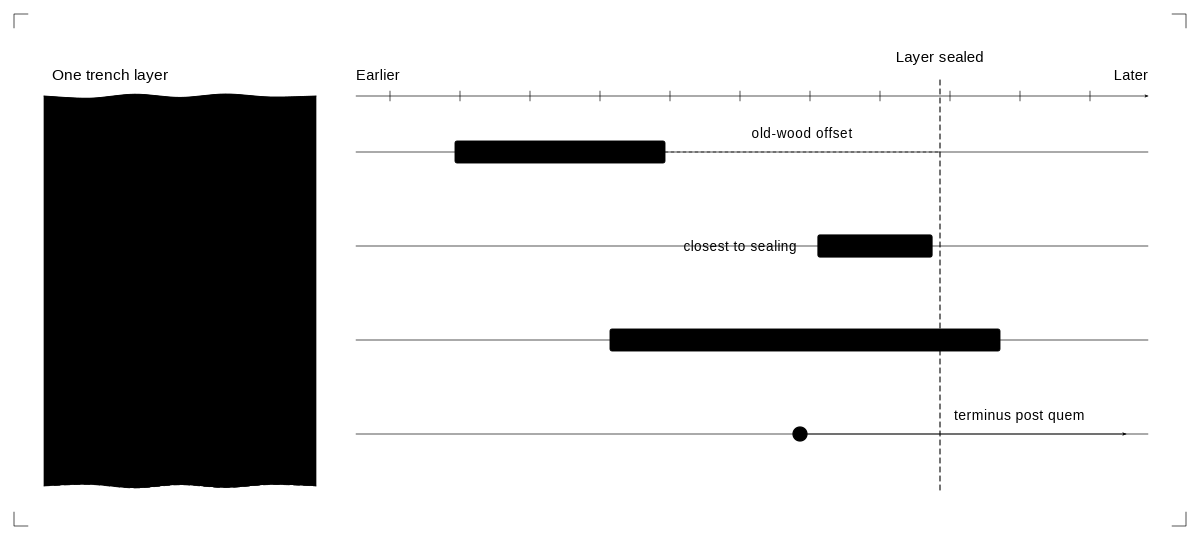
Chronometric comparison diagram contrasting old-wood charcoal, short-lived grain AMS dates, ceramic style horizons, and coin terminus post quem against one sealing event.
Inner heartwood growth rings can pre-date a fire by decades, pottery styles persist across generations, and a coin gives only the earliest possible burial date (terminus post quem).

001At a glance

Students take scholarly disagreements apart, name what kind each one is, rank the tests that would settle them, and write a judgement that is fair to both sides.

Objectives

  • I can set out a scholarly disagreement fairly: the question, each view, and the evidence each rests on.
  • I can say what kind of disagreement it is and what evidence would settle it.
  • I can rank the evidence and write a judgement that carries a level and the reason for it.

Pupils should already know

  • In lessons D1 to D4, students weighed one note of two views at a time: on the Sivagalai charcoal, the pepper cargo, the port of Muziris, and Keezhadi (Keeladi)'s tanks or Theyyam. This lesson compares several disagreements to ask why they happen.
  • Students know the four How-sure levels and have written judgements that carry a level.

Materials

Print
  • One sheet per student: support, core or stretch
  • The cut-out page for each group: three source cards and the key-word strip
  • An anatomy grid for each group, on the sheet or copied from the board
  • For the longer version: the further notes that do not concern faith, copied from this lesson plan, one per group. The faith notes stay with the teacher.
Screen
  • The classroom screen for this lesson
  • Optional: the evidence-ranking bench on the projector
Devices
  • Optional: the evidence-ranking bench on the students page, one device per pair

Key words

chronology
The order and dating of events at a site.
sigillata ടെറ സിജില്ലാറ്റ മൺപാത്രങ്ങൾ
Fine red-slipped tableware from the Roman and Eastern Mediterranean world.
amphora
A Mediterranean clay transport jar. Some types carried mainly wine.
Augustan
From the time of Augustus, whose Roman imperial coins are among those found in Kerala hoards.
stratigraphy
The order of soil layers, used with other evidence to date a site.
short-lived sample
Material such as grain that grew in a single season, without the inbuilt age of old wood.
umbrella stone കുടക്കല്ല്
A Kerala stone monument: a laterite dome resting on four shaped stone supports.
hood stone
A Kerala monument name that different authors use in different ways.
Poduke
A port named in the Periplus. Arikamedu is often proposed as Poduke.
Rouletted Ware റൗലറ്റഡ് വെയർ (കൊത്തുപണി മൺപാത്രങ്ങൾ)
Fine grey-and-black dishes made on a wheel, with rings of small pressed marks inside the base.

002Sequence

Step by step

Lesson length
  1. 456hook

    Teacher Show the photograph of the entrance to Arikamedu and run the think, puzzle, explore routine. Say that the masonry in view belongs to a later mission, not to the ancient settlement. Tell students that scholars have disagreed about when the ancient settlement began. Collect the puzzles. One of them should be a version of "How can experts read the same place so differently?"

    Pupils Say what you think you know about the place, what puzzles you, and how you could find out.

    Screen 1 of 12: Look first

  2. 7810model

    Teacher Model how to take a disagreement apart, using the note students met in lesson D3 on where the main port of Muziris lay. Set out its parts on the board: the question; View A and the evidence it rests on; View B and the evidence it rests on; the kind of disagreement; and what would settle it. For the kind, offer the names students will test today: how far the evidence reaches, which evidence counts, and how little evidence there is. Do not rank the views: View A is not the better view because it comes first.

    Pupils Copy the parts into your grid: the question, View A, View B, the kind of disagreement, what would settle it.

    Screen 2 of 12: Two views

  3. 121420guided

    Teacher Each group takes one card, so that every card is covered, and fills the grid for it. Check that groups record the evidence each view rests on, not only its conclusion, and that they copy what would settle it in the note's own words. Groups that finish early take a second card.

    Pupils Fill the grid for your card: the question, each view and its evidence, the kind of disagreement, what would settle it.

    Screen 3 of 12: How much can one rice date carry?

  4. 81022independent

    Teacher Groups rank the settling tests and the evidence on their card from most to least decisive, and write a reason for each place in the order. Then pairs of groups with different cards compare their orders. The card on Kerala's monuments lists one settling test: that group ranks it against the evidence already on the card, the early radiocarbon results and wood that may be older than its use, and says which would change the answer most. There is no single right order: credit reasons that say what each test would show. In the longer version, each group also takes one of the further notes that do not concern faith and sets it out on the grid.

    Pupils Rank the tests on your card from most to least decisive. Give a reason for each place. Compare your order with another group.

    Screen 6 of 12: Work it through together

  5. 121317claim

    Teacher Students grade the statements in the claim task. Before they grade the statement about Poduke, tell them that the identification of Arikamedu with Poduke was first proposed in the modern literature in 1941, and ask what a find would have to show to prove the name of a place, as in lesson D3. When they have graded, reveal the study's level and its reason for each. Then ask how a disagreement about dates can sit beside an order of events that the study rates highly. A reason that names real evidence or a real gap earns credit even when the level differs.

    Pupils Grade each statement. Write a reason that names the evidence or the gap. Then compare with the study.

    Screen 7 of 12: How sure can we be?

  6. 71015exit

    Teacher Students answer the enquiry question using two of the cards. For each, they name the kind of disagreement and the test that would settle it, then give one judgement with a level.

    Pupils Why do historians disagree, and what would settle it? Use two cards. Name the kind of disagreement and the settling test for each, then give one judgement with a level.

    Screen 12 of 12: Before you go

003Source cards

The three source cards

20 bound lines · 1 graded · 7 claims · 12 other records

Graded lines carry their How-sure glyph and 6-char hash; claims carry no fill glyph.

D5-SC1 · From a laboratory

How much can one rice date carry?

Excavated pit and stratified deposits at Sivagalai (Sivakalai).

Photo: Perumalism (Wikimedia Commons). Licence: CC BY-SA 4.0 (https://creativecommons.org/licenses/by-sa/4.0). Source: https://commons.wikimedia.org/wiki/File:Sivakalai_archaeological_site_16.jpg

What it cannot tell us The measurement belongs to the sampled plant material. It does not by itself date the whole site or a river-wide civilization. Stands on: R104-C005 · a claim the study makes (not graded)
Look
What is the question, and what does each view claim?
Talk
Do the two views disagree about the evidence itself, or about how far it reaches?
Ask
Which of the settling tests could be done soonest, and why?

D5-SC2 · From the ground

When did Arikamedu begin?

Present-day entrance and protected-site sign at Arikamedu.

Photo: Muthukumaran pk (Wikimedia Commons). Licence: CC BY-SA 3.0 (https://creativecommons.org/licenses/by-sa/3.0). Source: https://commons.wikimedia.org/wiki/File:Arikamedu,_Puducherry,_India_(1).JPG

What it cannot tell us This research recovered no record of a laboratory-dated sample from Arikamedu. That is a bounded search result, not proof that no such sample exists. Stands on: R116-C018 · a claim the study makes (not graded)
Look
What evidence did each view use?
Talk
Why might imported objects and Classical texts give a later start than the layers beneath them?
Ask
Which kind of evidence should decide when a site began, and why?

D5-SC3 · From the ground

When did Kerala's monument-building begin?

Several intact umbrella forms stand around exposed upright slabs in a clearing.

Photo: Ranjith Siji (Wikimedia Commons). Licence: CC BY-SA 4.0 (https://creativecommons.org/licenses/by-sa/4.0). Source: https://commons.wikimedia.org/wiki/File:Ariyannur_Umbrellas_DSC_0779.JPG

What it cannot tell us No laboratory date from an umbrella stone or hood stone appears in the sources the study inspected. Stands on: R255-C011 · a claim the study makes (not graded)
Look
What evidence does each view lean on?
Talk
Why do so few dates leave room for two views?
Ask
Which monuments would you sample first, and why?

    004Differentiation

    One task at three levels

    The three sheets use the same sources and the same task. Only the help changes.

    Support

    1. For your card, copy the question, then tick the evidence each view uses.
    2. Circle the kind of disagreement: how far the evidence reaches, which evidence counts, or how little evidence there is.
    3. Number the settling tests on your card from most to least decisive. If your card has only one test, rank it against the evidence on the card.
    4. Choose a level for each statement from the box and circle the evidence on the card that decided you.
    5. Complete the judgement: Historians disagree because ... It would be settled by ... I rate it ... because ...

    Help on the sheet

    • An anatomy grid: the question, View A and its evidence, View B and its evidence, the kind of disagreement, what would settle it
    • Key words glossed beside the text: chronology, sigillata, stratigraphy, short-lived sample, umbrella stone
    • The four levels with their meanings in a box
    • Sentence frames for setting out a view fairly: "... argues that ..., on the evidence of ..."

    Core

    1. The question is ... View A says ... because ... View B says ... because ...
    2. This is a disagreement about ...
    3. The most decisive test would be ... because ... The least decisive would be ... because ...
    4. I graded this statement ... because ... The study's level differs from mine because ...
    5. Historians disagree here because ... It would be settled by ... I rate the question now ... because ...

    Stretch

    1. Set out the disagreement on your card so fairly that a supporter of each view would accept your summary.
    2. Classify the disagreements on the cards. Is each about evidence, about reading the evidence, or about how much evidence there is?
    3. Rank the settling tests across the cards. Which single new find would change most, and why?
    4. Grade each statement. Explain how a disagreement about dates can sit beside a well-supported order of events.
    5. Write a judgement on one disagreement with a level, the reason, and the evidence that would change it.

    Extension

    Choose one of the further notes your teacher gives you: the tax on cargo crossing Egypt, the desert freight, the brick enclosures at Arikamedu, Pattanam's lowest layer, or how iron and monument burial reached South India. Set it out on the anatomy grid and say what kind of disagreement it is.

    005Assessment

    How you will know

    The grading task

    Grade each statement on the four levels and give the reason. Then compare your level with the study's, and explain any difference.

    1. People lived at Arikamedu before Mediterranean imports and Rouletted Ware arrived.
    2. Arikamedu was the port called Poduke in the Periplus.
    3. Monument burial in Kerala had begun by the first half of the first millennium BCE.
    4. How old are Kerala's umbrella stones and hood stones?
    5. Sivagalai's rice was grown in irrigated fields as a staple food.

    Exit task

    Why do historians disagree, and what would settle it? Use two of the cards. For each, name the kind of disagreement and the test that would settle it, then give one judgement with a level.

    Open the answer key

    The key gives what this website's summary says for each task, two examples written by us, and how to credit a reasoned disagreement.

    006Misunderstandings

    Misunderstandings to listen for (not yet observed in a classroom)

    • When experts disagree, one side must be biased or careless.

      The notes show disagreements with different causes. At Sivagalai both views start from the same rice date and differ about how much history it can carry.

    • A disagreement means that nothing is known.

      At Arikamedu, that people lived there before the Mediterranean imports is the study's strongest conclusion, even though the start date is disputed.

    • The newest view is always right.

      Begley's later chronology builds on Casal's excavations, yet the note still names what would settle the question: Casal's full stratigraphy, Begley's tables and securely contextualized absolute dates.

    • More dates of any kind would settle the question.

      The note asks for short-lived samples, such as charred seeds, from sealed primary contexts in several monument types and districts: the right kind of date, not just more of them.

    007With or without a screen

    With or without a screen

    Paper only

    Print the cut-out page for each group and a sheet for each student. Draw the anatomy grid on the board and fill it with the class for the Muziris note from lesson D3. For the longer version, print the further notes from this lesson plan, one per group. Students rank, grade and write on paper and shade their levels in pencil.

    One screen and a projector

    Show the Arikamedu photograph for the hook, then the model grid, then each card, then the claim statements. Keep the grid on the board while groups work on their cards.

    Classroom screen

    008Teacher notes

    Teacher notes

    • View A and View B are the notes' own labels. They are not ranked: View A is not the better view because it comes first. Nor is every pair even: at Arikamedu the study rates the order of events Well supported, and what stays open is the start date.
    • The Sivagalai card and the card on Kerala's monuments come from graves: the urn held bones, and the monuments are burials. The lesson shows no human remains. Speak of the people buried there with respect.
    • The further notes include the arrival stories of Kodungallur. These are matters of faith for many readers, and the study grades only the documentary record. They are not for group handouts or the stretch sheet. Lead them yourself, and only if you are confident the class will treat them as questions about documents. Never ask a student to speak for or against their own tradition.
    • The Mangadu on the monuments card is in Kollam district, Kerala. The iron sword mentioned in lesson D1 comes from a different Mangadu, in Salem district, Tamil Nadu, as the study of Tamil Nadu iron records. Say so if students connect them.
    • Further note: how imported cargo was taxed on its way to Alexandria. View A, the standard reading: one 25 percent quarter-tax, settled at the Alexandrian warehouse, as the papyrus states. View B, Federico De Romanis: several assessments at different points, possibly adding up to more. Would settle it: more of the papyrus, or another customs document showing which charges fell on one cargo at each stage.
    • Further note: whether Nicanor's desert freight supplied the ports or ships bound for India. View A: provisioning, since wheat dominates and moved all year without a peak in the July to September India sailing season (Kruse). View B: export, since some wine and ship-related goods could be cargo. Would settle it: receipts or passes that state the purpose of individual consignments.
    • Further note: whether the riverfront brick enclosures at Arikamedu were dyeing vats. View A: Wheeler and Casal associated earlier brick-lined tanks or pits with textile dyeing. View B: the 1989–90 excavators judged the newly exposed enclosures unsuitable, because they lacked paved floors and drainage outlets. Would settle it: a provenanced floor and drainage sequence, associated tools or textiles, and residue chemistry from surviving surfaces.
    • Further note: whether Pattanam's lowest layer was a settlement of the monument builders. View A: yes; Cherian and colleagues (2009) call it the first Iron Age habitation remains found in Kerala. View B: not yet shown; several scholars ask for more checking or find no direct link with the monuments. Would settle it: a wider exposure and full publication of the lower sands, new short-lived dates, or a dated burial ground clearly tied to that occupation.
    • Further note: whether iron and megalithic burial reached South India first through the Kerala coast. View A: yes, T. Satyamurthy (1992), from the early Mangadu dates. View B: no, K. Rajan (2014) and Joanna Sudyka (2010), who cite earlier dated iron in Karnataka and Tamil Nadu. Would settle it: securely dated iron-bearing contexts on the Kerala coast that are older than the inland ones.
    • Further note (faith): whether the apostle Thomas reached Kerala. View A: yes, as the churches of the Thomas Christian tradition hold; J. N. Farquhar and A. E. Medlycott defended the historicity of Thomas's mission to India. View B: not shown; M. G. S. Narayanan, Jarl Charpentier, T. K. Joseph and István Perczel, for different reasons, find the evidence lacking. Would settle it: a dated inscription or document from the Kerala coast, older than about 300 CE, that names Christians or the apostle.
    • Further note (faith): whether Kodungallur, called Shingly, was the first Jewish settlement in Kerala. View A: community tradition and much earlier historical writing hold that Jews settled at Kodungallur in antiquity, often dated after 70 CE. View B: Ophira Gamliel (2018) argues that the Shingly story took shape in the early sixteenth century. Would settle it: a Jewish inscription, document or burial from Kodungallur securely dated before 849 CE.
    • Further note (faith): when the Chera king's conversion happened, if it did. View A: popular tradition and official heritage pages place it in the Prophet's lifetime, with the Cheraman Juma Masjid founded in 629 CE. View B: later dates or a reading as legend, from Zayn al-Din, M. G. S. Narayanan and Sebastian Prange. Would settle it: a dated early Arabic or Malayalam record of the conversion, or scientific dating of the oldest fabric of the mosque.
    • This lesson is listed against CBSE project work, England's aims on interpretations and methods of enquiry, and the C3 inquiry arc, for skills only. The anatomy grid can start a student project.

    Sensitive topics

    Two cards come from graves, and the Sivagalai urn held bones; the lesson shows no human remains. The further notes on the arrival stories of Kodungallur touch faith traditions that matter to many families. The study grades only the documentary record, and so does this lesson: use those notes only as questions about documents, and never ask a student to speak for or against a tradition.

    On this website

    009Sources used

    Sources used

    Every fact in this lesson comes from these studies. The codes name the statements the lesson cites.

    010Downloads

    Everything to print

    Each document prints on A4 or US Letter. The Malayalam sheets are drafts that no Malayalam editor has yet reviewed.

    The unit pack

    Lesson D5 · Ages 14 to 18 · Lesson plan

    Two views

    Why do historians disagree, and what would settle it?

    Unit D: How sure can we be? · Ladder step Argue · Draft written with AI assistance; not yet tried in a classroom

    Objectives

    • I can set out a scholarly disagreement fairly: the question, each view, and the evidence each rests on.
    • I can say what kind of disagreement it is and what evidence would settle it.
    • I can rank the evidence and write a judgement that carries a level and the reason for it.

    Pupils should already know

    • In lessons D1 to D4, students weighed one note of two views at a time: on the Sivagalai charcoal, the pepper cargo, the port of Muziris, and Keezhadi's tanks or Theyyam. This lesson compares several disagreements to ask why they happen.
    • Students know the four How-sure levels and have written judgements that carry a level.
    Layers of the South/educators/lessons/two-views/a97585a61f00Draft written with AI assistance; not yet tried in a classroomMalayalam draft, not yet reviewed by a Malayalam editorText CC BY-SA 4.0; photos as creditedPage 1/2

    Lesson D5 · Ages 14 to 18 · Lesson plan

    Two views

    Materials

    • Print One sheet per student: support, core or stretch; The cut-out page for each group: three source cards and the key-word strip; An anatomy grid for each group, on the sheet or copied from the board; For the longer version: the further notes that do not concern faith, copied from this lesson plan, one per group. The faith notes stay with the teacher.
    • Screen The classroom screen for this lesson; Optional: the evidence-ranking bench on the projector
    • Devices Optional: the evidence-ranking bench on the students page, one device per pair
    • Paper only Print the cut-out page for each group and a sheet for each student. Draw the anatomy grid on the board and fill it with the class for the Muziris note from lesson D3. For the longer version, print the further notes from this lesson plan, one per group. Students rank, grade and write on paper and shade their levels in pencil.

    Misunderstandings to listen for (not yet observed in a classroom)

    • When experts disagree, one side must be biased or careless. The notes show disagreements with different causes. At Sivagalai both views start from the same rice date and differ about how much history it can carry.
    • A disagreement means that nothing is known. At Arikamedu, that people lived there before the Mediterranean imports is the study's strongest conclusion, even though the start date is disputed.
    • The newest view is always right. Begley's later chronology builds on Casal's excavations, yet the note still names what would settle the question: Casal's full stratigraphy, Begley's tables and securely contextualized absolute dates.
    • More dates of any kind would settle the question. The note asks for short-lived samples, such as charred seeds, from sealed primary contexts in several monument types and districts: the right kind of date, not just more of them.
    Layers of the South/educators/lessons/two-views/a97585a61f00Draft written with AI assistance; not yet tried in a classroomMalayalam draft, not yet reviewed by a Malayalam editorText CC BY-SA 4.0; photos as creditedPage 2/2