Skip to content
Layers of the South
Search

Lesson C1 · Unit C: Kingdoms, trade and the evidence

Megaliths as sources

What can megaliths tell us, and what can't they?

Project this lessonClass vote

Ages
Ages 11 to 14
Minutes
30 / 45 / 60
Ladder step
1 Look, 3 Grade

Curriculum

  • SCERT Kerala Social Science Part 2, Standard VI, Unit 8 "Towards South Indian History"
  • SCERT Kerala Social Science Part II, Standard VII, Unit 12 "The Foundation Stones of History"

No school board has reviewed or endorsed these mappings.

Draft written with AI assistance; not yet tried in a classroom

Four Kerala burial forms on one ground line with cutaway subsoil: an umbrella stone with no burial found below, a rock-cut chamber, a slab cist with a porthole, and a lidded urn deep in a pit.
Raised, cut, assembled and buried: four ways of making a burial place. The surface form does not reveal what lies below; forms also combine, as when a hood stone sealed an urn pit at Cheramanangad.

001At a glance

Students describe an umbrella stone before explaining it, find out what lay beneath excavated monuments and what laboratory dates measure, and grade five statements about Kerala's megaliths.

Objectives

  • I can describe a monument before I explain it.
  • I can say what a monument's shape, the burial beneath it and a laboratory date each tell us, and what they cannot.
  • I can grade a statement about megaliths and give a reason that names the evidence.

Pupils should already know

  • Students have sorted what was found from what was worked out, and graded statements on the four How-sure levels, in unit B. If they have not, add five minutes at the start to introduce the levels.
  • Students can find central, northern and southern Kerala on a map.

Materials

Print
  • One sheet per student: support, core or stretch
  • The cut-out page for each group: three source cards and the key-word strip
  • A Shape, Beneath, Date grid for each group, on the sheet or copied from the board
Screen
  • The classroom screen for this lesson

Key words

umbrella stone കുടക്കല്ല്
A Kerala stone monument: a laterite dome resting on four shaped stone supports.
laterite ചെങ്കല്ല് / വെട്ടുകല്ല്
An iron-rich weathered rock that can be cut and shaped with hand tools.
megalith
A monument made of large stones. Kerala's Iron Age is known mainly from such burial monuments.
excavate
To dig a site carefully, recording what is found and where.
urn
A large pot. At Cheramanangad, an urn under one monument held bone.
symbolic burial
The excavators' name for a grave monument with no burial in it.
laboratory date
An age measured in a laboratory from a sample, such as charcoal.
elite
A small group with more wealth or rank than others.
millennium
A thousand years.
BCE
Years before year one, counted backwards.
hood stone
A name for a kind of Kerala stone monument. Different authors use it, and "hat stone", in different ways.
first millennium BCE
The thousand years from 1000 BCE down to the last year before year one begins.

002Sequence

Step by step

Lesson length
  1. 356hook

    Teacher Show the photograph of the umbrella stone and run the see, think, wonder routine. Write what students see in one column before anyone explains anything: the dome, the four supports, the stone it is made of. Collect wonders such as "What is under it?" and "How old is it?" on the board. The lesson returns to them at the end.

    Pupils Look at the photograph. Say what you see, then what you think and what you wonder.

    Screen 1 of 10: Look first

  2. 5810model

    Teacher Model careful looking with the umbrella stone card. Say: "I see a dome of laterite on four shaped supports. I think it marks a grave. I wonder whether anything lies under it." Point out that the middle sentence is an idea, not something seen. Draw a grid on the board with these column heads: Shape (what you can see), Beneath (what digging found) and Date (what a laboratory date shows). Put the first sentence in the Shape column.

    Pupils Copy the grid. Put one thing you can see in the Shape column.

    Screen 2 of 10: An umbrella stone

  3. 71013guided

    Teacher Groups read the Cheramanangad card and fill the Beneath column. Ask what the excavators found under each kind of monument. Check that groups notice the empty umbrella stone. Then ask whether "symbolic burials" is something the excavators found or something they worked out.

    Pupils Read the card. Fill the Beneath column. Underline what was found and circle what was worked out.

    Screen 3 of 10: What lay beneath at Cheramanangad

  4. 5811independent

    Teacher Pairs read the card on dates and fill the Date column. Then each pair writes one thing that none of the cards can tell us. Listen for answers about the age of the umbrella stones, or about what lay under monuments that have never been opened.

    Pupils Fill the Date column. Then write one thing that none of the cards can tell us.

    Screen 4 of 10: Many graves, few dates

  5. 6913claim

    Teacher Students grade the statements in the claim task, using the levels and their meanings. Before they grade the statement about gold and bronze, give them one more piece of evidence, from a cemetery at Adichanallur in Tamil Nadu: burials there vary in form, depth and grave goods, and some graves held gold and bronze. Before the statement about when monument burial began, draw a number line from 1000 BCE to year one and mark 500 BCE and 800 BCE, so students see where the first half of the first millennium BCE falls. Then reveal the study's level and reason for each statement. A reason that names real evidence or a real gap earns credit even when the level differs. In 30 minutes, grade the first three sentences and set the rest for next time.

    Pupils Grade each statement and write a reason that names a card. Then compare with the study.

    Screen 5 of 10: How sure can we be?

  6. 457exit

    Teacher Return to the wonders from the start. Students answer the enquiry question in two sentences: one thing megaliths can tell us and one thing they cannot, each with the card it comes from.

    Pupils What can megaliths tell us, and what can't they? Write one sentence for each.

    Screen 2 of 10: An umbrella stone

003Source cards

The three source cards

20 bound lines · 7 graded · 8 claims · 5 other records

Graded lines carry their How-sure glyph and 6-char hash; claims carry no fill glyph.

C1-SC1 · From the ground

An umbrella stone

A broad rounded laterite capstone rests on upright support stones among trees.

Photo: Ranjith Siji (Wikimedia Commons). Licence: CC BY-SA 4.0 (https://creativecommons.org/licenses/by-sa/4.0). Source: https://commons.wikimedia.org/wiki/File:Kudakkallu_Parambu_DSC_0638.JPG

What it cannot tell us The shape on the surface does not, on its own, tell us what lies beneath. Stands on: place cheramanangad.whatIsInterpreted
Look
Describe the monument: its parts, its shape and what it is made of.
Talk
What can you tell from the outside, and what can't you?
Ask
What would you need to do to find out what lies beneath it?
C1-SC2 · From the ground

What lay beneath at Cheramanangad

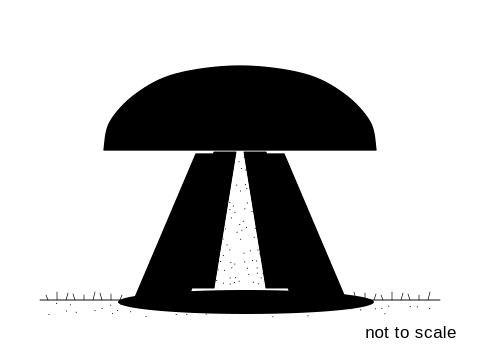
An umbrella stone: a dome-shaped cap of laterite resting on four slabs that lean in towards each other. Nothing is drawn under the ground. Not to scale.
What it cannot tell us The study found no laboratory date for this site. Stands on: R135-HS4 · Not known #247eb9
Look
What was found under each kind of monument?
Talk
Which sentence on this card was worked out rather than found?
Ask
Why might people build a grave monument with no burial in it?

C1-SC3 · From a laboratory

Many graves, few dates

A strip of this website’s 1000 BCE–600 CE window zooms to 1000–400 BCE, where two Adichanallur urn paddy samples show their ASI-reported calibrated ranges and probabilities.
What it cannot tell us The Mangadu samples do not date the whole of southern Kerala's Iron Age. Stands on: R140-C012 · a claim the study makes (not graded)
Look
Which monuments on this card have a laboratory date, and which have none?
Talk
A laboratory date measures a sample. Why does that matter when we try to date a monument?
Ask
Which sample would you most like to find under an umbrella stone, and why?

    004Differentiation

    One task at three levels

    The three sheets use the same sources and the same task. Only the help changes.

    Support

    1. Circle the words that describe what you can see on the umbrella stone: dome, four supports, laterite, bones, a date.
    2. Tick what was found under the Cheramanangad monuments: an urn with bone, iron objects, nothing at all.
    3. Circle the right ending: A laboratory date measures the sample / the building of the monument.
    4. Choose a level for each statement from the box.
    5. Complete: Megaliths can tell us ... They can't tell us ...

    Help on the sheet

    • A Shape, Beneath, Date grid with the first row started
    • Key words glossed beside the text: umbrella stone, laterite, urn, laboratory date
    • The four levels with their meanings in a box
    • Sentence starters for a reason: The card says ... / The evidence does not show ...

    Core

    1. I can see ... It is made of ...
    2. Under the monuments at Cheramanangad, the excavators found ...
    3. A laboratory date measures ... so it does not tell us ...
    4. I graded this statement ... because ...
    5. Megaliths can tell us ... but they can't tell us ...

    Stretch

    1. Describe the umbrella stone as exactly as you can before you explain anything about it.
    2. What does the Cheramanangad excavation show about using a monument's shape as evidence?
    3. Why are laboratory dates for Kerala's monuments so important, and why are they not enough?
    4. Grade each statement and explain how you weighed the evidence.
    5. What can megaliths tell us about the people who made them, and what can't they? Use all three cards.

    Extension

    Choose another monument from the atlas, such as the rock-cut cave at Kattakampal; your teacher can read its atlas line aloud. Fill a Shape, Beneath, Date row for it, and say which column stays empty.

    005Assessment

    How you will know

    The grading task

    Grade each statement as Well supported, Likely, Possible or Not known. Give a reason that names a card or a gap in the evidence.

    1. Umbrella stones cluster in central and northern Kerala.
    2. Monument burial in Kerala had begun by the first half of the first millennium BCE.
    3. The empty monuments were symbolic burials.
    4. How old are Kerala's umbrella stones and hood stones?
    5. Graves with gold and bronze mark a ranked elite.

    Exit task

    What can megaliths tell us, and what can't they? Write one sentence for each, and name the card each comes from.

    Open the answer key

    The key gives what this website's summary says for each task, two examples written by us, and how to credit a reasoned disagreement.

    006Misunderstandings

    Misunderstandings to listen for (not yet observed in a classroom)

    • Every umbrella stone has a burial under it.

      At Cheramanangad, the umbrella stone that was opened held no burial. "Urns beneath umbrella stones" does not hold as a rule there.

    • Umbrella stones are found only in Kerala.

      They cluster in central and northern Kerala, but a full survey outside Kerala was not completed. "Distinctive" fits the evidence better than "unique".

    • A laboratory date from a grave tells us when the monument was built.

      A laboratory date measures its sample. At Kuttikol, the dates come from sampled carbon, not from the cutting of the chambers.

    • Rich grave goods prove that the person buried was a ruler.

      There are two views. One, from 1915, reads deep urns and gold-rich graves as signs of rank. The study's caution is that the differences are real but could reflect age, ritual office, household practice, date or a particular ceremony.

    007With or without a screen

    With or without a screen

    Paper only

    Print the cut-out page for each group and a sheet for each student. The photograph on the umbrella stone card works in black and white, because the task is to describe shape and material. Draw the Shape, Beneath, Date grid on the board. Students shade their levels in pencil.

    One screen and a projector

    Show the umbrella stone photograph for the hook and the model, then the Cheramanangad card, then the card on dates, then the claim statements. Fill the first row of the grid with the class before groups fill the rest.

    Classroom screen

    008Teacher notes

    Teacher notes

    • The photograph shows one umbrella stone at Kudakkallu Parambu. The cards do not say whether it is the one opened in 1990–91, so do not tell students that it is.
    • Kerala Class VI Unit 8 covers megaliths. This lesson puts named sites, an excavation and laboratory dates behind that line. Class VII Unit 12 uses megaliths to write local history; lesson C5 takes up that method.
    • Monument names are used inconsistently. Umbrella stone, hat stone, hood stone, topikkallu and kudakkallu have been used differently by different authors since Babington in 1823. Read each label by its author's definition.
    • Students may meet claims online that Kudakkallu Parambu is over 4,000 years old or was built around 2000 BC. In the sources the study inspected, these statements have no published dating support.
    • The Mangadu dates are stated differently in different places. The Kerala State Archaeology Department summarises one result as about 900 BCE; Abhayan (2018) tabulates 1299–902 and 1269–821 cal BCE, while the laboratory sheet gives roughly 1300–800 BCE. If students have met "900 BCE", show both.
    • For the umbrella stones at Ariyannur, nobody knows yet when they were built: no excavation report or laboratory date was recovered.
    • There are two views on why monuments take the forms they do. An older view links each form to the local stone; this study holds that geology made techniques possible but did not decide the form. If students ask why umbrella stones are found where they are, give both.
    • The study thinks burial monuments were probably still being made or used when Pattanam traded with the Mediterranean, though few graves are dated. This links the lesson to lesson C4.
    • Porkalam matters for dating: its pots and beads became a long-used comparison set for dating central Kerala's burial monuments. That is why the missing beads in umbrella stones matter.
    • For the stretch extension, the atlas records other forms: at Kattakampal, a multi-chambered rock-cut burial cave.
    • Burials in urns and under stone monuments run across several periods, so this lesson sits on the whole timeline strip rather than in one window.
    • If you plan a visit, the atlas line for Cheramanangad reads: "Protected ASI monument open to visitors; walking on or leaning against the stones is not allowed." The line is undated; check before you travel.
    • Two views on laterite: school geography textbooks often say laterite is soft when cut and hardens in the air (Buchanan's early description). A field geology study of one Kerala quarry found blocks that were already hard when cut, so this website grades that point Likely rather than settled.

    Sensitive topics

    Megaliths are graves, and some held human bone. The evidence in this lesson comes from opening them. Speak of the people buried there with respect, as people and not as finds. No image in this lesson shows human remains. Some students may have been bereaved: let them work on the umbrella stone card or the card on dates, and never ask anyone to imagine a death or a burial. Most of the monuments named here are protected, so students should never climb on or dig at one.

    009Sources used

    Sources used

    Every fact in this lesson comes from these studies. The codes name the statements the lesson cites.

    010Downloads

    Everything to print

    Each document prints on A4 or US Letter. The Malayalam sheets are drafts that no Malayalam editor has yet reviewed.

    The unit pack

    Lesson C1 · Ages 11 to 14 · Lesson plan

    Megaliths as sources

    What can megaliths tell us, and what can't they?

    Unit C: Kingdoms, trade and the evidence · Ladder step Look, Grade · Draft written with AI assistance; not yet tried in a classroom

    Objectives

    • I can describe a monument before I explain it.
    • I can say what a monument's shape, the burial beneath it and a laboratory date each tell us, and what they cannot.
    • I can grade a statement about megaliths and give a reason that names the evidence.

    Pupils should already know

    • Students have sorted what was found from what was worked out, and graded statements on the four How-sure levels, in unit B. If they have not, add five minutes at the start to introduce the levels.
    • Students can find central, northern and southern Kerala on a map.
    Layers of the South/educators/lessons/megaliths-as-sources/a97585a61f00Draft written with AI assistance; not yet tried in a classroomMalayalam draft, not yet reviewed by a Malayalam editorText CC BY-SA 4.0; photos as creditedPage 1/2

    Lesson C1 · Ages 11 to 14 · Lesson plan

    Megaliths as sources

    Materials

    • Print One sheet per student: support, core or stretch; The cut-out page for each group: three source cards and the key-word strip; A Shape, Beneath, Date grid for each group, on the sheet or copied from the board
    • Screen The classroom screen for this lesson
    • Paper only Print the cut-out page for each group and a sheet for each student. The photograph on the umbrella stone card works in black and white, because the task is to describe shape and material. Draw the Shape, Beneath, Date grid on the board. Students shade their levels in pencil.

    Misunderstandings to listen for (not yet observed in a classroom)

    • Every umbrella stone has a burial under it. At Cheramanangad, the umbrella stone that was opened held no burial. "Urns beneath umbrella stones" does not hold as a rule there.
    • Umbrella stones are found only in Kerala. They cluster in central and northern Kerala, but a full survey outside Kerala was not completed. "Distinctive" fits the evidence better than "unique".
    • A laboratory date from a grave tells us when the monument was built. A laboratory date measures its sample. At Kuttikol, the dates come from sampled carbon, not from the cutting of the chambers.
    • Rich grave goods prove that the person buried was a ruler. There are two views. One, from 1915, reads deep urns and gold-rich graves as signs of rank. The study's caution is that the differences are real but could reflect age, ritual office, household practice, date or a particular ceremony.
    Layers of the South/educators/lessons/megaliths-as-sources/a97585a61f00Draft written with AI assistance; not yet tried in a classroomMalayalam draft, not yet reviewed by a Malayalam editorText CC BY-SA 4.0; photos as creditedPage 2/2