Skip to content
Layers of the South
Search

Lesson B4 · Unit B: How do we find out?

Coins from far away

What can a coin tell us, and what can't it?

Project this lessonClass vote

Ages
Ages 9 to 11
Minutes
30 / 40 / 45
Ladder step
1 Look, 3 Grade

Curriculum

No curriculum line is published for this lesson.

Draft written with AI assistance; not yet tried in a classroom

Two coins with a head in profile. A deep cut runs across the head on the left coin. The right coin has two small holes near its edge. The lettering is not drawn. Not to scale.
Marks on Roman coins found in South India: a slash across the portrait, and two holes. The marks are clear; why the portraits were slashed is not known.

001At a glance

Pupils look closely at marks on coins, then grade five statements about Roman coins and silver portrait coins found in South India, giving a reason for each.

Objectives

  • I can describe a coin's marks before I explain them.
  • I can grade a statement about coins on the four levels and give a reason.
  • I can say what a coin can tell us and what it cannot.

Pupils should already know

  • Pupils have graded statements and given reasons in lessons B1 to B3.
  • Pupils have met Tamil-Brahmi letters in lesson B2.
  • Pupils know that a coin is metal money with pictures or writing on it.

Materials

Print
  • One sheet per pupil: support, core or stretch
  • The cut-out page for each pair: three source cards and the four certainty cards
Screen
  • The classroom screen for this lesson

Key words

hoard
A store of coins that someone hid or buried.
portrait
A picture of a person's head or face.
ornament
Something worn to look nice, like jewellery.
Roman
From the Roman Empire, whose rulers were called emperors.
inland
Away from the coast, deeper into the land.
riverbed
The ground at the bottom of a river.
Palakkad Gap പാലക്കാട് ചുരം
A gap through the Western Ghats hills, used as a way across.
Tamil-Brahmi തമിഴി (തമിഴ് ബ്രാഹ്മി)
An early way of writing Tamil, with letters taken from Brahmi.

002Sequence

Step by step

Lesson length
  1. 455hook

    Teacher Show the coin drawing. Ask pupils to say only what they see first: the marks, the cut, the holes, the pictures. Write their words in a "We see" column. Then ask what they think and what they wonder. Say that the drawing is not to scale.

    Pupils Look at the coins. Say what you see. Then say what you think and what you wonder.

    Screen 1 of 11: Look first

  2. 578model

    Teacher Model grading with statements that are not in the claim task, and give a reason from the evidence each time, not from one word. Read: "Some small silver coins show a head and a name." Say: "The head and the name are on the coins themselves, so I would shade the box in: strong evidence." Then read: "Experts think the hoards fit coins moving through the Palakkad Gap." Say: "The hoards are spread in a way that fits that route, but no single route or carrier is shown, so I would draw slanting lines: probably." Ask: what evidence did I use each time? Point out that a word such as "think" tells you someone is working something out. It does not tell you which level fits.

    Pupils Listen. Then say what evidence helped the teacher choose each level.

    Screen 2 of 11: Silver coins from Karur

  3. 689guided

    Teacher Read the cards with the class, one at a time. For each line, ask: is this on the coin, is it what experts work out from it, or is it something nobody can tell yet? Pupils underline what was found and circle what was worked out. Each time, ask: what would we need to find to be surer?

    Pupils Read each card with your partner. Underline what was found. Circle what was worked out.

    Screen 3 of 11: Marks on Roman coins

  4. 689claim

    Teacher Read each statement in the claim task. Pupils shade a box for each one and write a reason. Then reveal the study's level and its reason. If a pupil chose a different level with a good reason, say so out loud: a reason that names real evidence or a real gap earns the credit. In 30 minutes, grade the first three sentences and set the rest for next time.

    Pupils Shade a box for each statement. Write one reason.

    Screen 5 of 11: How sure can we be?

  5. 689independent

    Teacher Pupils make lists on their sheet: what a coin can tell us, and what it cannot. Can: what metal it looks like, what is on it, and marks made on it later. Cannot, from these cards: why the portraits were cut, who buried a hoard and why, and when a riverbed coin was made.

    Pupils List what a coin can tell us, and what it cannot.

    Screen 10 of 11: Look at how these statements differ.

  6. 345exit

    Teacher Ask the enquiry question again. Each pupil writes one thing a coin can tell us and one thing it cannot, with a reason.

    Pupils What can a coin tell us, and what can't it? Write one thing for each, with a reason.

    Screen 11 of 11: Before you go

003Source cards

The three source cards

19 bound lines · 13 graded · 0 claims · 6 other records

Graded lines carry their How-sure glyph and 6-char hash; claims carry no fill glyph.

B4-SC1 · From the ground

Marks on Roman coins
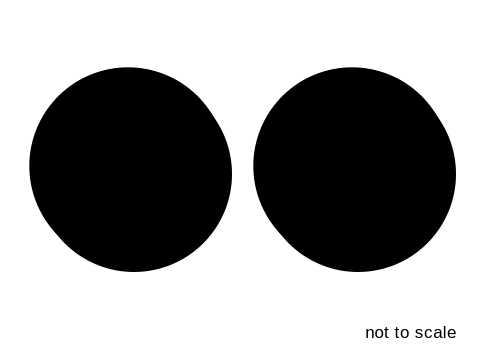
Two coins with a head in profile. A deep cut runs across the head on the left coin. The right coin has two small holes near its edge. The lettering is not drawn. Not to scale.
What it cannot tell us Both ideas, testing for fake gold and cancelling the portrait, fit the marks. No study used here has tested the metal inside the cuts. Stands on: R251-HS4 · Not known #ab1eca
Look
What marks can you see on the coins in the drawing?
Talk
Why might someone make two holes in a coin?
Ask
What test would you do to find out why the portraits were cut?

B4-SC2 · From the ground

Coins buried in Kerala

A worn punch-marked silver piece, a schematic Roman denarius with a chisel cut, both faces of a square Chera copper coin, and an Eyyal jar timeline: minted, cut, buried after 98–99 CE, found 1945.
What it cannot tell us A hoard shows where coins ended up. It does not show who carried them there. Stands on: R122-HS2 · Likely #824b26
Look
What was in the pot at Eyyal?
Talk
Why does it matter that the find records are poor?
Ask
What would you like to ask the person who buried the coins?

B4-SC3 · From the ground

Silver coins from Karur

Two coins with a head in profile. A deep cut runs across the head on the left coin. The right coin has two small holes near its edge. The lettering is not drawn. Not to scale.
What it cannot tell us The names match kings in old poems. No date or text yet links the coins to those kings. Stands on: R162-HS4 · Possible #6f0012
Look
What two things are on these silver coins?
Talk
Why is a coin from a riverbed harder to date than one from a dig?
Ask
What would help experts agree on when the coin was made?

    004Differentiation

    One task at three levels

    The three sheets use the same sources and the same task. Only the help changes.

    Support

    1. Circle the marks you can see on the coins: a cut, two holes, or both.
    2. Circle what was in the pot at Eyyal: Roman coins only, or Roman and Indian coins.
    3. Shade a box for each statement: strong evidence, probably, maybe or nobody knows yet.
    4. Draw a line from each sentence to its list: a coin can tell us, or it cannot.
    5. Finish: A coin can tell us ... A coin cannot tell us ...

    Help on the sheet

    • The coin drawing with the cut and the holes labelled
    • A word box: hoard, portrait, ornament, riverbed, Tamil-Brahmi
    • The four how-sure boxes with their words. Strong evidence: shade it in. Probably: slanting lines. Maybe: dots. Nobody knows yet: leave it empty.

    Core

    1. On the coins I can see ...
    2. The pot at Eyyal held ...
    3. Shade a box for each statement. I chose it because ...
    4. A coin can tell us ... A coin cannot tell us ...
    5. What can a coin tell us, and what can't it? My answer is ... because ...

    Stretch

    1. Describe the marks on the coins before you explain them.
    2. Explain what the Eyyal pot shows, and what it does not.
    3. Grade each statement and explain your level.
    4. Make two lists: what a coin can tell us and what it cannot. Use all three cards.
    5. What can a coin tell us, and what can't it? Use two cards in your answer.

    Extension

    Experts have two ideas about why the portraits were cut. What test could help decide between them?

    005Assessment

    How you will know

    The grading task

    Shade a box to show how sure we can be about each statement. Write one reason for each.

    1. Most of the Pudukkottai gold coins were cut across the portrait.
    2. Coins with two holes were worn or sewn on as ornaments.
    3. The coin names belong to kings praised in early Tamil poems.
    4. Why were the portraits slashed?
    5. Who buried the hoards, and why?

    Exit task

    What can a coin tell us, and what can't it? Write one thing for each, with a reason.

    Open the answer key

    The key gives what this website's summary says for each task, two examples written by us, and how to credit a reasoned disagreement.

    006Misunderstandings

    Misunderstandings to listen for (not yet observed in a classroom)

    • Roman coins in Kerala show that Romans lived there.

      These hoards do not establish resident Roman communities in Kerala. Roman-origin objects show connections, not who handled them or where they lived.

    • The date on a coin tells us when it was cut or buried.

      A coin is made before it is cut, worn or buried. Coin issue dates do not date the slashing event.

    • A coin found in a river is as easy to date as one from a dig.

      Riverbed provenance is weaker than a sealed archaeological context.

    007With or without a screen

    With or without a screen

    Paper only

    Print the cut-out page for each pair and a sheet for each pupil. The coin drawing works in black and white. Draw one coin large on the board with a cut across the face and two holes near the edge. Pupils grade on paper and shade their certainty boxes in pencil.

    One screen and a projector

    Show the coin drawing, then the Kerala card, then the Karur card, then the claim statements, one per screen. Go back to the coin drawing while pupils write their exit answer.

    Classroom screen

    008Teacher notes

    Teacher notes

    • Scholars disagree about why the portraits were slashed. P. V. Radhakrishnan reads the cut as an assay cut, opening the metal under the thick portrait to detect plated fakes. Earlier scholarship, summarised by the Government Museum, Chennai, reads it as cancelling the emperor's authority while keeping the gold's value. Microscopy and element mapping of the cut surfaces could help settle it. Teach it as a disagreement, never as a mistake.
    • Scholars also disagree about where the cuts were made. One view treats the slashes as Indian quality control; another warns that a cut cannot be assumed to be Indian.
    • Pudukkottai: Oxford's hoard database describes about 90 percent of 501 aurei as slashed; the Chennai museum lists 461.
    • Eyyal: later scholarship gives a mixed hoard of 117 pieces, 83 of them Roman. The original 1963 and 1965 reports were not checked page by page.
    • Karur: published dates for the Kuttuvan Kotai coin run from early BCE proposals to the early fourth century CE.
    • Double piercing does not prove a particular necklace arrangement; the safer claim is that coins were hung or attached.
    • The coin drawing is not to scale. It shows two gold coins drawn for teaching, one cut across the portrait and one with two holes; it is not a single find.
    • On the timeline strip, this lesson sits in the window 200 BCE to 300 CE.

    009Sources used

    Sources used

    Every fact in this lesson comes from these studies. The codes name the statements the lesson cites.

    010Downloads

    Everything to print

    Each document prints on A4 or US Letter. The Malayalam sheets are drafts that no Malayalam editor has yet reviewed.

    The unit pack

    Lesson B4 · Ages 9 to 11 · Lesson plan

    Coins from far away

    What can a coin tell us, and what can't it?

    Unit B: How do we find out? · Ladder step Look, Grade · Draft written with AI assistance; not yet tried in a classroom

    Objectives

    • I can describe a coin's marks before I explain them.
    • I can grade a statement about coins on the four levels and give a reason.
    • I can say what a coin can tell us and what it cannot.

    Pupils should already know

    • Pupils have graded statements and given reasons in lessons B1 to B3.
    • Pupils have met Tamil-Brahmi letters in lesson B2.
    • Pupils know that a coin is metal money with pictures or writing on it.

    Key words: hoard (A store of coins that someone hid or buried.); portrait (A picture of a person's head or face.); ornament (Something worn to look nice, like jewellery.); Roman (From the Roman Empire, whose rulers were called emperors.); inland (Away from the coast, deeper into the land.); riverbed (The ground at the bottom of a river.); Palakkad Gap (A gap through the Western Ghats hills, used as a way across.); Tamil-Brahmi (An early way of writing Tamil, with letters taken from Brahmi.).

    Materials

    • Print One sheet per pupil: support, core or stretch; The cut-out page for each pair: three source cards and the four certainty cards
    • Screen The classroom screen for this lesson
    • Paper only Print the cut-out page for each pair and a sheet for each pupil. The coin drawing works in black and white. Draw one coin large on the board with a cut across the face and two holes near the edge. Pupils grade on paper and shade their certainty boxes in pencil.

    Teacher notes

    • Scholars disagree about why the portraits were slashed. P. V. Radhakrishnan reads the cut as an assay cut, opening the metal under the thick portrait to detect plated fakes. Earlier scholarship, summarised by the Government Museum, Chennai, reads it as cancelling the emperor's authority while keeping the gold's value. Microscopy and element mapping of the cut surfaces could help settle it. Teach it as a disagreement, never as a mistake.
    • Scholars also disagree about where the cuts were made. One view treats the slashes as Indian quality control; another warns that a cut cannot be assumed to be Indian.
    Layers of the South/educators/lessons/coins-from-far-away/a97585a61f00Draft written with AI assistance; not yet tried in a classroomMalayalam draft, not yet reviewed by a Malayalam editorText CC BY-SA 4.0; photos as creditedPage 1/2

    Lesson B4 · Ages 9 to 11 · Lesson plan

    Coins from far away

    • Pudukkottai: Oxford's hoard database describes about 90 percent of 501 aurei as slashed; the Chennai museum lists 461.
    • Eyyal: later scholarship gives a mixed hoard of 117 pieces, 83 of them Roman. The original 1963 and 1965 reports were not checked page by page.
    • Karur: published dates for the Kuttuvan Kotai coin run from early BCE proposals to the early fourth century CE.
    • Double piercing does not prove a particular necklace arrangement; the safer claim is that coins were hung or attached.
    • The coin drawing is not to scale. It shows two gold coins drawn for teaching, one cut across the portrait and one with two holes; it is not a single find.
    • On the timeline strip, this lesson sits in the window 200 BCE to 300 CE.

    Misunderstandings to listen for (not yet observed in a classroom)

    • Roman coins in Kerala show that Romans lived there. These hoards do not establish resident Roman communities in Kerala. Roman-origin objects show connections, not who handled them or where they lived.
    • The date on a coin tells us when it was cut or buried. A coin is made before it is cut, worn or buried. Coin issue dates do not date the slashing event.
    • A coin found in a river is as easy to date as one from a dig. Riverbed provenance is weaker than a sealed archaeological context.

    Sources used

    • Roman coins in South India were slashed, pierced and copied R251-HS1, R251-HS2, R251-TV1, R251-HS4, R251-C005, R251-C009, R251-C001, R251-TV2, R251-C010
    • Kerala's Roman coin hoards show inland movement, not motive R122-HS1, R122-HS2, R122-HS4, R122-C008, R122-C018, R122-HS3
    • Chera silver portrait coins carry Tamil-Brahmi names and titles R162-HS1, R162-HS2, R162-TV1, R162-HS4, R162-HS3, R162-C007, R162-C005
    Layers of the South/educators/lessons/coins-from-far-away/a97585a61f00Draft written with AI assistance; not yet tried in a classroomMalayalam draft, not yet reviewed by a Malayalam editorText CC BY-SA 4.0; photos as creditedPage 2/2