Skip to content
Layers of the South
Search

Classroom screen · B4

Coins from far away

The screen fills the window. Right and Left arrows, or Page Down and Page Up, move between screens. Home and End go to the first and last. F fills the whole screen. T starts a timer.

Each screen prints on its own landscape page, for a classroom without a projector.

Back to the lesson plan

00:00 / 05:00

    Timings are the plan's suggestion, not a measure of pupils.
    Look first

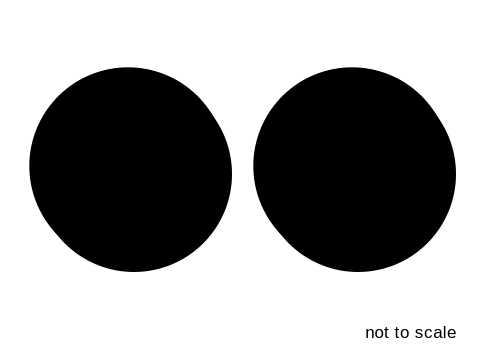
    Two coins with a head in profile. A deep cut runs across the head on the left coin. The right coin has two small holes near its edge. The lettering is not drawn. Not to scale.

    Look at the coins in the drawing. What do you see? What do you think? What do you wonder?

    • I see
    • I think
    • I wonder

    1/11

    From the ground

    Silver coins from Karur

    Two coins with a head in profile. A deep cut runs across the head on the left coin. The right coin has two small holes near its edge. The lettering is not drawn. Not to scale.
    • Some small silver coins show a head and a name.
    • The name is written in Tamil-Brahmi letters.
    • Experts think the heads look like Roman coin portraits.

    What it cannot tell us The names match kings in old poems. No date or text yet links the coins to those kings.

    • Teacher notes Most coins from Karur come from a riverbed or from people who collected them, not from a dig. Experts do not agree about when one of these coins was made.
    • Look What two things are on these silver coins?
    • Talk Why is a coin from a riverbed harder to date than one from a dig?
    • Ask What would help experts agree on when the coin was made?

    2/11

    From the ground

    Marks on Roman coins

    Two coins with a head in profile. A deep cut runs across the head on the left coin. The right coin has two small holes near its edge. The lettering is not drawn. Not to scale.
    • Most coins in a big hoard of gold coins from Pudukkottai were cut across the portrait.
    • Some Roman coins found in India have two small holes.
    • Experts think coins with two holes were worn, or sewn on, as ornaments.

    What it cannot tell us Both ideas, testing for fake gold and cancelling the portrait, fit the marks. No study used here has tested the metal inside the cuts.

    • Teacher notes Experts have different ideas about why the portraits were cut. One idea: the cut was a test, to find fake coins with only a thin skin of gold. Another idea: the cut cancelled the emperor's picture but kept the gold.
    • Look What marks can you see on the coins in the drawing?
    • Talk Why might someone make two holes in a coin?
    • Ask What test would you do to find out why the portraits were cut?

    3/11

    From the ground

    Coins buried in Kerala

    A worn punch-marked silver piece, a schematic Roman denarius with a chisel cut, both faces of a square Chera copper coin, and an Eyyal jar timeline: minted, cut, buried after 98–99 CE, found 1945.
    • Roman gold and silver coins have been found in several parts of Kerala.
    • Some were found far inland, away from the coast.
    • At Eyyal, one pot held Roman coins and Indian silver coins together.

    What it cannot tell us A hoard shows where coins ended up. It does not show who carried them there.

    • Teacher notes Experts think the hoards fit coins moving across the hills through the Palakkad Gap. The records of how the hoards were found are poor.
    • Look What was in the pot at Eyyal?
    • Talk Why does it matter that the find records are poor?
    • Ask What would you like to ask the person who buried the coins?

    4/11

    How sure can we be? 1/5

    Most of the Pudukkottai gold coins were cut across the portrait.

    • strong evidence
    • probably
    • maybe
    • nobody knows yet

    5/11

    How sure can we be? 2/5

    Coins with two holes were worn or sewn on as ornaments.

    • strong evidence
    • probably
    • maybe
    • nobody knows yet

    6/11

    How sure can we be? 3/5

    The coin names belong to kings praised in early Tamil poems.

    • strong evidence
    • probably
    • maybe
    • nobody knows yet

    7/11

    How sure can we be? 4/5

    Why were the portraits slashed?

    • strong evidence
    • probably
    • maybe
    • nobody knows yet

    8/11

    How sure can we be? 5/5

    Who buried the hoards, and why?

    • strong evidence
    • probably
    • maybe
    • nobody knows yet

    9/11

    Look at how these statements differ.

    List what a coin can tell us, and what it cannot.

    • When the coins were made.Not known

    10/11

    Before you go

    What can a coin tell us, and what can't it? Write one thing for each, with a reason.

    11/11