D1-SC1 · From the ground
Rice in a burial urn at Sivagalai

Photo: Perumalism (Wikimedia Commons). Licence: CC BY-SA 4.0 (https://creativecommons.org/licenses/by-sa/4.0). Source: https://commons.wikimedia.org/wiki/File:Sivakalai_archaeological_site_14.jpg
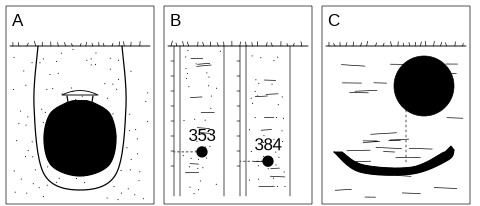
- One burial urn at Sivagalai is reported as intact and lidded, with bones, iron objects and paddy inside it. Stands on: R104-C002 · a claim the study makes (not graded)
- The paddy from that urn measured 2950 ± 30 BP. Stands on: R104-C003 · a claim the study makes (not graded)
- The state archaeology department publishes it as 1155 BCE: one calendar value, not a complete range. Stands on: R104-C003 · a claim the study makes (not graded)
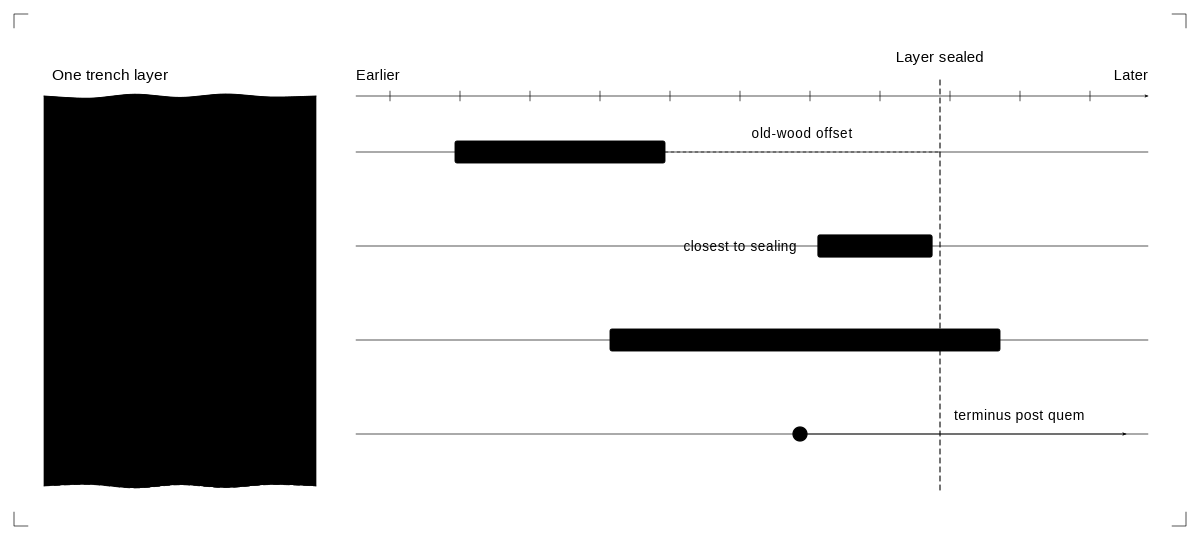
- Paddy grows in a single season, so it avoids the centuries of inbuilt age possible in heartwood. Stands on: lab lab-radiocarbon-clock samples/samp-sivagalai/calibrationNote
- The measurement belongs to the sampled plant material. It does not by itself date the whole Sivagalai site. Stands on: R104-C005 · a claim the study makes (not graded)
What it cannot tell us Iron objects in the same urn support an association, but they do not turn the paddy's date into a direct date on each iron object. Stands on: R104-CR004 · a claim the study makes (not graded)
- Look
- What exactly was dated, and where did it lie?
- Talk
- Which event does this date come closest to, and which events can it not reach on its own?
- Ask
- What would you need to know before using this date for the iron objects in the same urn?