Lesson A1 · Ages 7 to 9 · Lesson plan
Two-colour pots
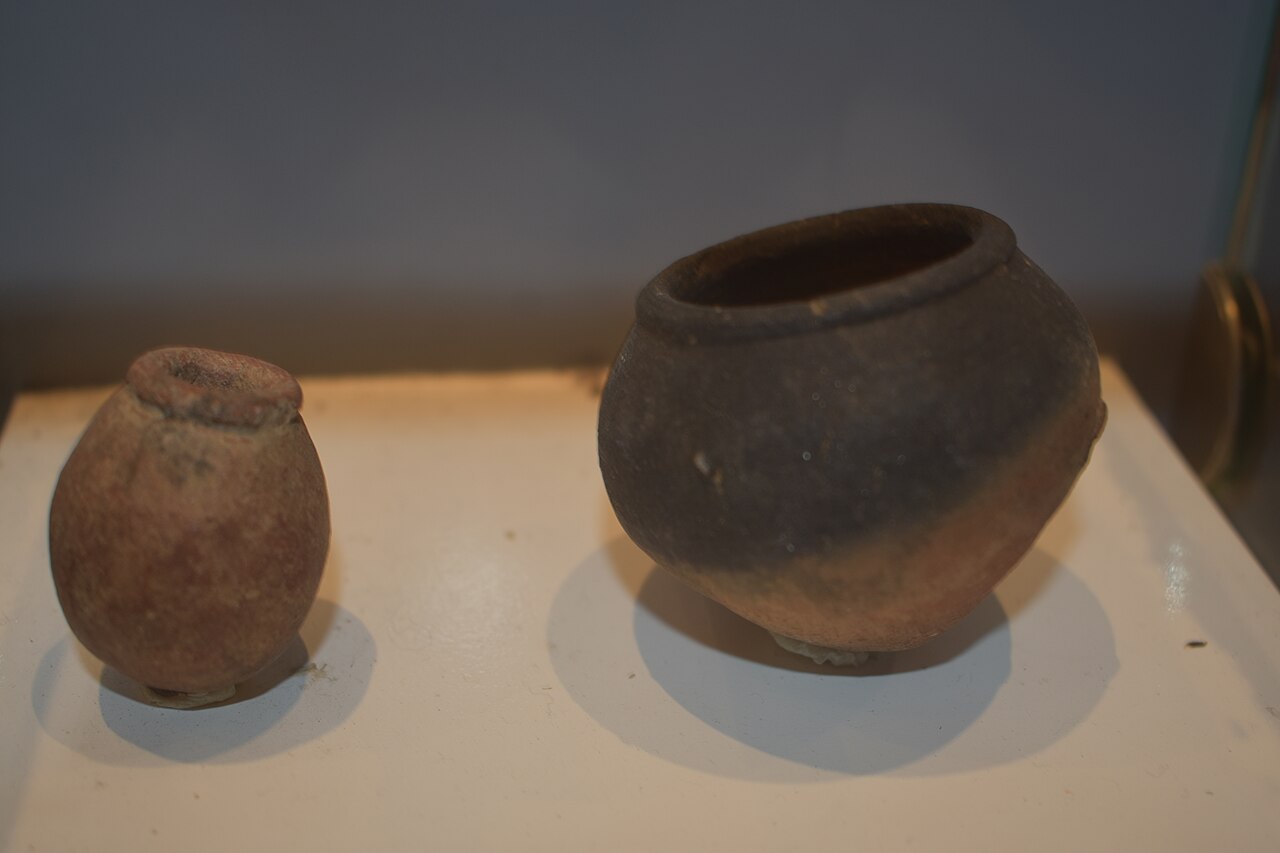
Why is this pot two colours?
Unit A: What did people leave behind? · Ladder step Look · Draft written with AI assistance; not yet tried in a classroom
Objectives
- I can say what I see before I say what I think.
- I can tell what is in the black part and the red part.
- I can hold up a how-sure card with my group and say what its words mean.
Pupils should already know
- Children know that clay pots are shaped first and then baked hard.
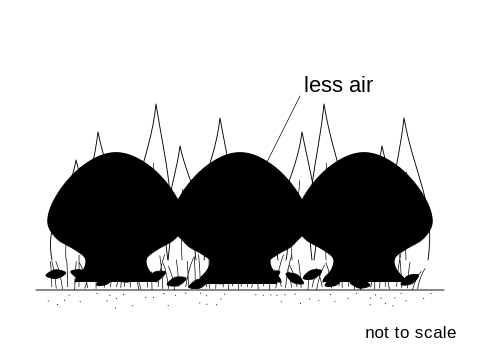
- Children have seen smoke leave black marks on something, such as a cooking pot or a lamp.
Key words: black-and-red ware (Pots that are black on one part and red on another.); carbon (The black stuff in soot and charcoal.); hematite (Red stuff with iron in it.); fire (To bake clay hard in great heat.); sample (A small piece taken away to be tested.); kaolin (A white clay.).
Materials
- Print One sheet per child: support, core or stretch; The cut-out page for each group: three source cards and the four certainty cards; A black crayon and a red crayon for each child; One colour print of the pot card for each group (see the print-only note if you have no colour printer); A cup to turn upside down, for the teacher
- Screen The classroom screen for this lesson, if you have a projector
- Paper only Print the cut-out page once per group and a sheet for each child. The pot card needs colour, because the task is to see its black top and its red bottom. Print that card in colour for each group if you can. Without a colour printer, each group colours its pot card at the start, with the black crayon on the top and the red crayon on the bottom, as the card's own words say. Read the test card and the firing card aloud. Children shade their certainty boxes with a pencil, so the rest of the sheet works in black and white.
Teacher notes
- The pot in the photograph is not the piece that was tested. The test was on a piece from Keezhadi. Say so if children ask.