Skip to content
Layers of the South
Search

Lesson A3 · Unit A: What did people leave behind?

Toy carts

Did children long ago have toys?

Project this lessonClass vote

Ages
Ages 7 to 9
Minutes
30 / 45
Ladder step
1 Look

Curriculum

No curriculum line is published for this lesson.

Draft written with AI assistance; not yet tried in a classroom

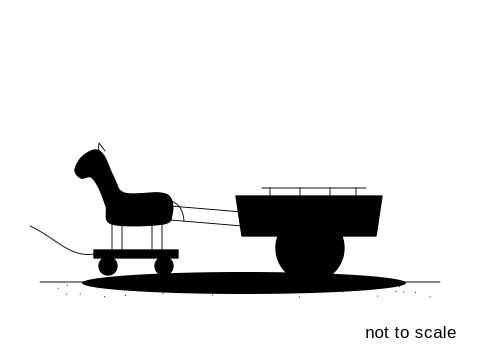
A small toy horse on wheels pulling a little two-wheeled cart on a string. It is drawn from the words of a poem, not from a toy that was found.
Drawn from a poem, not a find.

001At a glance

Children look closely at what two old Tamil poems show, at an old game piece from far away, and at what nobody knows yet about old games.

Objectives

  • I can say what a poem shows before I say what I think it means.
  • I can say what an old object shows, and what it cannot tell us.
  • I can hold up a how-sure card with my group and say what its words mean.

Pupils should already know

  • Children have used "I see, I think, I wonder" in lessons A1 and A2.
  • Children know that a poet makes up a poem, and that a poem can be about real or imagined things.

Materials

Print
  • One sheet per child: support, core or stretch
  • The cut-out page for each group: three source cards and the four certainty cards
  • Pencils in a few colours, for the drawing task
Screen
  • The classroom screen for this lesson, if you have a projector

Key words

poem
Words put together by a poet, often in lines.
poet
A person who makes poems.
palm leaf
A dried leaf of a palm tree, once used for writing.
ivory
A hard, creamy material from an elephant tusk.
die (plural: dice)
A small cube with dots, used in games.
tender
Gentle and loving.

002Sequence

Step by step

Lesson length
  1. 57hook

    Teacher Show the toy-cart drawing on the poems card or on the screen. Say plainly that it is a modern drawing made from old Tamil poems, not a photograph of an old toy. Ask children to say only what they can see, and write their words in a "We see" column. Then ask what they think and what they wonder.

    Pupils Look at the toy-cart drawing. Say what you see. Then say what you think and what you wonder.

    Screen 1 of 10: Look first

  2. 45model

    Teacher Show how to look at a poem before explaining it. Say: "The poem shows a child with a small toy cart. That is what the poem shows. I think children really played like this long ago. That is my idea about the poem." Ask: which sentence tells what the poem shows, and which tells my idea?

    Pupils Listen. Then say one sentence that starts "The poem shows".

    Screen 2 of 10: Two old poems

  3. 710guided

    Teacher Read the poems card aloud and show its drawing: its label says it is drawn from a poem, not a find. Then read the card about how old poems reach us. Say the poems' names for the children: Kuruntokai 61 and Ainkurunuru 403. Ask: is a poem the same as a photo? Then ask: how do we still have these poems today?

    Pupils Listen to the cards. Say what the poems show. Then say how the poems reached us.

    Screen 2 of 10: Two old poems

  4. 59independent

    Teacher Each child draws what the poems show: a child with a small toy cart. They label the drawing "My drawing, not an old toy". Walk round and ask: what does the poem show, and what did you add?

    Pupils Draw a child with a small toy cart, as the poems show. Write the label: My drawing, not an old toy.

    Screen 5 of 10: Work it through together

  5. 68claim

    Teacher Give each group a set of certainty cards and read their words: strong evidence, probably, maybe, nobody knows yet. Read the claim sentences one at a time, and let each group hold up the card it thinks fits. After each one, say which card the study gives it and the reason in simple words.

    Pupils Listen to each sentence. With your group, hold up a card: strong evidence, probably, maybe or nobody knows yet.

    Screen 6 of 10: How sure can we be?

  6. 36exit

    Teacher Ask the enquiry question again: did children long ago have toys? Each child says or writes one thing a poem shows and one thing nobody knows yet. Collect the answers; an honest "nobody knows yet" is a good answer.

    Pupils Say or write one thing a poem shows. Then say or write one thing nobody knows yet.

    Screen 10 of 10: Before you go

003Source cards

The three source cards

18 bound lines · 8 graded · 0 claims · 10 other records

Graded lines carry their How-sure glyph and 6-char hash; claims carry no fill glyph.

A3-SC1 · From a poem

Two old poems

A small toy horse on wheels pulling a little two-wheeled cart on a string. It is drawn from the words of a poem, not from a toy that was found.
Drawn from a poem, not a find.
What it cannot tell us A poem is not a photo. It shows a world the poet imagined. It is not a record of a real family. Stands on: R028-HS2 · Possible #846ace
Look
What do the children in the poems have?
Talk
Is a poem the same as a photo? Why or why not?
Ask
What would you like to ask the poet?

A3-SC2 · From a text

How old poems reach us

A bundle of palm leaves between two boards, held by a cord through two holes, with one leaf lifted to show lines of writing.
What it cannot tell us The copies we read today were made long after the poems. Stands on: timeline entry 'tl-sangam-poetry-purananuru'
Look
What were the poems copied onto?
Talk
Why might people copy a poem by hand?
Ask
What would you like to know about the people who copied the poems?

A3-SC3 · From the ground

Game pieces and missing rules

Grid of five micro-object inspection cards showing a peppercorn, an inscribed sherd, a carnelian bead, a spindle whorl, and an iron chisel.
What it cannot tell us A game piece does not come with its rules. Stands on: R028-HS4 · Not known #4e9665
Look
Why is an ivory die from Egypt not proof of games in South India?
Talk
Can a die tell us the rules of a game?
Ask
What would you like to know about the people who played with it?

    004Differentiation

    One task at three levels

    The three sheets use the same sources and the same task. Only the help changes.

    Support

    1. Circle what you can see in the toy cart drawing: wheels, a horse, or a board game.
    2. Circle what the poems were copied onto: palm leaves or stone.
    3. Circle where the die was dug up: Egypt or Kerala.
    4. Shade a box for the card your group held up for the rules of old games.

    Help on the sheet

    • The toy-cart drawing with two blank labels to fill in
    • A word box: poem, poet, toy cart, palm leaf, dice, rules
    • The four how-sure boxes drawn ready to shade, each with its words

    Core

    1. In the toy cart drawing I see ...
    2. The two poems show children with ...
    3. Draw what the poems show. Label it: My drawing, not an old toy.
    4. Shade a box for the card your group held up for the rules of old games. The study gives it the card ...

    Stretch

    1. Describe the toy cart drawing to someone who cannot see it. Explain why it is not a photo of an old toy.
    2. Explain what the two poems show, and why a poem is not a photo.
    3. Draw what the poems show. Write a label that says what your drawing is and what it is not.
    4. Shade a box for the card your group held up for the rules of old games. Then write the reason your teacher gave for the study's card.

    Extension

    One poem shows a child with the same name as the grandfather. Does that mean children were usually named after a grandparent? Explain.

    005Assessment

    How you will know

    The grading task

    Your teacher will read a sentence. Your group holds up the card that shows how sure we can be.

    1. The poems on the card show children with small toy carts.
    2. The poems show how real families long ago treated their children.
    3. Long ago, children were usually named after a grandfather.
    4. What rules were played on the old game boards and pieces?

    Exit task

    Did children long ago have toys? Say or write one thing a poem shows and one thing nobody knows yet.

    Open the answer key

    The key gives what this website's summary says for each task, two examples written by us, and how to credit a reasoned disagreement.

    006Misunderstandings

    Misunderstandings to listen for (not yet observed in a classroom)

    • A poem is a true report of what happened.

      The poems show an imagined literary world; they are not records of real households. They still show how the poets wrote about children.

    • Because one poem names a child after the grandfather, children were usually named that way.

      One poem gives one literary instance; it does not prove a household naming rule.

    • We know the rules of the old board games.

      Boards and pieces survive without their rules; rules shown today are modern reconstructions.

    007With or without a screen

    With or without a screen

    Paper only

    Print the cut-out page once per group and a sheet for each child. Hold up the game piece card for the looking routine. Read the poems card and the palm-leaf card aloud. Children draw on their sheets and shade their certainty boxes with a pencil, so the sheet works in black and white.

    One screen and a projector

    Show the game piece card for the looking routine, then the poems card, then the palm-leaf card, one per screen. Leave each claim sentence on the screen while groups hold up their cards.

    Classroom screen

    008Teacher notes

    Teacher notes

    • The study read both poems, Kuruntokai 61 and Ainkurunuru 403, in an online translation with notes. Both scenes with toy carts are clear in the poems.
    • The study keeps the poems apart from real life: they show an imagined literary world. That is why the sentence about real families gets the "maybe" card: poets may have drawn on real families, but a poem is not a record of one.
    • The die was excavated at Oxyrhynchus in Egypt. It is a game piece to look at, not evidence of a game or of children's play in Tamilakam. Say so if children ask where it is from.
    • This lesson has no photograph of an old toy cart. The drawing on the poems card shows a toy horse and cart made from the poems' words, and its label says so. Do not show a modern toy as if it were old. The children's drawings carry the label "My drawing, not an old toy".
    • If children ask how we still have the poems: each poem reaches us inside later layers, a note naming its poet, an anthology, often a commentary, a palm-leaf copy and a printed edition.
    • On the timeline strip, this lesson sits in the window 200 BCE to 300 CE, called Connected worlds.
    • Two of the four sentences in the claim task get "nobody knows yet". Present that as an honest answer, not a failure: the evidence so far does not settle them.
    • The poems' dates are debated. Most specialists date the older poems to about the first century BCE to the third century CE; Herman Tieken argues for the eighth or ninth century. The timeline marks the date as likely, not certain.

    009Sources used

    Sources used

    Every fact in this lesson comes from these studies. The codes name the statements the lesson cites.

    010Downloads

    Everything to print

    Each document prints on A4 or US Letter. The Malayalam sheets are drafts that no Malayalam editor has yet reviewed.

    The unit pack

    Lesson A3 · Ages 7 to 9 · Lesson plan

    Toy carts

    Did children long ago have toys?

    Unit A: What did people leave behind? · Ladder step Look · Draft written with AI assistance; not yet tried in a classroom

    Objectives

    • I can say what a poem shows before I say what I think it means.
    • I can say what an old object shows, and what it cannot tell us.
    • I can hold up a how-sure card with my group and say what its words mean.

    Pupils should already know

    • Children have used "I see, I think, I wonder" in lessons A1 and A2.
    • Children know that a poet makes up a poem, and that a poem can be about real or imagined things.

    Key words: poem (Words put together by a poet, often in lines.); poet (A person who makes poems.); palm leaf (A dried leaf of a palm tree, once used for writing.); ivory (A hard, creamy material from an elephant tusk.); die (plural: dice) (A small cube with dots, used in games.); tender (Gentle and loving.).

    Materials

    • Print One sheet per child: support, core or stretch; The cut-out page for each group: three source cards and the four certainty cards; Pencils in a few colours, for the drawing task
    • Screen The classroom screen for this lesson, if you have a projector
    • Paper only Print the cut-out page once per group and a sheet for each child. Hold up the game piece card for the looking routine. Read the poems card and the palm-leaf card aloud. Children draw on their sheets and shade their certainty boxes with a pencil, so the sheet works in black and white.

    Teacher notes

    • The study read both poems, Kuruntokai 61 and Ainkurunuru 403, in an online translation with notes. Both scenes with toy carts are clear in the poems.
    • The study keeps the poems apart from real life: they show an imagined literary world. That is why the sentence about real families gets the "maybe" card: poets may have drawn on real families, but a poem is not a record of one.
    Layers of the South/educators/lessons/toy-carts/a97585a61f00Draft written with AI assistance; not yet tried in a classroomMalayalam draft, not yet reviewed by a Malayalam editorText CC BY-SA 4.0; photos as creditedPage 1/2

    Lesson A3 · Ages 7 to 9 · Lesson plan

    Toy carts

    • The die was excavated at Oxyrhynchus in Egypt. It is a game piece to look at, not evidence of a game or of children's play in Tamilakam. Say so if children ask where it is from.
    • This lesson has no photograph of an old toy cart. The drawing on the poems card shows a toy horse and cart made from the poems' words, and its label says so. Do not show a modern toy as if it were old. The children's drawings carry the label "My drawing, not an old toy".
    • If children ask how we still have the poems: each poem reaches us inside later layers, a note naming its poet, an anthology, often a commentary, a palm-leaf copy and a printed edition.
    • On the timeline strip, this lesson sits in the window 200 BCE to 300 CE, called Connected worlds.
    • Two of the four sentences in the claim task get "nobody knows yet". Present that as an honest answer, not a failure: the evidence so far does not settle them.
    • The poems' dates are debated. Most specialists date the older poems to about the first century BCE to the third century CE; Herman Tieken argues for the eighth or ninth century. The timeline marks the date as likely, not certain.

    Misunderstandings to listen for (not yet observed in a classroom)

    • A poem is a true report of what happened. The poems show an imagined literary world; they are not records of real households. They still show how the poets wrote about children.
    • Because one poem names a child after the grandfather, children were usually named that way. One poem gives one literary instance; it does not prove a household naming rule.
    • We know the rules of the old board games. Boards and pieces survive without their rules; rules shown today are modern reconstructions.

    Sources used

    • Early Tamil poems show children playing with toy carts R028-HS1, R028-HS3, R028-HS2, R028-HS4
    Layers of the South/educators/lessons/toy-carts/a97585a61f00Draft written with AI assistance; not yet tried in a classroomMalayalam draft, not yet reviewed by a Malayalam editorText CC BY-SA 4.0; photos as creditedPage 2/2